Research Disclaimer: All compounds described are sold exclusively for in-vitro and laboratory research use. Not for unsupervised use. This content does not constitute medical advice.
BPC-157 stability questions come up in two separate contexts: plasma pharmacokinetics (how long it circulates after administration) and storage stability (how long the peptide retains potency before use). Understanding both is essential for designing valid research protocols and maintaining compound integrity.
BPC-157 Plasma Half-Life#
Published pharmacokinetic data:
BPC-157 has a relatively short plasma half-life estimated at approximately 4 hours in rodent models (SC administration). This is typical for a 15-amino acid peptide — small enough to be filtered by the kidney, and subject to proteolytic cleavage in circulation.
Why short plasma t½ doesn't mean short effects:
BPC-157's mechanism operates through receptor-mediated signaling (Egr-1 transcription factor activation, VEGF upregulation). Once the signaling cascade is initiated:
- Egr-1 is a transcription factor with its own half-life (~1–2 hours in nucleus, but target gene mRNA persists)
- VEGF protein produced has its own stability in tissue (~hours to days)
- New collagen fibers and blood vessels formed persist long after the peptide is eliminated
So the biological effect of BPC-157 outlasts its plasma presence substantially. This is analogous to how a single growth factor exposure can drive sustained cell proliferation.
Research dosing frequency: Most published in vivo studies use once-daily or twice-daily dosing — consistent with the ~4h t½ and the need for sustained receptor stimulation to maintain the anabolic signaling cascade.
Lyophilized BPC-157: Shelf Life#
The most stable form is lyophilized powder at -20°C:
| Storage condition | Expected stability |
|---|---|
| Lyophilized, -20°C | 2+ years (beyond most published study periods) |
| Lyophilized, 2–8°C | 6–12 months |
| Lyophilized, room temperature | Not recommended; weeks to months depending on humidity |
Why lyophilization extends shelf life:
- Removes water → eliminates hydrolysis (the main degradation pathway for peptides)
- Reduces Maillard reactions (peptide-sugar browning)
- Reduces oxidation (no aqueous environment for reactive oxygen species)
- Preserves tertiary structure
Quality indicator for lyophilized BPC-157: The powder should be white and cohesive. Yellowing, browning, or loss of the cake structure (turned to loose powder) can indicate temperature excursion or moisture exposure — run HPLC if suspicious before using in research.
Reconstituted BPC-157: Stability#
Once dissolved in BAC water:
Reconstituted BPC-157 in bacteriostatic water (0.9% benzyl alcohol) at 2–8°C:
- Generally considered stable for up to 28 days
- Benzyl alcohol (0.9%) acts as an antimicrobial preservative — prevents bacterial growth that would degrade the peptide
- Oxidation is the primary remaining concern → amber vials or light-protected storage recommended
Reconstituted stability at -20°C: Freezing the reconstituted solution is possible but not optimal:
- Freeze-thaw cycles cause physical stress to the peptide (ice crystal formation)
- If freezing reconstituted BPC-157: aliquot into single-use volumes before freezing → avoid multiple freeze-thaw cycles
- Each freeze-thaw cycle reduces peptide integrity slightly; keep to ≤3 cycles
Reconstituted BPC-157 in saline or sterile water (no preservative): Stability reduces to 24–72 hours at 2–8°C. Sterile water is not recommended for BPC-157 unless used immediately — the lack of antimicrobial agent allows rapid bacterial growth.
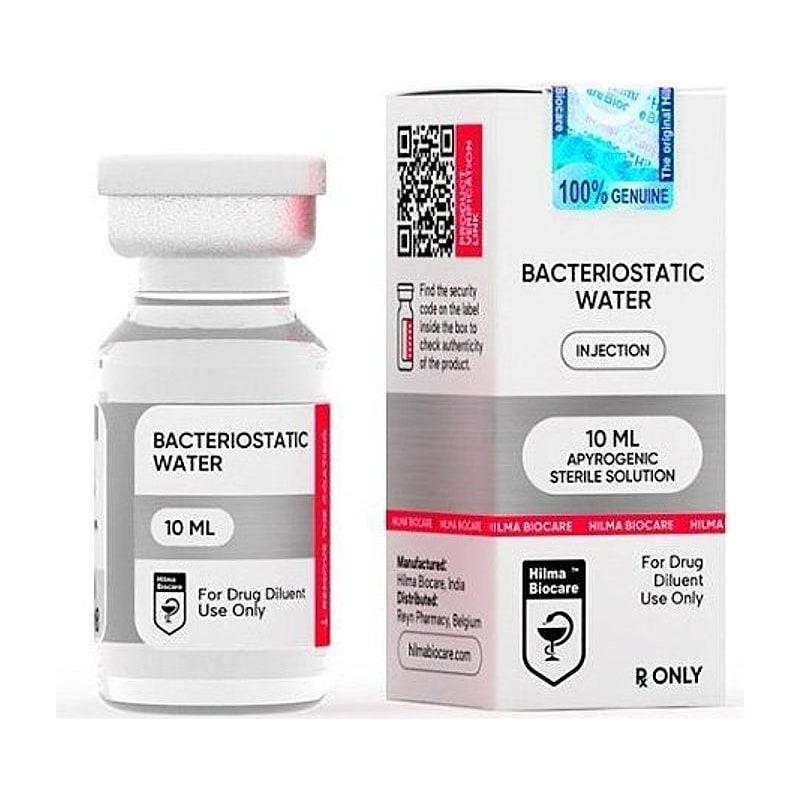
Bacteriostatic Water (30ml), €9Signs of Degraded BPC-157#
How to identify potentially degraded peptide before use:
- Visual: Lyophilized cake should be white and intact; reconstituted solution should be clear and colorless. Yellowish/brownish color suggests oxidation.
- Solubility: BPC-157 dissolves readily in BAC water. Persistent cloudiness or particles suggest aggregation (partial degradation).
- HPLC purity recheck: If storage conditions were compromised, run HPLC to verify purity before using in research. Any drop below 95% warrants compound replacement.
Degradation pathway: The primary degradation mechanism is oxidation of the histidine residue in BPC-157's sequence under aqueous conditions — accelerated by light and higher temperatures.
Research Use Only. JuicedPharma does not provide medical advice.
Published by JuicedPharma Research Team · October 2026 · Category: Peptides & Recovery