Research Disclaimer: BPC-157 is sold exclusively for in-vitro and laboratory research use. All preparation protocols described here are for research contexts only. This content does not constitute medical advice. BPC-157 is not approved for human use.
Proper reconstitution is one of the most critical steps in peptide research. A technically flawed reconstitution — incorrect volume, contaminated diluent, improper technique — produces dose inaccuracies and can degrade the compound before the experiment begins. BPC-157 is stable by peptide standards, but it is not immune to improper handling.
This guide consolidates best practices from standard laboratory peptide reconstitution protocols, adapted specifically for BPC-157 research.
Table of Contents#
- What Is Lyophilized Powder and Why It Requires Reconstitution
- What You Need Before Starting
- Choosing the Right Diluent
- Volume Calculations: How Much Bacteriostatic Water to Add
- Step-by-Step Reconstitution Protocol
- Concentration and Dose Calculations
- Working Dilutions for Small-Dose Research
- Aliquoting for Multi-Session Research
- Quality Checks After Reconstitution
- Frequently Asked Questions
- Key References
What Is Lyophilized Powder and Why It Requires Reconstitution#
Lyophilization (freeze-drying) removes water from a peptide solution by first freezing it and then reducing the surrounding pressure to allow the frozen water to sublimate directly from solid to gas. The result is a dry, porous powder or cake that can be stored for extended periods without degradation — because water is the primary driver of peptide hydrolysis.
Before a lyophilized peptide can be used in research, it must be dissolved back into a liquid medium (reconstituted). The reconstitution step:
- Re-hydrates the peptide structure into its active conformation
- Creates a solution of known concentration for accurate dosing
- Introduces the first time-sensitive stability window (the reconstituted solution degrades more quickly than the dry powder)
For BPC-157, reconstitution is straightforward because it is highly water-soluble — it dissolves completely in aqueous solution without requiring organic solvents or special pH adjustment.
What You Need Before Starting#
Before reconstituting BPC-157, ensure you have:
Compounds and reagents:
- BPC-157 lyophilized powder vial (5 mg standard)
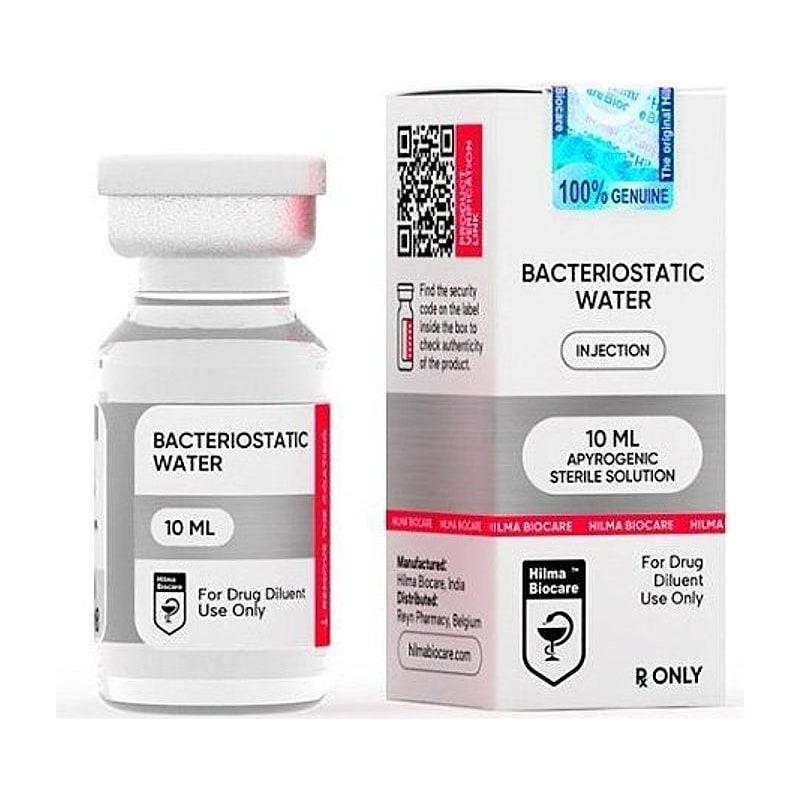
- Bacteriostatic Water (0.9% benzyl alcohol, USP grade) — not sterile water, not saline
- 70% isopropyl alcohol (IPA) or 70% ethanol swabs for sterilization
Equipment:
- Calibrated syringe: 1 ml or 3 ml, with 23–25 gauge needle (for adding diluent to vial)
- Additional syringe for withdrawing doses
- Low-bind microcentrifuge tubes (if aliquoting)
- Vortex mixer (optional — gentle manual swirling is sufficient)
- Permanent marker for labeling
- Refrigerator or -20°C freezer
Do not use:
- Plain sterile water for injection (no preservative — microbial growth risk in multi-use vials)
- Normal saline (0.9% NaCl) as the sole diluent (acceptable for dosing vehicle dilution, not for stock)
- Tap water (not sterile)
- Acidic or basic solutions (BPC-157 is stable at physiological pH)
Choosing the Right Diluent#
Why bacteriostatic water#
Bacteriostatic water (BAC water) contains 0.9% benzyl alcohol, which acts as a bacteriostatic (growth-inhibiting) preservative. This is critical for multi-use vials that will be punctured multiple times over days or weeks — each needle insertion introduces a contamination risk that benzyl alcohol mitigates.
Without a preservative, a vial punctured even once should be considered single-use from a sterility standpoint.
Can you use sterile water?#
Yes, but only for single-use preparations. If you reconstitute BPC-157 in sterile water, use the entire vial in one session or discard the remainder. Do not store reconstituted solutions in sterile water.
Can you use saline?#
0.9% NaCl (saline) is acceptable as a dosing vehicle (the liquid you dilute the dose into immediately before injection) but is not ideal as the primary reconstitution diluent. The sodium chloride does not affect BPC-157 stability significantly, but saline lacks preservative action. If saline is used as the reconstitution diluent, treat as single-use.
Volume Calculations: How Much Bacteriostatic Water to Add#
The volume of BAC water you add determines the concentration of your stock solution. Choose a volume that gives a convenient concentration for your dose calculations.
Common reconstitution volumes for a 5 mg BPC-157 vial#
| BAC Water Added | Resulting Concentration |
|---|---|
| 1 ml | 5 mg/ml = 5,000 µg/ml |
| 2 ml | 2.5 mg/ml = 2,500 µg/ml |
| 2.5 ml | 2 mg/ml = 2,000 µg/ml |
| 5 ml | 1 mg/ml = 1,000 µg/ml |
Recommendation: For standard rat research at 10 µg/kg, use 2.5 ml to produce a 2 mg/ml stock. This concentration is high enough to allow precise microdilution and low enough to minimize the injection volume of concentrated solution.
Step-by-Step Reconstitution Protocol#
1. Prepare your workspace#
Work on a clean, flat surface. Ideally use a biosafety cabinet or clean bench. Wash hands thoroughly or use nitrile gloves.
2. Sterilize the vial tops#
Wipe the rubber septum of the BPC-157 vial and the BAC water vial with a 70% IPA or ethanol swab. Allow 10–15 seconds to dry before puncturing.
3. Draw the diluent#
Using a clean 1–3 ml syringe with a 23–25G needle, draw the desired volume of bacteriostatic water (e.g., 2.5 ml for a 2 mg/ml stock).
4. Add the diluent slowly#
Insert the needle through the rubber septum of the BPC-157 vial. Direct the stream of liquid down the glass wall of the vial, not directly onto the lyophilized powder cake. This prevents foaming and mechanical disruption of the peptide.
Add the liquid slowly over 10–15 seconds.
5. Do not shake#
After adding the diluent, gently swirl the vial in a circular motion. Do not shake, vortex, or invert vigorously — mechanical agitation creates bubbles and can cause peptide aggregation or denaturation.
BPC-157 dissolves quickly in aqueous solution. Most vials are clear within 30–60 seconds of gentle swirling. If the solution remains turbid after 2 minutes of gentle swirling, allow it to sit for 5 minutes at room temperature — do not continue agitating.
6. Inspect the solution#
The reconstituted BPC-157 solution should be:
- Clear (not turbid or cloudy)
- Colorless (or very faintly yellow — acceptable)
- Particle-free
Discard if the solution is cloudy, has visible particulates, or has an unusual color.
7. Label the vial#
Immediately label with: compound name, concentration, date of reconstitution, and your initials. Include storage temperature.
8. Store appropriately#
Refrigerate at 2–8°C for use within 4–6 weeks. For longer storage, aliquot into single-use volumes and freeze (see below).
Concentration and Dose Calculations#
Formula#
Dose volume (ml) = [Dose (µg) ÷ Concentration (µg/ml)]
Example: 10 µg/kg in a 300g rat, 2 mg/ml stock#
- Animal weight: 0.300 kg
- Target dose: 10 µg/kg × 0.300 kg = 3 µg
- Stock concentration: 2 mg/ml = 2,000 µg/ml
- Volume from stock: 3 µg ÷ 2,000 µg/ml = 0.0015 ml (1.5 µl)
1.5 µl is too small to inject accurately with standard syringes. A working dilution is needed.
Working Dilutions for Small-Dose Research#
For very small doses (sub-10 µg per animal), create a working dilution from the stock:
Creating a 20 µg/ml working dilution from 2 mg/ml stock#
- Take 10 µl of 2 mg/ml stock (= 20 µg)
- Add 990 µl sterile saline (= 1 ml total)
- Working concentration = 20 µg/ml
At 20 µg/ml, the 3 µg dose for a 300g rat requires 0.15 ml — a practical injection volume.
Always prepare working dilutions fresh on the day of use. Do not store working dilutions; they are more dilute and thus less stable than concentrated stock solutions.
Dosing vehicle#
Most published BPC-157 studies deliver the dose in a total volume of 1 ml/kg saline vehicle. For a 300g rat, this means the total injection volume is 0.3 ml. Dilute the working dose into 0.3 ml saline (via a mixing syringe or directly in the dose syringe).
Aliquoting for Multi-Session Research#
If you are running a study over multiple weeks and will not use the full reconstituted vial within 4–6 weeks, aliquot before freezing:
- After reconstitution, draw the full vial into a 3–5 ml syringe
- Dispense into pre-labeled, low-bind microcentrifuge tubes (0.2–0.5 ml per tube)
- Seal with cap (don't use parafilm — it can off-gas into the solution)
- Label each tube: compound, concentration, date, session number
- Freeze at -20°C or -80°C
At -20°C, aliquots are stable for 3–6 months. At -80°C, 6–12 months.
Use each aliquot only once — thaw, use entire tube contents, discard. This eliminates freeze-thaw degradation.
Quality Checks After Reconstitution#
Before using reconstituted BPC-157 in an experiment, perform these checks:
| Check | Pass | Fail (discard) |
|---|---|---|
| Clarity | Clear solution | Turbid, cloudy, or milky |
| Color | Colorless to faint yellow | Brown, pink, or bright yellow |
| Particulates | None visible | Visible particles or aggregates |
| pH (optional) | 6.5–7.5 | <5 or >9 |
| Odor | Odorless | Unusual or strong odor |
Frequently Asked Questions#
What happens if I shake the vial? Vigorous shaking creates air bubbles and can mechanically disrupt the peptide through shear force, potentially causing aggregation. Always swirl gently.
Can I use DMSO to dissolve BPC-157? No. BPC-157 dissolves readily in aqueous solution and does not require organic solvents. DMSO is used for hydrophobic compounds; BPC-157 is hydrophilic.
What if the powder doesn't fully dissolve? Let it sit for 5 minutes undisturbed. If still not dissolved after gentle swirling, the powder may be aggregated. Partial dissolution suggests a quality or storage issue with the lyophilized product.
Can I use the same syringe for multiple vials? No. Use a fresh sterile needle for each vial puncture to maintain sterility.
How do I know if my reconstituted BPC-157 has degraded? Degradation is not always visually apparent. The safest indicator is time: if the reconstituted solution is older than the stability window (4–6 weeks refrigerated), discard and reconstitute fresh. For critical experiments, HPLC analysis of the solution before use is the definitive check.
Key References#
-
Sikiric P, et al. (2016). "Novel cytoprotective mediator, stable gastric pentadecapeptide BPC 157." Current Pharmaceutical Design, 22(8):1011–1040.
-
Manning MC, et al. (2010). "Stability of protein pharmaceuticals: an update." Pharmaceutical Research, 27(4):544–575.
-
Wang W. (2000). "Lyophilization and development of solid protein pharmaceuticals." International Journal of Pharmaceutics, 203(1–2):1–60.
-
Staresinic M, et al. (2003). "Gastric pentadecapeptide BPC 157 accelerates healing of transected rat Achilles tendon." Journal of Orthopaedic Research, 21(6):976–983.
-
ICH Q1A(R2) (2003). "Stability Testing of New Drug Substances and Products." International Council for Harmonisation.
Research Use Only: BPC-157, Bacteriostatic Water, and all products referenced are sold exclusively for in-vitro research and laboratory use. Not for human consumption. JuicedPharma does not provide medical advice.
Published by JuicedPharma Research Team · September 2026 · Category: Research Protocols & Science