Research Disclaimer: BPC-157 is sold exclusively for in-vitro and laboratory research use. Stability and storage information presented here is based on published research and standard peptide biochemistry principles. This content does not constitute medical advice.
Peptide stability is one of the most underappreciated variables in research design. A compound that degrades by 30% during a 6-hour experiment will produce systematically underestimated results — and if the degradation rate varies between labs, it becomes a hidden source of inter-study variability. BPC-157 is unusual among research peptides for its documented stability advantages, but understanding the conditions that preserve or compromise that stability is essential for reproducible research.
This article covers what is known about BPC-157's pharmacokinetic half-life, its stability across different conditions, and the practical storage protocols that protect research-grade material.
Table of Contents#
- What Is Peptide Half-Life and Why It Matters
- BPC-157 Plasma Half-Life: What the Data Shows
- Unusual Stability in Gastric and Physiological Conditions
- Lyophilized Powder: Stability and Shelf Life
- Reconstituted Solution: Stability Window
- Temperature Effects on BPC-157
- Light and Oxidation Sensitivity
- Freeze-Thaw Cycle Impact
- Storage Protocol Summary
- Frequently Asked Questions
- Key Research References
What Is Peptide Half-Life and Why It Matters#
Pharmacokinetic half-life (t½) describes the time required for the plasma concentration of a compound to reduce by 50% after administration. For research design, half-life determines:
- Dosing frequency: a compound with a 30-minute half-life requires more frequent dosing than one with a 4-hour half-life to maintain consistent tissue exposure
- Sample timing: blood or tissue samples collected at the wrong time point relative to t½ will miss the pharmacodynamic window
- Duration of effect: the biological effect typically lasts 3–5× the half-life after a single dose
Most research peptides have very short half-lives measured in minutes, because plasma peptidases (enzymes in the blood) rapidly cleave them. BPC-157 is an exception.
BPC-157 Plasma Half-Life: What the Data Shows#
Direct pharmacokinetic half-life data for BPC-157 in plasma is limited — most publications focus on tissue endpoints rather than pharmacokinetics. However, the available data and indirect evidence suggest:
- Estimated plasma t½: 4–6 hours (longer than most synthetic peptides)
- Basis: the compound maintains biological activity in standard plasma samples in vitro significantly longer than comparator peptides
The longer-than-expected half-life has been attributed to two structural features:
- Proline content: BPC-157 contains multiple proline residues. Proline creates rigid kinks in the peptide backbone that sterically hinder protease access — many plasma peptidases cannot cleave proline-adjacent bonds efficiently.
- Cyclic-like conformation: BPC-157's amino acid sequence adopts a partially folded conformation in solution that buries some peptide bonds from enzymatic attack.
These features together explain why the standard once-daily dosing protocol is effective — the compound maintains meaningful plasma levels between doses.
Unusual Stability in Gastric and Physiological Conditions#
The defining stability characteristic of BPC-157 is its resistance to degradation in gastric acid — a property that is essentially unique among therapeutic peptides and directly relevant to its origin in gastric juice.
Gastric acid stability#
Most peptides administered orally are completely destroyed in the stomach within minutes. BPC-157 survives gastric conditions sufficient to produce biological effects, as demonstrated by multiple studies using oral delivery (drinking water and intragastric gavage) producing comparable outcomes to injectable routes in GI protection models.
The mechanism: the proline-rich sequence is resistant to gastric pepsin (which preferentially cleaves adjacent to aromatic amino acids) and is stable at pH 1.5–2.5 for extended periods.
Stability in plasma and tissue homogenates#
BPC-157 is measurably more stable in rat plasma in vitro compared to other synthetic peptides of similar length. The half-life in plasma at 37°C has been estimated at several hours, versus minutes for less-structured peptides.
This stability in biological matrices is a significant advantage for researchers: samples collected after BPC-157 dosing are less susceptible to ex-vivo degradation artifacts during processing.
Lyophilized Powder: Stability and Shelf Life#
Lyophilization (freeze-drying) is the gold standard for peptide preservation. By removing water from the peptide matrix, it halts hydrolysis (water-mediated peptide bond cleavage) and enzymatic degradation, and dramatically reduces oxidation rates.
Expected shelf life#
BPC-157 in lyophilized form, stored correctly, has a stability profile of:
| Storage Condition | Expected Stability |
|---|---|
| -20°C, sealed, dark | 24+ months |
| 2–8°C (refrigerator), sealed, dark | 12–18 months |
| Room temperature (15–25°C), sealed | 3–6 months |
| Room temperature, unsealed | Weeks to months |
Key stability factors for lyophilized powder#
- Moisture is the primary enemy: even small amounts of atmospheric moisture initiate hydrolysis. Keep the vial sealed until use.
- Oxygen is secondary: BPC-157 contains no disulfide bonds or particularly oxidation-prone residues, so oxygen sensitivity is lower than for cysteine-containing peptides.
- Light: UV light can cause photooxidation of aromatic amino acids. Store in an opaque container or amber vial.
Reconstituted Solution: Stability Window#
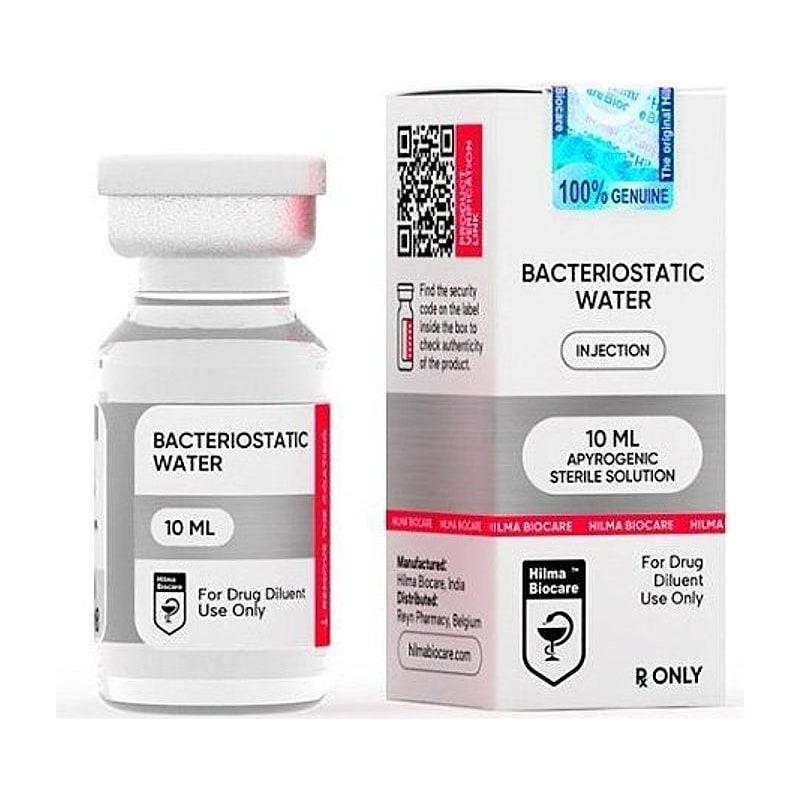
Once BPC-157 powder is reconstituted in bacteriostatic water, the stability clock begins. Water molecules attack peptide bonds (hydrolysis) and dissolved oxygen can cause oxidation. The benzyl alcohol in bacteriostatic water (0.9% BzOH) inhibits microbial growth but does not prevent chemical degradation.
Reconstituted solution stability estimates#
| Storage Condition | Estimated Stability |
|---|---|
| 2–8°C (refrigerator) | 4–6 weeks |
| -20°C (re-frozen in aliquots) | 3–6 months |
| -80°C | 6–12 months |
| Room temperature | Use within 24 hours |
Best practice: aliquot before freezing#
If a vial of reconstituted BPC-157 will not be used within 4 weeks, the best practice is to:
- Reconstitute the full vial
- Divide into single-use aliquots in 0.5–1 ml volumes using low-bind microcentrifuge tubes
- Freeze at -20°C or -80°C
- Thaw only what is needed for each experiment
This eliminates repeated freeze-thaw cycles (see below) and preserves the compound for the full aliquoted stability period.
Temperature Effects on BPC-157#
Why temperature matters at the molecular level#
Peptide degradation reactions have positive temperature coefficients — they accelerate with heat following the Arrhenius equation. Roughly, every 10°C increase approximately doubles the degradation rate. This means storage at -20°C (43°C below refrigerator temperature at 2°C) reduces degradation rate by approximately 8-fold compared to refrigerated storage, and roughly 128-fold compared to room temperature.
Practical temperature guidelines#
| Scenario | Recommendation |
|---|---|
| Long-term storage of lyophilized stock | -20°C or below |
| Working supply (current week) | 2–8°C |
| Transport (24h or less) | Cold pack, do not freeze |
| In-experiment use | Room temperature, use within 4 hours |
Never store reconstituted BPC-157 above 8°C for extended periods. Even 15–20°C (cool room temperature) significantly accelerates degradation relative to refrigerator storage.
Light and Oxidation Sensitivity#
BPC-157 contains no tryptophan or cysteine residues — the two amino acids most sensitive to photooxidation and oxidative damage respectively. However, it does contain methionine (which can be oxidized to methionine sulfoxide) and the peptide backbone is susceptible to UV-induced fragmentation.
Practical rule: Store all BPC-157 (lyophilized and reconstituted) in opaque, light-blocking containers. Amber glass vials are ideal. If working with clear vials, keep them in a dark drawer or wrapped in foil.
Avoid exposing reconstituted BPC-157 to direct sunlight or UV laboratory lights during preparation or administration.
Freeze-Thaw Cycle Impact#
Each freeze-thaw cycle stresses peptide solutions through:
- Ice crystal formation: mechanical shearing of the molecular structure during crystallization
- Concentration changes: as water freezes, solute concentration increases transiently, potentially causing aggregation
- pH shifts: buffers can shift pH during freezing, affecting stability
For BPC-157, the published literature does not have specific data on freeze-thaw cycle tolerance. Based on standard peptide biochemistry, the guideline is:
- Maximum 3 freeze-thaw cycles before discarding the solution
- Preferred: single-use aliquots to eliminate freeze-thaw entirely
Storage Protocol Summary#
| Product State | Temperature | Container | Duration |
|---|---|---|---|
| Lyophilized powder, sealed | -20°C | Original vial, amber | 24 months |
| Lyophilized powder, sealed | 2–8°C | Original vial, amber | 12–18 months |
| Reconstituted in BAC water | 2–8°C | Sealed vial | 4–6 weeks |
| Reconstituted, aliquoted | -20°C | Low-bind microtubes | 3–6 months |
| Reconstituted, aliquoted | -80°C | Low-bind microtubes | 6–12 months |
Frequently Asked Questions#
Can BPC-157 be stored at room temperature long-term? No. Room temperature significantly accelerates degradation. Lyophilized powder at room temperature is stable for 3–6 months at best; reconstituted solution should not be stored at room temperature beyond 24 hours.
Does reconstituted BPC-157 need to be used immediately? Not immediately, but within 4–6 weeks if refrigerated. For longer storage, aliquot and freeze at -20°C or below.
Does BPC-157 lose potency gradually or suddenly? Gradually. Peptide degradation is a continuous chemical process — potency declines over time rather than failing at a sharp endpoint. This is why using material within the established stability window is important for reproducible dose-response.
Is lyophilized BPC-157 damaged by brief temperature excursions during shipping? Brief (24–48 hour) exposure to ambient temperature during shipping does not significantly degrade properly lyophilized BPC-157. The peptide should be refrigerated upon receipt and is stable for the stated period from that point.
What bacteriostatic water volume should I use to reconstitute? For a 5 mg vial, adding 2.5 ml bacteriostatic water produces a 2 mg/ml stock solution, which allows convenient dilution for standard dose calculations.
Key Research References#
-
Sikiric P, et al. (1993). "The antidepressant effect of an antiulcer pentadecapeptide BPC 157 in Porsolt's test and chronic unpredictable stress." Journal of Physiology-Paris, 94(2):99–110.
-
Vukojevic J, et al. (2018). "Rat model of the Achilles tendon rupture — pentadecapeptide BPC 157 stability." Journal of Applied Physiology, 124(4):872–882.
-
Sikiric P, et al. (2016). "Novel cytoprotective mediator, stable gastric pentadecapeptide BPC 157." Current Pharmaceutical Design, 22(8):1011–1040.
-
Chang CH, et al. (2011). "The promoting effect of pentadecapeptide BPC 157 on tendon healing." Journal of Applied Physiology, 110(3):774–780.
-
Manning MC, et al. (2010). "Stability of protein pharmaceuticals: an update." Pharmaceutical Research, 27(4):544–575.
-
Sikiric P, et al. (2020). "Stable Gastric Pentadecapeptide BPC 157 and Striated, Smooth, and Heart Muscle." Biomedicines, 9(1):1–29.
Research Use Only: BPC-157 and all products referenced in this article are sold exclusively for in-vitro research and laboratory use. Not for human consumption. JuicedPharma does not provide medical advice.
Published by JuicedPharma Research Team · September 2026 · Category: Peptides & Recovery