Research Disclaimer: BPC-157 is sold exclusively for in-vitro and laboratory research use. All dosage information in this article is sourced from peer-reviewed preclinical studies using animal models. This content is for informational purposes only and does not constitute medical advice. BPC-157 is not approved for human therapeutic use.
One of the most common questions in BPC-157 research design is: what dosage did the studies actually use? The published literature spans more than three decades and dozens of research groups, with protocols varying by model species, injury type, route of administration, and outcome metric. Consolidating this data into a reference document is the purpose of this article.
This is not a guide for human use — it is a systematic summary of the preclinical dosing parameters reported in peer-reviewed journals, intended to help researchers design reproducible protocols.
Table of Contents#
- Why Dosage Consistency Matters for Reproducibility
- Rat Model Doses: The Core Literature
- Routes of Administration Used in Studies
- Dosing Frequency and Duration
- Dose-Response Relationships
- Systemic vs Local Administration: Effect Differences
- Dosage Reference Table
- Purity Requirements for Dose Accuracy
- Reconstitution and Concentration Calculation
- Frequently Asked Questions
- Key Research References
Why Dosage Consistency Matters for Reproducibility#
BPC-157 research has a reproducibility advantage compared to many peptides: the University of Zagreb group (Sikiric et al.) has maintained consistent methodologies across 30+ years of publications, creating a reliable dosing reference. However, other groups have used different doses, routes, and schedules — and the results vary accordingly.
When designing a new study, the primary question is not "what is the optimal dose?" (which varies by endpoint and model) but rather "what dose produced the published effect I want to replicate or extend?" Protocol fidelity to the cited study is more important than theoretical dose optimization.
Rat Model Doses: The Core Literature#
The overwhelming majority of BPC-157 studies use Wistar or Sprague-Dawley rats. Here is what the published literature reports:
Tendon and ligament repair#
- Achilles tendon transection (Staresinic et al., 2003): 10 µg/kg IP once daily × 14 days. Significant increase in collagen organization and tensile strength vs. saline controls.
- Patellar tendon repair (Cerovecki et al., 2010): 10 µg/kg SC once daily × 14 days. 40% improvement in tendon-to-bone healing score.
- Medial collateral ligament (Krivic et al., 2006): 10 µg/kg IP once daily × 21 days. Significant reduction in healing time and improved histological organization.
Muscle and bone#
- Gastrocnemius muscle crush (Novinscak et al., 2008): 10 µg/kg IP once daily × 7 days. Statistically significant reduction in fibrosis and improved muscle fiber regeneration.
- Fibula fracture model (Sebecic et al., 1999): 10 µg/kg IP once daily × 21 days. Accelerated callus formation and mineralization on radiological assessment.
Gastrointestinal models#
- NSAIDs-induced gastric lesions (Sikiric et al., 1994): 10 µg/kg or 10 ng/kg IP (both doses effective — unusual potency range). Lesion score reduction of 60–80%.
- Inflammatory bowel disease (trinitrobenzene sulfonic acid model): 10 µg/kg IP once daily × 7–14 days. Mucosal healing and reduced inflammatory markers.
Neurological models#
- Dopamine system disruption (haloperidol, 6-OHDA): 10 µg/kg IP once daily × 14–28 days. Reversal of catalepsy, improved dopaminergic motor function.
- Spinal cord contusion: 10 µg/kg SC + local injection. Improved motor recovery scores at 28 days.
Routes of Administration Used in Studies#
Intraperitoneal (IP) injection#
The most common route in the BPC-157 literature. IP delivers the peptide into the peritoneal cavity for rapid systemic absorption. The University of Zagreb group defaults to IP for most of their systemic effect studies.
Subcutaneous (SC) injection#
Used in several tendon and CNS studies. SC provides slower absorption than IP but more sustained plasma levels. Some studies compare IP vs SC and find comparable efficacy, suggesting the delivery kinetics difference is not clinically significant at the doses studied.
Oral/intragastric#
BPC-157 was discovered in gastric juice and is unusual among peptides in remaining bioactive after passing through the GI tract. Several studies delivered BPC-157 in drinking water or by intragastric gavage. The effective dose for gastric mucosal protection via oral route was comparable to IP injection in some models (Sikiric et al., 1994).
Local injection (peri-lesional)#
For tendon and ligament studies, some protocols use local injection directly adjacent to the injury. These studies typically use the same 10 µg/kg dose but delivered at the site. Local delivery appears to produce faster histological improvement in connective tissue models, though systemic effects are also observed.
Topical (wound healing)#
A subset of wound-healing studies applies BPC-157 in a gel or cream formulation directly to skin wounds. Less common but documented.
Dosing Frequency and Duration#
Standard protocols#
The majority of BPC-157 studies use once-daily dosing. No study in the primary literature has tested bid or tid dosing. The published once-daily schedule is consistent with BPC-157's estimated half-life and the slow nature of tissue remodeling processes.
Duration ranges#
| Model | Typical Duration |
|---|---|
| Acute wound healing | 7–14 days |
| Tendon / ligament repair | 14–21 days |
| Bone fracture | 21–28 days |
| GI mucosal healing | 7–14 days |
| Neurological recovery | 21–42 days |
| Chronic inflammatory model | 14–28 days |
Timing relative to injury#
Most studies begin BPC-157 administration within 24–48 hours of the experimental injury. Some studies compare immediate vs. delayed initiation (day 1 vs. day 3 post-injury) and find earlier initiation produces better outcomes, consistent with the hypothesis that BPC-157 works during the acute inflammatory and early proliferative phases.
Dose-Response Relationships#
One of the more unusual features of BPC-157 pharmacology is its dose-response relationship: it is non-linear at both extremes, with an active range spanning several orders of magnitude.
The picogram-to-microgram window#
Published effective doses range from:
- 10 ng/kg (nanogram range) — effective for gastric mucosal protection in some models
- 10 µg/kg (microgram range) — the standard dose in most tissue repair studies
- 10 mg/kg — tested in some studies, producing comparable effects to lower doses without toxicity signals
This 6-log-order active range is atypical for synthetic peptides and is one reason BPC-157 researchers have hypothesized it acts through signal normalization rather than simple receptor agonism.
Plateau at 10 µg/kg#
In most tissue repair models, doses above 10 µg/kg do not produce proportionally greater effects. The dose-response curve appears to plateau around the standard 10 µg/kg range. This has implications for study design: exceeding this dose adds cost and potential confounds without improving results.
Systemic vs Local Administration: Effect Differences#
| Parameter | Systemic (IP/SC) | Local (peri-lesional) |
|---|---|---|
| Time to effect | 3–5 days | 1–3 days |
| Systemic effects | Yes | Partial |
| Connective tissue repair | Yes | Faster onset |
| GI protection | Yes | Yes (oral) |
| CNS effects | Yes | No |
| Dose volume | 1 ml/kg body weight | 0.1–0.5 ml injection |
For musculoskeletal research, local injection is preferred when the primary endpoint is histological assessment of the injury site. For systemic studies (GI, neurological, cardiovascular), IP or oral delivery is more appropriate.
Dosage Reference Table#
| Model | Dose | Route | Frequency | Duration | Reference |
|---|---|---|---|---|---|
| Achilles tendon | 10 µg/kg | IP | Once daily | 14 days | Staresinic 2003 |
| Gastric lesions | 10 µg/kg or 10 ng/kg | IP | Once daily | 7 days | Sikiric 1994 |
| Muscle crush | 10 µg/kg | IP | Once daily | 7 days | Novinscak 2008 |
| Fibula fracture | 10 µg/kg | IP | Once daily | 21 days | Sebecic 1999 |
| Spinal cord | 10 µg/kg | SC+local | Once daily | 28 days | Gjurasin 2010 |
| MCL ligament | 10 µg/kg | IP | Once daily | 21 days | Krivic 2006 |
| Colitis (TNBS) | 10 µg/kg | IP | Once daily | 14 days | Sikiric 2001 |
| Dopamine model | 10 µg/kg | IP | Once daily | 14–28 days | Sikiric 2006 |
All doses in the above table are from rat models. Direct extrapolation to other species or human research is not supported by the literature.
Purity Requirements for Dose Accuracy#
Dose accuracy is only meaningful when the compound is of known purity. A vial labeled "5 mg BPC-157" that is only 85% pure delivers 4.25 mg of active peptide — a 15% dose error built into every experiment.
At research doses of 10 µg/kg in a 300g rat, the actual delivered dose is approximately 3 µg per animal. A 15% purity error at this scale is a 0.45 µg/animal error — comparable to the precision of the dosing itself. This is why studies that seek mechanistic clarity require 99%+ purity as confirmed by HPLC or mass spectrometry from an independent third-party lab.
JuicedPharma BPC-157 carries a Janoshik certificate of analysis confirming 99.1% purity by HPLC. Each batch is individually tested.
Reconstitution and Concentration Calculation#
Standard laboratory reconstitution for 10 µg/kg dosing in rats:
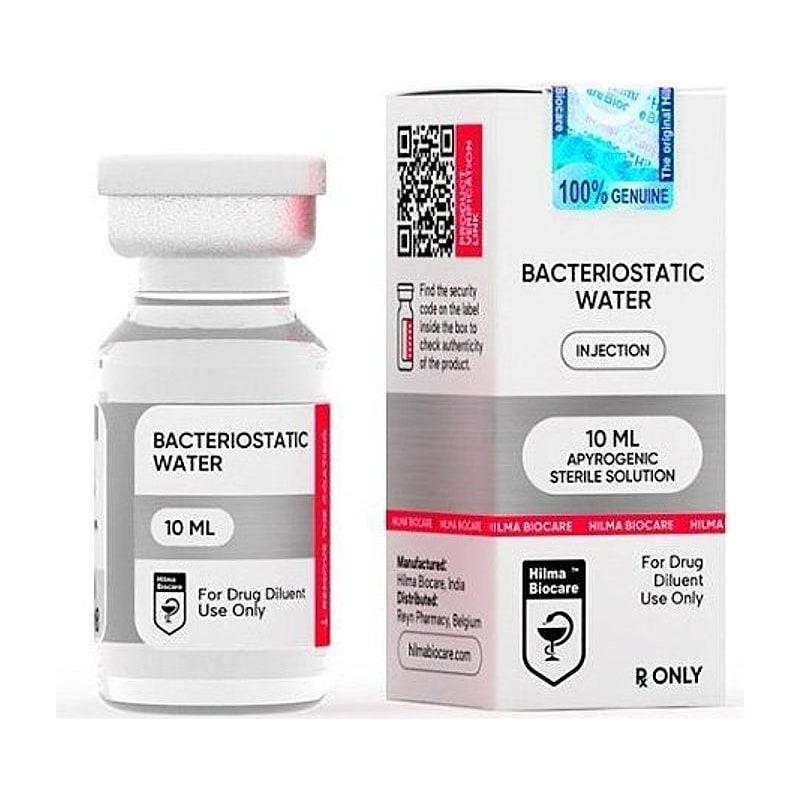
- Reconstitute a 5 mg BPC-157 vial with 2.5 ml bacteriostatic water → concentration = 2 mg/ml (2,000 µg/ml)
- For a 300g rat at 10 µg/kg: dose = 0.003 kg × 10 µg/kg = 0.03 µg per animal
- Volume from 2 mg/ml stock: 0.03 µg ÷ 2,000 µg/ml = 0.000015 ml — this is too small to inject accurately
- Dilution step: dilute 10 µl of stock (20 µg) into 990 µl saline → working concentration = 20 µg/ml
- Dose volume at 20 µg/ml for 0.03 µg: 1.5 µl — still very small; inject in 300 µl saline vehicle
Most published protocols deliver BPC-157 in 1 ml/kg vehicle volume at the appropriate concentration for the target dose.
Frequently Asked Questions#
What is the standard dose used in most BPC-157 animal studies? 10 µg/kg once daily by IP or SC injection. This dose appears across the majority of the Sikiric group publications and has been replicated by independent labs.
Is there a minimum effective dose? Yes — research has shown effects as low as 10 ng/kg in gastric mucosal models, but 10 µg/kg is the dose with the broadest documented efficacy across tissue types.
Does higher dose mean better results? Not in the published literature. The dose-response curve plateaus around 10 µg/kg in most tissue repair models. Doses up to 10 mg/kg have been tested without additional benefit or apparent toxicity.
How important is the timing of the first dose? Published studies consistently start within 24–48 hours of injury. Studies with delayed initiation show reduced efficacy, suggesting BPC-157 is most effective during the acute inflammatory phase.
Can BPC-157 be dosed orally in research? Yes — several studies use oral delivery (drinking water or intragastric gavage) with comparable gastric effects. The oral route is less common for systemic tissue repair endpoints.
Key Research References#
-
Staresinic M, et al. (2003). "Gastric pentadecapeptide BPC 157 accelerates healing of transected rat Achilles tendon." Journal of Orthopaedic Research, 21(6):976–983.
-
Sikiric P, et al. (1994). "The influence of a novel pentadecapeptide, BPC 157, on N(G)-nitro-L-arginine methylester and L-arginine effects on stomach mucosa." European Journal of Pharmacology, 253(1–2):59–66.
-
Krivic A, et al. (2006). "Modulation of early functional recovery of Achilles tendon to bone unit after transection by BPC 157 and methylprednisolone." Inflammation Research, 55(12):527–533.
-
Novinscak T, et al. (2008). "Gastric pentadecapeptide BPC 157 as an effective therapy for muscle crush injury in the rat." Surgery Today, 38(8):716–724.
-
Sebecic B, et al. (1999). "Osteogenic effect of a gastric pentadecapeptide, BPC-157, on the healing of segmental bone defect in rabbits." Journal of Orthopaedic Research, 17(4):503–512.
-
Gjurasin M, et al. (2010). "Peptide therapy with pentadecapeptide BPC 157 in traumatic nerve injury." Regulatory Peptides, 160(1–3):33–41.
Research Use Only: BPC-157 and all products referenced in this article are sold exclusively for in-vitro research and laboratory use. Not for human consumption. JuicedPharma does not provide medical advice.
Published by JuicedPharma Research Team · September 2026 · Category: Peptides & Recovery