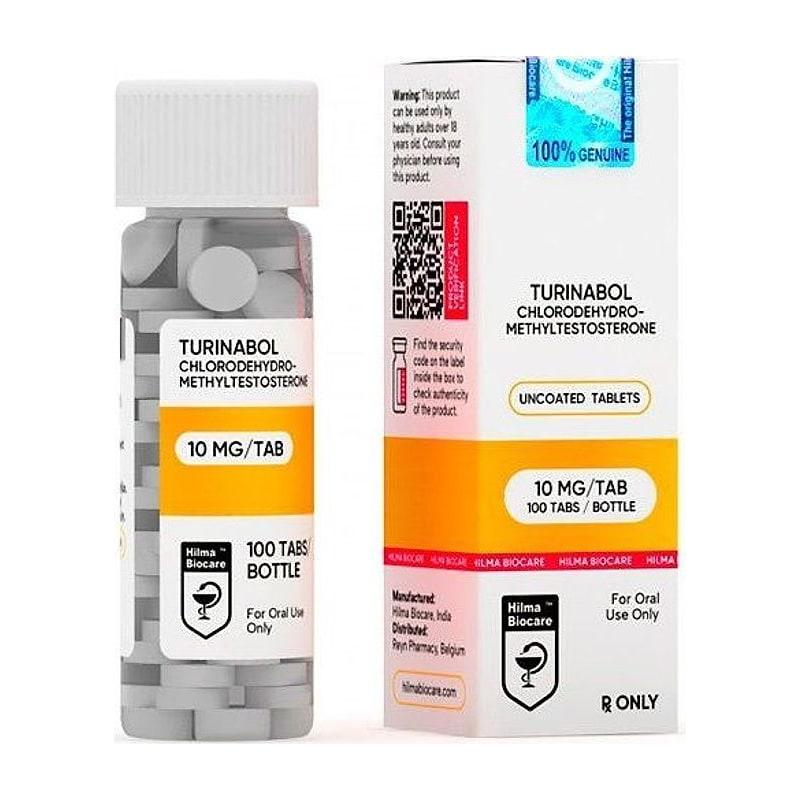
Research Disclaimer: Turinabol is sold exclusively for in-vitro and laboratory research use. Not for unsupervised use. This content does not constitute medical advice.
Turinabol (4-chloro-17α-methyl-testosterone; colloquially "T-bol"; CDMT, chlordehydromethyltestosterone) was developed in 1961 by Jenapharm (East Germany) and became the centerpiece of the state-sponsored doping program (Staatsplan Thema 14.25) that supplied East German Olympic athletes from 1974 to 1989. Its pharmacological design — adding a 4-chloro substituent to methandrostenolone (dianabol) — eliminates aromatization and reduces androgenicity while retaining anabolic activity. The East German program preferred it over other androgens due to its undetectability under 1970s–80s doping tests and moderate side effect profile. Turinabol remains a pharmacologically interesting research compound for studying the structural requirements for androgen aromatizability and AR selectivity.
Table of Contents#
- Structure: Methandrostenolone + 4-Chloro
- How the 4-Chloro Group Blocks Aromatization
- Pharmacokinetics and the CDMT Detection Story
- AR Binding and Selectivity Profile
- East German State Doping Research Context
- Hepatotoxicity: Milder Than Dianabol?
- Research Protocols
- Key References
Structure: Methandrostenolone + 4-Chloro#
Methandrostenolone (dianabol) scaffold:
- Δ1,2 double bond (between C1 and C2) in ring A
- C17α-methyl (oral bioavailability)
- Non-5α-reduced (retains Δ4-3-ketone) → would normally aromatize
Turinabol modification: 4-chloro substitution:
- Chlorine atom added at C4 position (on ring A, adjacent to the ketone at C3)
- C4 chloro → blocks the aromatase enzymatic mechanism (see next section)
- Combined with Δ1,2: creates 1,4-chloro-diene structure with distinctive spectral signature
Effect of modification on structure-activity:
- Keeps anabolic activity (AR binding largely preserved)
- Eliminates estradiol production (no aromatization)
- Reduces androgenicity (A:A ratio: ~6:1 by most assays, vs. methandrostenolone ~8:1)
- Combined Δ1,2 + 4-Cl → more planar ring A → different AR helix-12 conformation than methandrostenolone
How the 4-Chloro Group Blocks Aromatization#
Aromatase mechanism requiring C4 hydrogen:
The CYP19A1 (aromatase) enzyme aromatizes ring A through 3 sequential hydroxylation steps:
- C19 methyl hydroxylation (→ C19-OH → C19-aldehyde)
- C2β hydroxylation
- Oxidative removal of C19 aldehyde → ring A aromatization requires loss of the C1 and C2 hydrogens
How C4-Cl blocks this:
- Aromatase's final step requires a C4 hydrogen (or equivalent carbon) for the enolization/aromatization reaction geometry
- C4-Cl replaces the H → aromatase cannot complete the ring A aromatization cascade
- Result: turinabol is a structural aromatase SUBSTRATE BLOCKER — the enzyme can initiate binding but cannot complete the hydroxylation sequence
Research tool value: Turinabol can be used to study aromatase substrate binding vs. catalytic activity — it binds aromatase but is not converted to an estrogenic product, making it a partial inhibitor of the reaction at substrate level.
Pharmacokinetics and the CDMT Detection Story#
Basic PK:
| Parameter | Value |
|---|---|
| Oral bioavailability | ~70–80% (C17α-methyl) |
| t½ | ~16h (longer than dianabol ~3–6h due to Δ1,2 protection) |
| Tmax | ~2–4h |
| Protein binding | Moderate; some SHBG binding |
| Metabolism | Hepatic; CYP3A4; multiple metabolites |
The detection story — WADA 2004:
- East German athletes used turinabol from 1974 onward; it was undetectable with 1970s–80s urinary immunoassay/GC-MS targeting standard AAS metabolites
- In 2004, WADA laboratories developed new GC-MS/MS methods targeting long-term metabolites of CDMT (particularly glucuronide and sulfate conjugates)
- Stored urine samples from 2000 Sydney Olympics were retested → numerous East German and other athletes testing positive
- Key long-term metabolite: 4-chloro-17β-hydroxy-androsta-1,4-dien-3-one (CDMT alcohol) — detectable up to 3–4 weeks after last dose
- Newer antidoping methods detect CDMT metabolites out to ~7–8 weeks
AR Binding and Selectivity Profile#
AR affinity:
- Turinabol RBA: ~30–40% of testosterone in receptor binding assays
- Moderate affinity; lower than stanozolol, much lower than DHT derivatives
A:A ratio:
- Hershberger: ~6:1 (low selectivity by steroid standards; higher than testosterone 1:1)
- Non-aromatizing → no estrogen-driven water retention
- Weak progestogenic activity (low, not clinically significant)
Comparison with methandrostenolone:
| Property | Methandrostenolone (dianabol) | Turinabol |
|---|---|---|
| 4-chloro | No | Yes |
| Aromatization | Yes (→17α-methylestradiol) | None |
| A:A ratio | ~8:1 | ~6:1 |
| Water retention | High (E2-mediated) | Minimal |
| t½ (oral) | ~3–6h | ~16h |
| SHBG binding | Moderate | Moderate |
East German State Doping Research Context#
Staatsplan Thema 14.25 (1974–1989):
- State-sponsored systematic doping program; Jenapharm the primary supplier
- ~10,000 athletes administered CDMT (primarily female athletes who showed greater relative lean mass gains)
- Dose used: typically 5–15 mg/day (much lower than therapeutic androgenic doses)
- Rationale: CDMT's weak androgenicity → less virilization in female athletes than testosterone
- Monitoring: program included blood work and regular medical monitoring (documented in Stasi archives released post-1989)
Scientific legacy:
- The program — reprehensible in ethical context — inadvertently generated a large, if poorly documented, dataset on low-dose CDMT effects in high-performance athletes
- Key finding: lean mass gains at doses as low as 5 mg/day without significant virilization (relevant to modern SARM comparisons)
- The Stasi archives (partially released) are a historical source for CDMT pharmacology research
Hepatotoxicity: Milder Than Dianabol?#
Comparative profile:
- Turinabol is generally considered less hepatotoxic than methandrostenolone at equivalent doses
- Mechanism: same C17α-methyl → BSEP inhibition + CYP reactive metabolites, but different metabolite profile
- 4-Cl group: may reduce arene oxide formation (a reactive hepatotoxic intermediate) vs. unsubstituted ring A
Clinical observation (from East German program records):
- Athletes using 5–15 mg/day CDMT over years → ALT elevations modest and typically transient
- Higher doses (>50 mg/day) → more significant liver enzyme elevation
Research conclusion: Turinabol is still hepatotoxic (all C17α-methylated androgens are); the degree appears somewhat milder than methandrostenolone at equivalent systemic doses, but this has not been rigorously quantified in controlled head-to-head studies.
Research Protocols#
Aromatase substrate competition assay#
| Parameter | Specification |
|---|---|
| Enzyme | Recombinant CYP19A1 (human aromatase, 10 nM) |
| Substrate | ¹⁴C-androstenedione 100 nM (aromatase substrate → measures ³H₂O release as aromatization indicator) |
| Competitor | Turinabol 0.1–100 µM, letrozole 0.1–100 nM (positive control), vehicle |
| Readout | ³H₂O release (scintillation counting); IC50 calculation by 4-parameter curve fitting |
| Interpretation | Turinabol IC50 for aromatase competition (substrate-level vs. active-site mechanism) |
Key References#
-
Franke WW & Berendonk B. (1997). "Hormonal doping and androgenization of athletes: a secret program of the German Democratic Republic." Clinical Chemistry, 43(7):1262–1279.
-
Müller M, et al. (2004). "Identification of urinary metabolites of chlorodehydromethyltestosterone." Rapid Communications in Mass Spectrometry, 18(8):956–962.
-
Donike M. (2004). "Doping control and analysis." In: Endocrine Methods in Doping Research, pp. 221–248.
Research Use Only: Turinabol is sold exclusively for in-vitro research and laboratory use. Not for unsupervised use. JuicedPharma does not provide medical advice.
Published by JuicedPharma Research Team · September 2026 · Category: Research Protocols & Science