Research Disclaimer: Testosterone esters are sold exclusively for in-vitro and laboratory research use. Not for unsupervised use. This content does not constitute medical advice.
Selecting the correct testosterone ester for a research protocol requires understanding how ester chain length determines half-life, absorption rate, and dosing interval. This reference guide compiles pharmacokinetic data for all major testosterone esters used in research and clinical medicine, with guidance on ester selection criteria.
Table of Contents#
- Ester Half-Life: The Chemistry
- Complete Ester Comparison Table
- PK Profiles After Single Injection
- Ester Selection for Research Protocols
- Rodent vs. Human PK: Critical Differences
- Storage and Formulation Stability
- Key References
Ester Half-Life: The Chemistry#
All injectable testosterone esters work via the same mechanism:
- Testosterone is esterified at the 17β-OH position — an ester bond formed between testosterone's hydroxyl group and a fatty acid
- After IM injection in oil vehicle → depot forms → slow release from oil depot into interstitial fluid
- Plasma and tissue esterases hydrolyze the ester bond → free testosterone released → biologically active
What determines t½?
- Ester chain length: longer carbon chain = greater lipophilicity = slower ester hydrolysis = longer t½
- Oil vehicle viscosity: more viscous oil (e.g., castor oil for undecanoate) slows depot release
- Branching (e.g., isocaproate, cypionate's cyclopentyl ring): slight modification of release rate vs. straight chain
The relationship is approximately linear: each additional carbon in the ester chain adds roughly 1–2 days to the effective t½ in humans.
Complete Ester Comparison Table#
| Ester | Formal name | Carbons | MW added | % Free T | t½ (human) | t½ (rat) | Injection interval | Primary vehicle |
|---|---|---|---|---|---|---|---|---|
| Testosterone base | — | 0 | 0 | 100% | ~0.5–1h (IM) | Minutes | Daily | Water suspension or oil |
| Testosterone suspension | — | 0 | 0 | 100% | ~1–2 days | Hours | Daily | Aqueous |
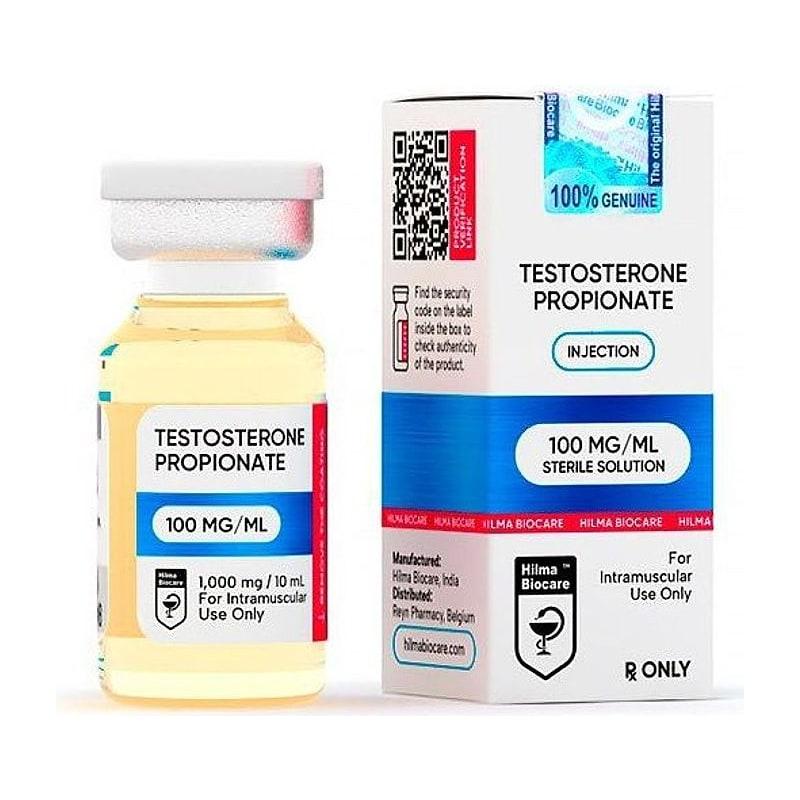
| Testosterone propionate | Propionate | 3 | 56 Da | 80% | 1–3 days | 0.5–1 day | Every 1–3 days | Sesame oil |
| Testosterone phenylpropionate | Phenylpropionate | ~5 (phenyl) | 130 Da | 66% | 3–5 days | 1–2 days | Every 3–4 days | Oil (blend) |
| Testosterone isocaproate | Isocaproate | 5 (branched) | 98 Da | 72% | 5–7 days | 2–3 days | Every 4–5 days | Oil (blend) |
| Testosterone enanthate | Heptanoate | 7 | 114 Da | 72% | 4.5 days | 1–2 days | Weekly | Sesame/MCT oil |
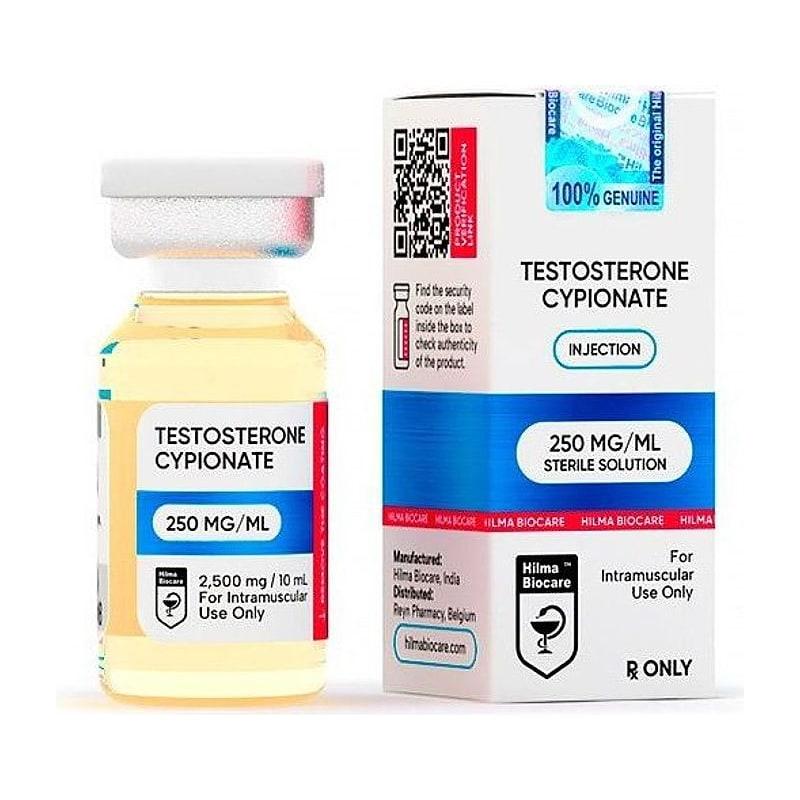
| Testosterone cypionate | Cyclopentylpropionate | 8 (ring) | 130 Da | 70% | 5–8 days | 2–3 days | Weekly | Cottonseed/sesame |
| Testosterone decanoate | Decanoate | 10 | 142 Da | 62% | 12–15 days | 5–7 days | Every 10–14 days | Oil (blend) |
| Testosterone undecanoate | Undecanoate | 11 | 156 Da | 63% | 33 days | — | Every 10–14 weeks | Castor oil |
| Testosterone buciclate | Buciclate | — | — | — | ~90 days | — | Quarterly/longer | Aqueous microcrystalline |
| Testosterone microspheres (PLGA) | — | — | — | ~100% | 60–90 days | — | Quarterly | Biodegradable polymer |
Note: t½ values are effective half-lives (incorporating both depot release and plasma clearance). Individual variation can be substantial (±30–50%).
PK Profiles After Single Injection#
Testosterone propionate (100 mg IM)#
| Time | Expected testosterone (ng/dL) |
|---|---|
| 0h (pre-injection) | Baseline (~300–400 in intact males) |
| 12h | ~800–1000 |
| 24h | ~1000–1200 (Cmax) |
| 48h | ~700–900 |
| 72h | ~400–600 |
| Day 5 | ~200–400 |
| Day 7 | Near baseline |
Testosterone enanthate (200 mg IM)#
| Time | Expected testosterone (ng/dL) |
|---|---|
| 0h | Baseline |
| 24h | ~800–1200 (rising) |
| 48–72h | ~1500–2500 (Cmax) |
| Day 5 | ~1000–1500 |
| Day 7 | ~700–1000 |
| Day 10 | ~500–800 |
| Day 14 | ~350–500 |
| Day 21 | Near baseline |
Testosterone undecanoate (1000 mg IM, castor oil)#
| Time | Expected testosterone (ng/dL) |
|---|---|
| 0h | Baseline |
| Day 3–5 | Rising |
| Day 7–10 | ~700–900 (Cmax) |
| Week 4 | ~500–700 |
| Week 8 | ~350–500 |
| Week 10 | ~250–400 (trough) |
| Week 12 | ~200–350 (trough before next injection) |
Ester Selection for Research Protocols#
By study duration#
| Study duration | Recommended ester | Rationale |
|---|---|---|
| Single acute exposure | Testosterone propionate (single injection) | Defined peak and rapid washout |
| Short-term (1–2 weeks) | Testosterone propionate (daily/EOD) | Short t½ allows dose adjustment; minimal accumulation |
| Medium-term (4–8 weeks) | Testosterone enanthate or cypionate (weekly) | Predictable PK, manageable injection frequency |
| Long-term (>8 weeks) | Testosterone enanthate/cypionate (weekly) or undecanoate (q10–14 weeks) | Stable levels; undecanoate minimizes injections for welfare |
| Washout required after treatment | Testosterone propionate | Fastest return to baseline |
By research endpoint#
| Research endpoint | Recommended ester | Rationale |
|---|---|---|
| Hershberger assay (OECD TG 441) | Testosterone propionate | Required reference compound |
| Androgen receptor nuclear dynamics (acute) | Testosterone propionate (single injection) | Defined timing window |
| Chronic body composition | Testosterone enanthate or cypionate | Stable levels without frequent injections |
| TRT pharmacokinetic modeling | Testosterone enanthate or cypionate | Matches clinical practice |
| Stable androgen background with minimal stress | Testosterone undecanoate (primates) | Infrequent injections |
| Long-term cardiometabolic effects | Testosterone enanthate/cypionate | Well-characterized clinical comparator |
Testosterone Enanthate, €37 · 99.2% purity
Rodent vs. Human PK: Critical Differences#
Extrapolating testosterone PK from rodent studies to humans requires understanding key species differences:
| Parameter | Human | Rat | Mouse |
|---|---|---|---|
| Endogenous T production | 5–7 mg/day | ~0.5–1 mg/day (scaled) | ~0.05–0.1 mg/day |
| Testosterone clearance rate | ~1 L/day | ~25 mL/day (scaled) | ~5 mL/day (scaled) |
| Metabolic rate per body weight | 1× | ~7× | ~10× |
| Testosterone propionate t½ | 1–3 days | 0.5–1 day | <12h |
| Testosterone enanthate t½ | 4.5 days | ~1–2 days | ~1 day |
| Practical implication | Weekly injection | Every 3 days (TE) | Every 2 days (TE) |
For rodent studies:
- Multiply human injection interval by ~0.2–0.3 to maintain equivalent steady-state exposure
- Example: weekly TE in humans → every 2–3 days in rats → every 2 days in mice
- Always include PK validation cohort if precise testosterone levels are critical
Testosterone Propionate, €28 · 99.1% purity
Storage and Formulation Stability#
Stability by ester length (general guidance)#
| Ester | Room temperature stability (sealed vial) | Refrigerated stability | Light sensitivity |
|---|---|---|---|
| Propionate | 12–18 months | 24+ months | Moderate (amber vial recommended) |
| Enanthate | 18–24 months | 36+ months | Moderate |
| Cypionate | 18–24 months | 36+ months | Moderate |
| Undecanoate (castor oil) | 36 months | Not required (high viscosity) | Moderate |
| Decanoate | 18–24 months | 36+ months | Moderate |
All injectable testosterone esters should be stored in amber glass vials away from direct light. Do not freeze — oil vehicles can separate or precipitate at low temperatures.
Key References#
-
Bhasin S, et al. (2001). "Testosterone dose-response relationships in healthy young men." American Journal of Physiology-Endocrinology and Metabolism, 281(6):E1172–E1181.
-
Nieschlag E & Behre HM. (2004). Testosterone: Action, Deficiency, Substitution. Cambridge University Press.
-
Schubert M, et al. (2004). "Pharmacokinetics of testosterone undecanoate injections in hypogonadal men." European Journal of Endocrinology, 151(4):453–460.
-
Mooradian AD, et al. (1987). "Biological actions of androgens." Endocrine Reviews, 8(1):1–28.
Research Use Only: All testosterone esters listed are sold exclusively for in-vitro research and laboratory use. Not for unsupervised use. JuicedPharma does not provide medical advice.
Published by JuicedPharma Research Team · September 2026 · Category: Research Protocols & Science