Research Disclaimer: Sustanon 250 and its component testosterone esters are sold exclusively for in-vitro and laboratory research use. Not for unsupervised use. This content does not constitute medical advice.
Sustanon 250 is a multi-ester testosterone formulation originally developed by Organon (now Aspen Pharma) for use in testosterone replacement therapy. It combines four testosterone esters — propionate, phenylpropionate, isocaproate, and decanoate — in a single 250 mg/mL injection. The pharmacokinetic rationale is to achieve both a rapid onset (from the short-acting propionate fraction) and prolonged duration (from the long-acting decanoate fraction), reducing injection frequency while maintaining stable testosterone levels.
Table of Contents#
- Four-Ester Composition
- Pharmacokinetic Rationale
- Composite PK Profile
- Vehicle and Formulation
- Research Applications
- Comparison to Single-Ester Preparations
- Research Protocols
- Key References
Four-Ester Composition#
Each 1 mL of Sustanon 250 contains:
| Ester | Dose per mL | Ester carbon chain | Approximate t½ | Role in blend |
|---|---|---|---|---|
| Testosterone propionate | 30 mg | 3C | 1–3 days | Rapid onset fraction |
| Testosterone phenylpropionate | 60 mg | ~5C (phenyl) | 3–5 days | Early/intermediate |
| Testosterone isocaproate | 60 mg | 5C (branched) | 5–7 days | Intermediate duration |
| Testosterone decanoate | 100 mg | 10C | 12–15 days | Long-duration fraction |
| Total | 250 mg |
Free testosterone equivalents#
After ester hydrolysis, the free testosterone yield per 250 mg Sustanon:
- Propionate: 30 mg × 0.80 = ~24 mg testosterone
- Phenylpropionate: 60 mg × 0.66 = ~40 mg testosterone
- Isocaproate: 60 mg × 0.72 = ~43 mg testosterone
- Decanoate: 100 mg × 0.62 = ~62 mg testosterone
- Total free testosterone: ~169 mg per 250 mg injection
Pharmacokinetic Rationale#
The pharmacokinetic design problem#
Single-ester testosterone formulations require a tradeoff:
- Short esters (propionate): rapid onset, but require frequent injections (every 1–3 days)
- Long esters (decanoate, undecanoate): infrequent injections, but slow onset (days to reach Cmax)
Sustanon's solution: combine esters of different chain lengths in one injection so:
- Propionate fraction → released and peaks within 24–48h → provides initial testosterone rise
- Phenylpropionate + isocaproate → released over days 2–7 → bridges the gap
- Decanoate fraction → released slowly over 10–14+ days → extends duration
Does the pharmacokinetic rationale hold?#
In theory: yes. In practice, the clinical evidence shows:
- Rapid initial peak is observed (from propionate fraction)
- Duration of elevated testosterone is extended vs. propionate alone
- BUT: studies comparing Sustanon 250 (q3 weeks) vs. testosterone enanthate (weekly) in TRT have found that Sustanon produces greater intra-interval variability due to the multi-peak PK profile
- Modern TRT increasingly uses single esters (enanthate/cypionate) with more predictable PK over Sustanon
Composite PK Profile#
After a single 250 mg IM injection (human data)#
| Phase | Timeframe | Driver ester(s) |
|---|---|---|
| Initial rapid rise | 0–48h | Propionate fraction |
| First peak (Cmax1) | ~24–48h | Propionate |
| Intermediate plateau | Days 3–7 | Phenylpropionate + isocaproate |
| Second peak (Cmax2) | ~5–7 days | Isocaproate/decanoate rising |
| Prolonged decline | Days 7–21 | Decanoate fraction |
| Return to baseline | ~21–28 days | After decanoate clearance |
Cmax range: 800–1500 ng/dL (lower per-mg peak than equivalent pure enanthate injection due to slower release from decanoate fraction and smaller total rapid-release dose)
Vehicle and Formulation#
Original Organon/Aspen Sustanon 250 formulation#
- Vehicle: arachis (peanut) oil
- Preservative: benzyl alcohol (1–2%)
- Important: peanut oil allergy consideration (relevant for clinical research; not applicable to in vitro work)
Research-grade Sustanon preparations#
Research-grade multi-ester testosterone blends typically use:
- Sesame oil (more neutral vehicle)
- MCT oil (medium-chain triglycerides, good solubility for all four esters)
- Benzyl benzoate (10–20%) as co-solvent for higher concentrations
- Benzyl alcohol (2%) as bacteriostat
Preparation note for higher concentrations#
The four esters vary in oil solubility. Decanoate (most lipophilic) has the best solubility. Propionate (least lipophilic of the four) can precipitate at high concentrations in pure MCT oil — warm the solution gently if crystallization occurs.
Research Applications#
Where Sustanon has research utility#
-
Mimicking once-monthly TRT pharmacokinetics: Sustanon given every 3–4 weeks (clinical protocol) produces the variable, biphasic testosterone profile that some TRT patients experience — useful for studying how peak-trough variation affects outcomes
-
Multi-peak PK modeling: Sustanon's composite PK creates a natural "stepped" input function — useful for pharmacokinetic modeling validation
-
Historical comparability: Many TRT studies from the 1980s–2000s used Sustanon. Researchers replicating those studies, or meta-analyzing outcomes across Sustanon and single-ester studies, need to understand Sustanon PK
-
Convenience in longer protocols: For chronic androgen studies in primates or larger animals where injection frequency matters, Sustanon q3 weeks provides prolonged exposure from a single injection — acceptable if PK variability is not the primary variable of interest
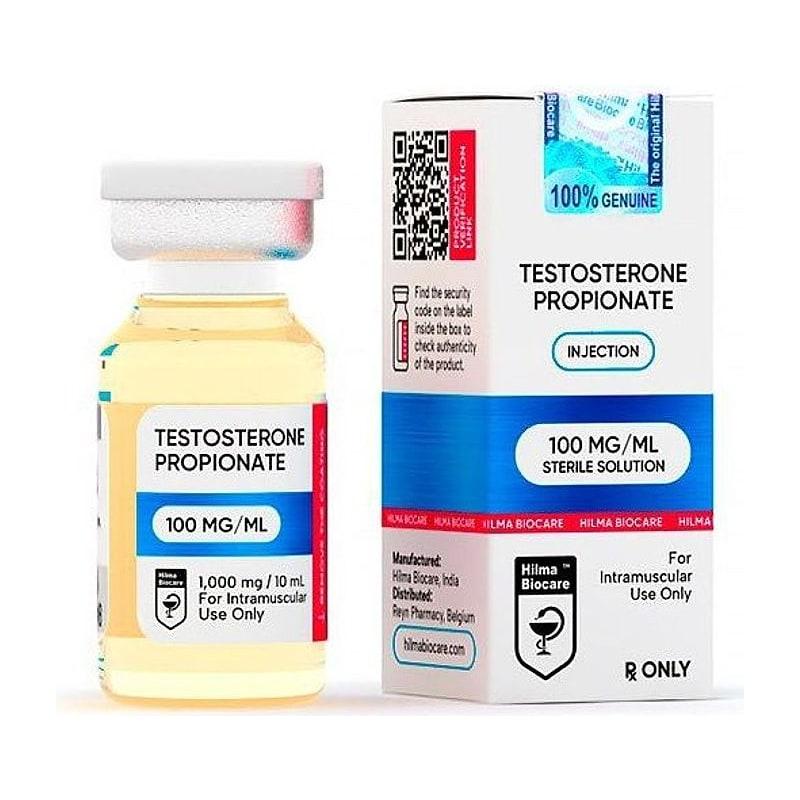
Testosterone Propionate, €28 · 99.1% purity
Comparison to Single-Ester Preparations#
| Feature | Sustanon 250 | Testosterone Enanthate | Testosterone Propionate |
|---|---|---|---|
| Esters | 4 esters | 1 ester | 1 ester |
| Onset | Rapid (propionate fraction) | Moderate | Rapid |
| Duration | 21–28 days | 14–21 days | 5–7 days |
| Peak-trough variability | High (biphasic) | Moderate | High (frequent injections needed) |
| Injection frequency | Every 2–3 weeks | Weekly | Every 1–3 days |
| Pharmacokinetic predictability | Lower (multi-peak) | Higher | Higher |
| Research protocol control | Less (complex PK) | More (simple PK) | More (defined peak/washout) |
For most research applications: single-ester testosterone is preferred over Sustanon because:
- Simpler pharmacokinetics → easier to model and interpret
- More reproducible between injection lots
- Fewer unknowns (ester ratio consistency in blends must be verified)
Sustanon is valuable specifically when studying its unique biphasic PK or replicating historical studies that used it.
Research Protocols#
Biphasic PK characterization study#
| Parameter | Specification |
|---|---|
| Subject | Castrated adult male rats |
| Compound | Sustanon 250 equivalent (proportional ester blend) |
| Dose | 0.5 mg/kg free testosterone equivalent |
| Route | IM injection (quadriceps) |
| Blood sampling | Pre-injection; 6h, 12h, 24h, 48h, 72h, Day 5, Day 7, Day 10, Day 14, Day 21 |
| Endpoints | Total testosterone by LC-MS/MS, individual ester plasma concentrations |
| Analysis | Non-compartmental PK analysis, deconvolution of individual ester contributions |
Chronic androgen exposure study (Sustanon q3-week dosing)#
| Parameter | Specification |
|---|---|
| Model | Castrated adult male rats |
| Dose | Sustanon 250 at 5 mg/kg (equivalent to TE 5 mg/kg) |
| Injection interval | Every 21 days |
| Duration | 12 weeks |
| Endpoints | Body composition (DEXA), muscle weight, bone density, serum testosterone (trough at day 21), LH, FSH |
Key References#
-
Handelsman DJ, et al. (1990). "Pharmacokinetics and pharmacodynamics of testosterone pellets in man." Journal of Clinical Endocrinology & Metabolism, 71(1):216–222.
-
Schulte-Beerbuhl M & Nieschlag E. (1980). "Comparison of testosterone, dihydrotestosterone, luteinizing hormone, and follicle-stimulating hormone in serum after injection of testosterone enanthate or testosterone cypionate." Fertility and Sterility, 33(2):201–203.
-
Behre HM, et al. (1999). "Comparison of testosterone, dihydrotestosterone, luteinizing hormone, and follicle-stimulating hormone in serum after injection of Sustanon or Testosterone Enanthate." European Journal of Endocrinology, 140(5):414–419.
Research Use Only: Sustanon 250 is sold exclusively for in-vitro research and laboratory use. Not for unsupervised use. JuicedPharma does not provide medical advice.
Published by JuicedPharma Research Team · September 2026 · Category: Research Protocols & Science