Research Disclaimer: All compounds described are sold exclusively for in-vitro and laboratory research use. Not for unsupervised use. This content does not constitute medical advice.
Testosterone is produced as a single molecule (17β-hydroxy-4-androsten-3-one; MW 288.4 Da), but research preparations are esterified at the 17β-hydroxyl position to extend its half-life and control release kinetics. The ester is cleaved by plasma and tissue esterases after injection, liberating free testosterone. Ester selection determines the pharmacokinetic profile — peak concentration, half-life, trough levels, and injection frequency — which are critical variables in any androgen research protocol.
Ester Chemistry: How Esters Extend Half-Life#
The principle:
- Free testosterone: highly lipophilic (log P ≈ 3.3) but rapidly metabolized → t½ ≈ 10 minutes IV
- Esterification at C17-OH: adds a fatty acid chain → increased lipophilicity → depot retention in oil vehicle
- After injection: ester distributes into lipid depot → slowly released → plasma esterases cleave ester → free testosterone liberated
- Longer ester carbon chain → more lipophilic → slower release → longer half-life
Molecular masses:
- Testosterone base: 288.4 Da
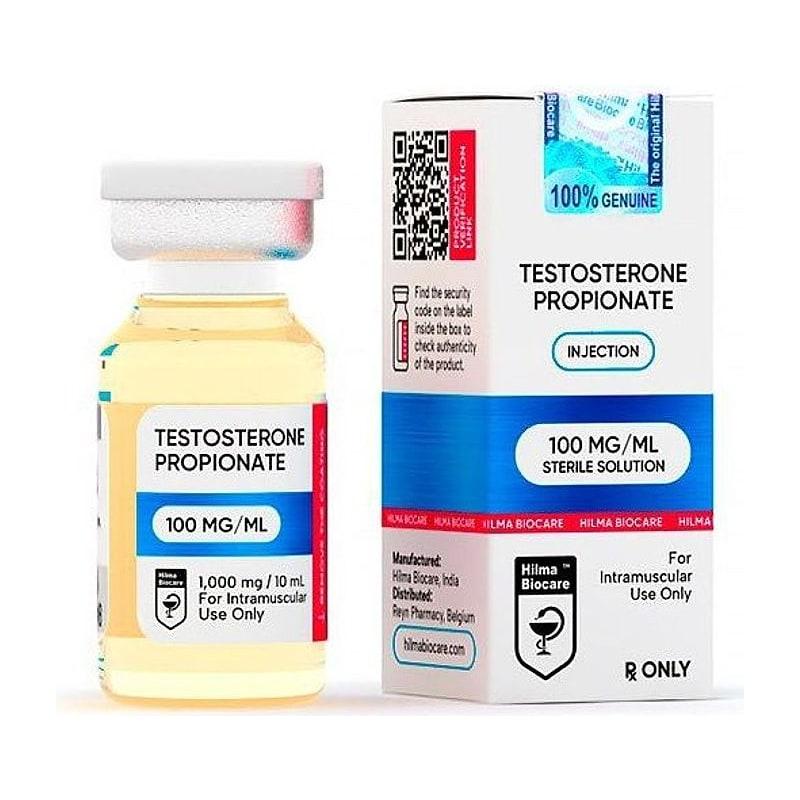
- TP (propionate, C3): 344.5 Da → 83.7% free testosterone by mass
- TE (enanthate, C7): 400.6 Da → 72.0% free testosterone by mass
- TC (cypionate, C8): 412.6 Da → 69.9% free testosterone by mass
- TU (undecanoate, C11): 456.7 Da → 63.2% free testosterone by mass
Pharmacokinetic Comparison#
| Ester | t½ | Tmax (single dose) | Steady state | Injection frequency | Peak-to-trough |
|---|---|---|---|---|---|
| Propionate | 1.5–2 days | 24–48h | ~1 week | Daily or every other day (EOD) | High (EOD dosing) |
| Enanthate | 4–5 days | 3–5 days | ~3 weeks | Weekly | Moderate |
| Cypionate | 5–6 days | 4–7 days | ~3–4 weeks | Weekly to every 10 days | Similar to enanthate |
| Undecanoate | 20–34 days (castor oil) | 7–21 days | ~3 months | Monthly | Low (very stable) |
Sustanon 250 (multi-ester blend):
- Contains: TP (30 mg) + testosterone phenylpropionate (60 mg) + testosterone isocaproate (60 mg) + testosterone decanoate (100 mg)
- Early peak from propionate; sustained release from longer esters
- Complex PK: not ideal for mechanistic research (multiple superimposed profiles); better for chronic suppression models
Choosing the Right Ester for Research#
Short-term/acute PK studies:
- Testosterone Propionate: fast peak, fast clearance → suitable for 1–7 day pharmacokinetic characterization, HPTA suppression response time studies
- Drawback: frequent injection (daily or EOD) necessary for stable levels in chronic models
Standard anabolic/endocrine research (4–16 weeks):
- Testosterone Enanthate: weekly injection achieves near-stable plasma levels after 3–4 weeks; well-validated PK model in rats
- Most published rodent anabolic research uses TE at 3–10 mg/kg/week
Chronic suppression/long-term studies:
- Testosterone Undecanoate: monthly injection; minimal stress on animals from injection frequency; most stable plasma levels
- Castor oil vehicle: more viscous than sesame oil → may cause injection site reactions in rodents; consider vehicle control
When peak-to-trough ratio matters:
- High ratio (propionate): appropriate for studies specifically investigating the effect of androgen fluctuation
- Low ratio (undecanoate): appropriate for studies requiring stable steady-state androgen levels without PK noise
Aromatization Rates by Ester#
All testosterone esters aromatize to estradiol at the same rate per unit of free testosterone — the ester itself doesn't affect aromatase activity. However, esters with higher peak concentrations (propionate; supraphysiological dosing) may produce higher peak E2 due to concentration-dependent aromatization.
For aromatization research: All esters are equivalent when dose is expressed as testosterone-equivalent (accounting for ester mass). Use HPLC or RIA to measure both testosterone and E2 at standardized time points post-injection.
Vehicle Considerations#
| Vehicle | Typical esters | Properties |
|---|---|---|
| Sesame oil | TE, TP, TC | Most common; low injection site reaction; well-tolerated |
| Castor oil | TU (Nebido) | Higher viscosity; TU is preferentially formulated in castor oil |
| MCT oil (medium chain triglycerides) | Any | Faster absorption than sesame; lower viscosity; more expensive |
| Cottonseed oil | TC (Depo-Testosterone) | Traditional US pharmaceutical standard for TC |
Research note: Vehicle choice affects release kinetics slightly — MCT oil releases faster than sesame oil. Ensure vehicle controls use the matching vehicle to avoid confounding injection-site effects.
Testosterone Enanthate, €37 · 99.2% puritySummary Table#
| Ester | Best for | Injection frequency | Peak stability | Research evidence |
|---|---|---|---|---|
| Propionate | Acute PK studies; short protocols | Daily/EOD | Low (fluctuating) | Good in short studies |
| Enanthate | Standard 8–12 week protocols | Weekly | Moderate | Most published rodent data |
| Cypionate | Alternative to enanthate (longer) | Weekly–10 days | Moderate-high | Equivalent to TE |
| Undecanoate | Long-term suppression; chronic models | Monthly | Highest | Less rodent data; human clinical |
Research Use Only. JuicedPharma does not provide medical advice.
Published by JuicedPharma Research Team · September 2026 · Category: Research Protocols & Science