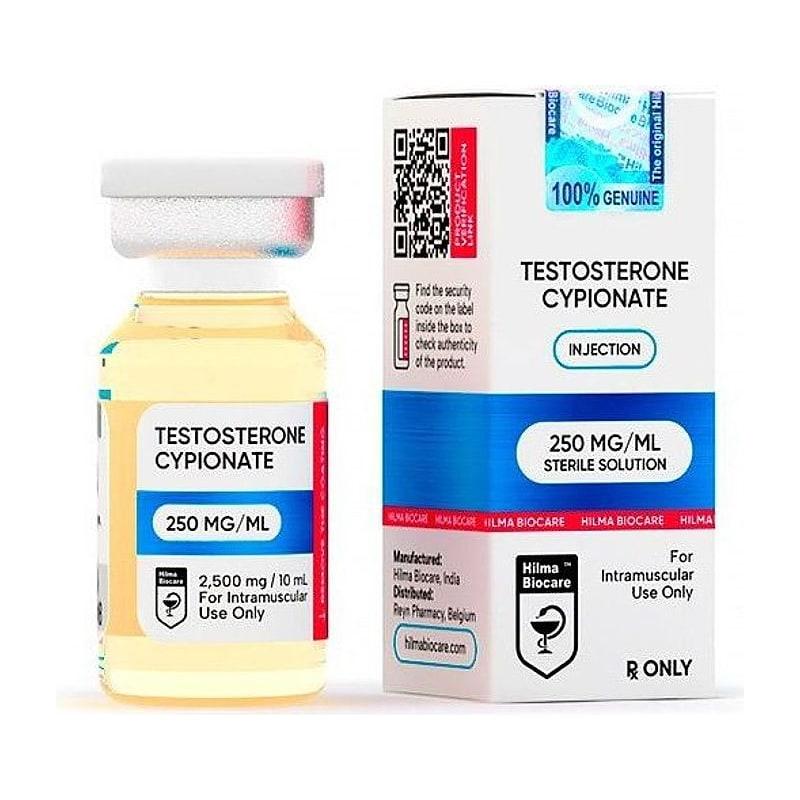
Research Disclaimer: Testosterone esters are sold exclusively for in-vitro and laboratory research use. Not for unsupervised use. This content does not constitute medical advice.
Testosterone cypionate (TC) and testosterone enanthate (TE) are the two most commonly used long-acting injectable testosterone esters in research and clinical medicine. They share the same active molecule (testosterone) but differ in their ester chain, oil vehicle compatibility, and minor pharmacokinetic characteristics. Understanding these differences is important for selecting the appropriate compound for specific research protocols.
Table of Contents#
- Structural Differences: Enanthate vs. Cypionate Ester
- Pharmacokinetic Comparison
- Bioequivalence: Are They Interchangeable?
- Vehicle and Solubility Differences
- Clinical and Research Use Patterns
- Which Form for Which Research?
- Practical Protocol Considerations
- Key References
Structural Differences: Enanthate vs. Cypionate Ester#
Both esters are attached at the 17β-hydroxyl position of testosterone:
| Feature | Testosterone Enanthate (TE) | Testosterone Cypionate (TC) |
|---|---|---|
| Ester chain | 7-carbon heptanoate | 8-carbon cyclopentylpropionate |
| Ester mass | 114 Da | 130 Da |
| % active testosterone | ~72% (by mass) | ~70% (by mass) |
| log P (lipophilicity) | ~3.9 | ~4.2 |
| Solubility in sesame oil | Good | Good |
| Solubility in MCT oil | Good | Good |
| Standard US/EU use | EU predominant | US predominant |
The cyclopentyl ring on the cypionate ester makes it slightly more lipophilic than enanthate — but the practical difference is minimal.
Pharmacokinetic Comparison#
Human pharmacokinetics#
| Parameter | Testosterone Enanthate | Testosterone Cypionate |
|---|---|---|
| Tmax after IM (200 mg) | 24–72h | 24–72h |
| Cmax (200 mg IM) | ~1500–2500 ng/dL | ~1600–2600 ng/dL |
| Effective t½ | ~4.5 days | ~5–8 days |
| Duration of action | ~14–21 days | ~14–21 days |
| Dosing interval (clinical) | 1–2 weeks | 1–2 weeks |
The most commonly cited pharmacokinetic difference: TC is often described as having a slightly longer t½ (~5–8 days) vs. TE (~4.5 days), attributed to the slightly greater lipophilicity of the cypionate ester allowing slower release from the oil depot. However, clinical pharmacokinetic studies show substantial overlap — the difference is not clinically or research-practically significant.
Pharmacokinetic studies (Snyder et al., 2001 and others): After identical 200 mg IM doses:
- Maximum testosterone levels: statistically similar between TC and TE
- Time to Cmax: similar (1–3 days)
- Area under the curve (AUC): similar over 14 days
- Conclusion: the two esters are clinically and practically bioequivalent at equal doses
Bioequivalence: Are They Interchangeable?#
Short answer: Yes, for research purposes.
The FDA has determined that testosterone cypionate and testosterone enanthate are bioequivalent (same active moiety, comparable pharmacokinetics) — supporting direct dose substitution.
For research protocols:
- Studies designed with TE can be replicated with TC without expecting different outcomes
- Studies requiring precise pharmacokinetic control should verify compound-specific PK in the model being used (rodents may metabolize esters differently than humans)
- Papers should specify which ester was used for reproducibility
Geographic and historical availability differences:
- Testosterone enanthate (Testoviron): historically more commonly available in Europe, Germany (Schering)
- Testosterone cypionate (Depo-Testosterone): historically US-predominant (Pfizer/Pharmacia)
- Both are now globally available as research compounds
Vehicle and Solubility Differences#
Both TC and TE are typically formulated in oil:
Pharmaceutical preparations:
- Testosterone enanthate (Testoviron): sesame oil + benzyl benzoate + benzyl alcohol (5% benzyl alcohol preservative)
- Testosterone cypionate (Depo-Testosterone): cottonseed oil + benzyl benzoate + benzyl alcohol
Research-grade preparations: Both are available dissolved in various oils (sesame oil most common) or in benzyl benzoate/benzyl alcohol vehicle (longer solubility).
Solubility note: At room temperature (20°C), both are highly soluble in sesame oil at concentrations up to 200 mg/mL. Cypionate has slightly better solubility at higher concentrations due to slightly greater lipophilicity — relevant only when preparing very concentrated formulations.
Benzyl alcohol/benzyl benzoate: Many injectable testosterone formulations use benzyl benzoate (5–10%) as co-solvent and benzyl alcohol (0.9–2%) as bacteriostatic agent. For in vitro work using pharmaceutical preparations, these excipients can confound results — use research-grade pure testosterone ester in appropriate vehicle for cell culture.
Clinical and Research Use Patterns#
TRT clinical use#
| Market | Preferred ester | Reason |
|---|---|---|
| United States | Cypionate | Historical availability (Depo-Testosterone standard) |
| Europe | Enanthate | Historical availability (Testoviron standard) |
| Both markets | Propionate (short-acting) | When rapid onset needed |
| US/EU | Undecanoate (Aveed/Nebido) | Quarterly IM depot injection |
Research use#
Research publications from the 1970s–1990s (the formative era of androgen receptor research) often used TE or TC interchangeably based on what was available locally. Modern researchers should be consistent within a study and clearly report which ester was used.
Which Form for Which Research?#
Choose testosterone enanthate when:#
- Replicating European TRT research protocols
- Comparing to Testoviron reference data
- Using established European research pharmacokinetic models
Choose testosterone cypionate when:#
- Replicating US TRT research protocols
- Comparing to Depo-Testosterone reference data
- Slightly longer t½ is desired (e.g., to reduce injection frequency in animal protocols)
Either ester works for:#
- Androgen receptor biology (pure AR agonism; ester cleaved before testosterone reaches AR)
- Anabolic/androgenic assays in castrated rodents
- HPTA suppression studies
- Body composition research
- Satellite cell research
Practical Protocol Considerations#
Injection volume and concentration#
For rodent research, minimize injection volume to reduce stress and local tissue response:
- Target: ≤0.2 mL per injection site for mice; ≤1 mL for rats
- Example: 200 mg/mL concentration in sesame oil → 0.1 mL delivers 20 mg/kg for a 100g rat
SC vs. IM in rodents#
IM injection in rodents (into quadriceps or gluteus) replicates human IM depot absorption. SC injection is often used for convenience but may produce different depot absorption profiles:
- IM: faster absorption peak, shorter depot; some local muscle damage at high volumes
- SC: slower, more prolonged absorption; less local tissue trauma
For comparing results with published data, match the route used in the reference study.
Vehicle preparation#
Research-grade testosterone ester powder:
- Dissolve in benzyl benzoate (20–30% v/v) using warming to 60°C until clear
- Add sesame oil (or MCT oil) to target volume
- Add benzyl alcohol (2% for bacteriostasis)
- Filter through 0.22 µm syringe filter while warm
- Aliquot into sterile vials; store at room temperature (stable 12+ months in sealed vials)
Key References#
-
Snyder PJ, et al. (2000). "Effect of testosterone treatment on body composition and muscle strength in men over 65 years of age." Journal of Clinical Endocrinology & Metabolism, 84(8):2647–2653.
-
Bhasin S, et al. (2001). "Testosterone dose-response relationships in healthy young men." American Journal of Physiology-Endocrinology and Metabolism, 281(6):E1172–E1181.
-
Mooradian AD, et al. (1987). "Biological actions of androgens." Endocrine Reviews, 8(1):1–28.
Research Use Only: Testosterone esters are sold exclusively for in-vitro research and laboratory use. Not for unsupervised use. JuicedPharma does not provide medical advice.
Published by JuicedPharma Research Team · September 2026 · Category: Research Protocols & Science