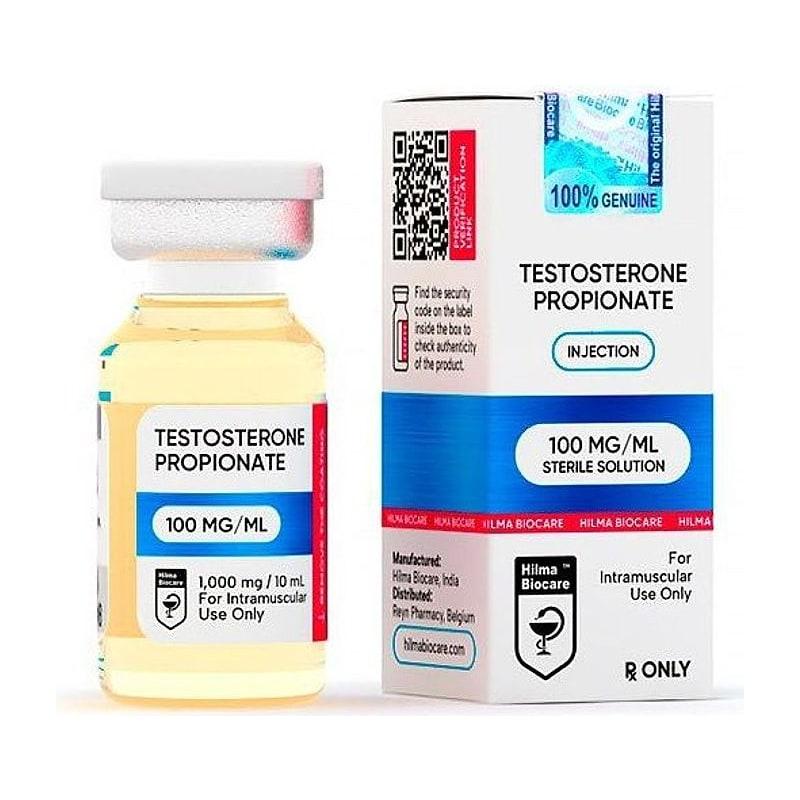
Research Disclaimer: Testosterone propionate is sold exclusively for in-vitro and laboratory research use. Not for unsupervised use. This content does not constitute medical advice.
Testosterone propionate (TP) is a short-acting testosterone ester with a 3-carbon (propionic acid) ester chain. With an effective half-life of approximately 1–3 days after IM injection, it produces a more rapid peak and faster clearance than enanthate or cypionate. This property makes testosterone propionate the preferred compound for research protocols requiring precise timing control, rapid washout, or acute androgen exposure studies.
Table of Contents#
- Propionate Ester: Why Short-Acting?
- Pharmacokinetics vs. Longer Esters
- Research Advantages of Short t½
- The Classic Hershberger Assay
- Rodent Research: Standard Protocols
- When to Use Propionate vs. Enanthate/Cypionate
- Key References
Propionate Ester: Why Short-Acting?#
3-carbon propionic acid ester at the 17β-OH position:
- Very short ester chain → rapidly hydrolyzed by plasma and tissue esterases
- Less lipophilic than enanthate or cypionate → faster release from oil depot after IM injection
- Result: rapid testosterone peak (Cmax within 12–24 hours) and fast decline
| Ester | Carbon chain | t½ (human) | Dosing interval |
|---|---|---|---|
| Propionate | 3C | ~1–3 days | Every 1–3 days |
| Phenylpropionate | ~5C equivalent | ~3–5 days | Every 3–4 days |
| Enanthate | 7C | ~4.5 days | Weekly |
| Cypionate | 8C (cyclopentyl) | ~5–8 days | Weekly |
| Undecanoate (Nebido) | 11C | ~33 days | Quarterly |
Pharmacokinetics vs. Longer Esters#
After 100 mg IM injection#
| Parameter | Testosterone Propionate | Testosterone Enanthate |
|---|---|---|
| Tmax | 12–24h | 24–72h |
| Cmax | ~800–1200 ng/dL | ~1500–2500 ng/dL |
| t½ | ~1–3 days | ~4.5 days |
| Detectable testosterone above baseline | ~5–7 days | ~14–21 days |
| Return to baseline | ~5–7 days | ~14–21 days |
In rodents#
Rodent t½ is shorter (~0.5–1 day for propionate in rats). Standard rat research protocol: every-other-day or daily SC injection to maintain stable androgen exposure.
Research Advantages of Short t½#
1. Rapid washout for pharmacodynamic studies#
When studying the time-course of AR-dependent gene expression changes:
- Testosterone propionate → peak → decline → washout within 5–7 days
- Allows repeated on/off cycles to study reversibility of anabolic effects
- Enanthate/cypionate: 14–21 day washout required between cycles
2. Precise timing in acute studies#
For studying the kinetics of early androgen receptor-mediated events (within the first 24–72 hours of androgen exposure):
- Single TP injection → predictable peak at 12–24h → defined decline
- Tissue can be harvested at specific post-injection timepoints for time-course analysis
3. Separation of early vs. late AR effects#
With TP, a short androgen pulse (single or 3-day injection) can be studied before the chronic adaptations of AR target gene expression are established. This is relevant for studying:
- Immediate AR binding events (receptor phosphorylation, cofactor recruitment)
- First-wave vs. second-wave gene expression targets
- Non-genomic rapid signaling (membrane AR → PI3K → Akt, within minutes)
The Classic Hershberger Assay#
Testosterone propionate is the required reference compound in the Hershberger assay — the international standard for assessing anabolic/androgenic activity of new compounds.
Protocol (OECD TG 441 guideline)#
- Adult male Sprague-Dawley or Wistar rats (castrated ≥7 days before start)
- Treatment: testosterone propionate 0.4 mg/kg/day SC (reference androgen)
- Test compound: co-administered SC
- Duration: 10 days
- Endpoints:
- Androgen-sensitive tissues: levator ani muscle (anabolic endpoint), ventral prostate, seminal vesicles, Cowper's glands (androgenic endpoints)
- Expressed as tissue weights; TP reference establishes expected weights at this dose
Why testosterone propionate specifically? The Hershberger assay uses TP (short-acting) rather than TE because:
- Predictable, rapid absorption without depot accumulation complicating 10-day kinetics
- Daily SC injection maintains consistent androgen exposure during the short 10-day protocol
- TE would still be accumulating from the first injection at day 10 → confounds interpretation
Rodent Research: Standard Protocols#
Daily SC dosing for sustained androgen exposure (rats)#
| Parameter | Specification |
|---|---|
| Model | Castrated adult male SD rats |
| Dose | 0.4 mg/kg/day (Hershberger reference) or 0.1–2 mg/kg/day (dose-response) |
| Vehicle | 0.2 mL sesame oil per injection |
| Duration | 10–28 days depending on endpoint |
| Endpoints | Tissue weights, serum testosterone (trough), muscle histology |
Acute androgen response (timing study)#
| Parameter | Specification |
|---|---|
| Model | Castrated adult male rats |
| TP dose | 1 mg/kg SC (single injection) |
| Tissue harvest | 2h, 6h, 12h, 24h, 48h, 72h post-injection |
| Endpoints | AR nuclear localization, ARE target gene mRNA (RT-PCR), phospho-AR (ChIP), protein synthesis (SUnSET assay) |
When to Use Propionate vs. Enanthate/Cypionate#
Use testosterone propionate when:#
- Running the Hershberger assay (required by OECD TG 441)
- Need rapid washout for crossover or short study designs
- Studying acute (single-dose) androgen effects
- Rodent daily injection protocols (easier to manage propionate daily vs. weekly enanthate with erratic rodent PK)
- Dose-titration studies requiring frequent dose adjustments
Use testosterone enanthate/cypionate when:#
- Mimicking human TRT pharmacokinetics (steady-state modeling)
- Long-term studies (8+ weeks) where injection frequency is a welfare concern
- Chronic body composition, bone density, or cardiovascular studies
- Human pharmacokinetic modeling
Key References#
-
Hershberger LG, et al. (1953). "Myotrophic activity of 19-nortestosterone and other steroids determined by modified levator ani muscle method." Proceedings of the Society for Experimental Biology and Medicine, 83(1):175–180.
-
OECD Test Guideline 441. (2009). "Hershberger Bioassay in Rats." Organisation for Economic Co-operation and Development.
-
Bhasin S, et al. (2001). "Testosterone dose-response relationships in healthy young men." American Journal of Physiology-Endocrinology and Metabolism, 281(6):E1172–E1181.
Research Use Only: Testosterone propionate is sold exclusively for in-vitro research and laboratory use. Not for unsupervised use. JuicedPharma does not provide medical advice.
Published by JuicedPharma Research Team · September 2026 · Category: Research Protocols & Science