Research Disclaimer: TB-500 is sold exclusively for in-vitro and laboratory research use. All dosage information is derived from peer-reviewed preclinical studies using animal models. This content does not constitute medical advice and should not be used for human dosing decisions.
TB-500 (Thymosin Beta-4) is dosed fundamentally differently from most other research peptides. Where BPC-157 is used at microgram-per-kilogram amounts (10 µg/kg), TB-500 research protocols use milligram-total doses — orders of magnitude higher on a per-animal basis. This reflects the stoichiometric nature of its G-actin sequestration mechanism: you need enough peptide to meaningfully shift the cellular G-actin pool.
This article compiles published TB-500 dosage data from preclinical models, explains the reconstitution math, and provides practical guidance for structuring research protocols.
Table of Contents#
- Why TB-500 Uses Higher Doses Than BPC-157
- Published Rat Model Doses
- Dosing Schedules: Frequency and Duration
- Routes of Administration
- Reconstitution Protocol
- Concentration Calculations
- Dose Reference Table
- Purity and Dose Accuracy
- Frequently Asked Questions
- Key Research References
Why TB-500 Uses Higher Doses Than BPC-157#
The dose difference between TB-500 and BPC-157 is not arbitrary — it reflects mechanistic differences.
BPC-157 acts through signaling cascades — it activates FAK-paxillin, triggers VEGF expression, modulates nitric oxide synthesis. Signaling events are amplified: one molecule of BPC-157 can activate one FAK molecule, which phosphorylates multiple downstream targets, which activate multiple downstream effectors. This amplification means very small quantities produce measurable biological effects.
TB-500 acts through stoichiometric binding — it physically binds G-actin molecules 1:1. The total pool of free G-actin in a cell or tissue is a real number of molecules; shifting the G/F-actin ratio meaningfully requires enough TB-500 to engage a significant fraction of that pool. No signaling amplification occurs at this step.
A typical non-muscle cell contains approximately 50–200 µM total actin, with roughly 50–100 µM free G-actin. At the tissue level, the mass of available G-actin is substantial. This is why effective TB-500 doses in research start in the milligram range per animal, not microgram.
Published Rat Model Doses#
Most TB-500 research uses Wistar or Sprague-Dawley rats (typical body weight 250–400g). Published doses:
Cardiac models#
- Myocardial infarction (ligation model): 150 µg total (single dose, IV) in the Bock-Marquette 2004 Nature study. This is notably low — approximately 0.5 mg/kg for a 300g rat.
- Epicardial progenitor mobilization (Smart 2007): 150 µg/dose SC, administered 3× over 1 week.
- Ischemia-reperfusion: 1–2 mg total per animal, 2–3× per week × 2–4 weeks. Some cardiac studies use lower doses in the 100–200 µg range for acute models.
Wound healing models#
- Skin excision wound: 5 µg applied topically per wound, every 2 days (topical gel formulation). Some studies use 50–500 µg/kg SC.
- Corneal wound: 0.1% Tβ4 eye drop solution (approximately 1 µg per drop), applied 3–4× daily.
Muscle / connective tissue models#
- Muscle crush injury: 2.5 mg total SC, 2× per week × 3 weeks.
- General repair studies: 2–5 mg/kg, 2× per week.
Key observation#
Doses in the TB-500 literature span a wider range than BPC-157 studies because different research groups are studying different tissue systems with different formulations. The cardiac literature uses lower total doses (acute IV delivery); muscle and connective tissue studies use higher doses (chronic SC delivery).
Dosing Schedules: Frequency and Duration#
Unlike BPC-157's once-daily schedule, TB-500 research commonly uses less frequent, higher-dose administration:
| Schedule | Typical Context |
|---|---|
| 2× per week | Muscle and connective tissue models (most common) |
| 3× per week | Cardiac repair models |
| Daily | Rare — only in some wound healing topical studies |
| Single acute dose | Specific mechanistic studies (IV, cardiac) |
Duration#
| Model | Duration |
|---|---|
| Acute cardiac protection | 1–7 days |
| Muscle regeneration | 3–6 weeks |
| Wound healing | 2–4 weeks |
| Chronic fibrosis / repair | 4–8 weeks |
The rationale for less-frequent dosing: TB-500's half-life (estimated 1–2 hours in plasma) is shorter than BPC-157's, but its mechanism (shifting the G-actin pool) has durable downstream effects. Once G-actin levels have been shifted and downstream signaling (ILK, VEGF) is activated, the acute peptide presence is less critical — the cellular consequences persist beyond the plasma half-life.
Routes of Administration#
Subcutaneous (SC) injection#
The most common route for systemic TB-500 research. SC provides slower absorption than IV, creating a sustained plasma level. Most muscle and connective tissue studies use SC.
Intravenous (IV) injection#
Used in acute cardiac studies where rapid peak plasma concentration is desired. The original Bock-Marquette 2004 cardiac protection study used IV dosing. IV is not practical for chronic dosing protocols.
Intraperitoneal (IP) injection#
Less common than for BPC-157, but used in some systemic repair studies. Absorption is rapid (similar to IV kinetics in rodents).
Topical application#
For wound healing and corneal studies. TB-500 in aqueous gel or eye drop formulation is applied directly to the wound surface. Effective concentrations at the wound site can be achieved with much lower total doses than systemic routes — but systemic effects are minimal.
Intramyocardial injection#
Used in some cardiac regeneration studies where direct delivery to infarcted myocardium is the goal. Specialized surgical approach; not a routine research route.
Reconstitution Protocol#
TB-500 is supplied as lyophilized powder. Reconstitution follows the same principles as BPC-157, with one important difference: TB-500 doses are much larger in absolute terms, so higher volumes of reconstituted solution may be used.
Materials needed#
- TB-500 vial (5 mg lyophilized)
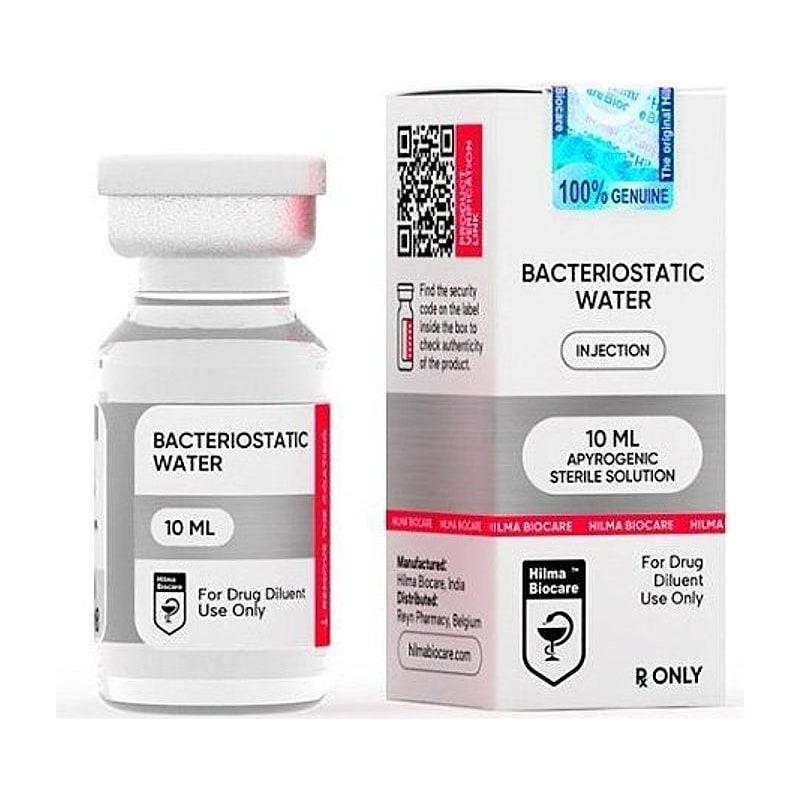
- Bacteriostatic water (BAC water, 0.9% benzyl alcohol)
- 1–3 ml syringe with 23–25G needle
- 70% IPA swabs
- Labels
Protocol#
- Swab both vial tops with 70% IPA; allow 15 seconds to dry
- Draw desired volume of BAC water (see calculations below)
- Insert needle through TB-500 vial septum; direct stream down the glass wall — not onto the powder directly
- Swirl gently until dissolved (30–60 seconds) — do not shake
- Inspect: solution should be clear and colorless
- Label with: compound, concentration, reconstitution date
- Refrigerate at 2–8°C; use within 4–6 weeks
Concentration Calculations#
Reconstitution volumes for a 5mg TB-500 vial#
| BAC Water Added | Resulting Concentration |
|---|---|
| 1 ml | 5 mg/ml = 5,000 µg/ml |
| 2 ml | 2.5 mg/ml = 2,500 µg/ml |
| 2.5 ml | 2 mg/ml = 2,000 µg/ml |
| 5 ml | 1 mg/ml = 1,000 µg/ml |
Recommended: 2.5 ml → 2 mg/ml. This concentration allows practical injection volumes for common research doses.
Dose calculation example#
Protocol: 2.5 mg TB-500, SC, 2× per week, in a 300g rat
- Dose: 2.5 mg = 2,500 µg
- Stock concentration: 2 mg/ml = 2,000 µg/ml
- Injection volume: 2,500 µg ÷ 2,000 µg/ml = 1.25 ml per injection
1.25 ml SC in a 300g rat is a high-end but acceptable injection volume. If you prefer a smaller volume, use a higher-concentration stock:
- Add 1 ml BAC water → 5 mg/ml stock
- 2.5 mg dose: 2,500 µg ÷ 5,000 µg/ml = 0.5 ml per injection — more comfortable for the animal
Per-kg calculation example#
Protocol: 5 mg/kg, 2× per week, 300g rat
- Animal weight: 0.300 kg
- Dose: 5 mg/kg × 0.300 kg = 1.5 mg per injection
- At 2 mg/ml stock: 1.5 mg ÷ 2 mg/ml = 0.75 ml
Dose Reference Table#
| Model | Total Dose | Route | Frequency | Duration | Reference |
|---|---|---|---|---|---|
| MI (cardiac) | 150 µg | IV | Single (acute) | Day 0 | Bock-Marquette 2004 |
| Epicardial progenitors | 150 µg | SC | 3× week | 1 week | Smart 2007 |
| Muscle crush | 2.5 mg/animal | SC | 2× week | 3 weeks | Various |
| Wound healing (skin) | 5 µg (topical) | Topical | Every 2 days | 2–4 weeks | Philp 2004 |
| Systemic repair (general) | 2–5 mg/kg | SC | 2× week | 3–6 weeks | Multiple |
| Corneal healing | ~1 µg/drop (0.1% solution) | Topical | 3–4×/day | 1–2 weeks | Sosne 2007 |
All doses from rat or mouse models. Species-specific adjustments may apply.
Purity and Dose Accuracy#
At the milligram doses used for TB-500, purity errors translate directly to dose errors:
- A 5mg vial at 95% purity contains 4.75 mg active TB-500 — a 250 µg deficit
- At 2.5 mg dose per animal: this is a 5% underdose per injection
- Over a 3-week (6-dose) protocol: cumulative underdose of 1.5 mg per animal
For research where dose precision is required, this deficit introduces systematic error into all dose-response comparisons. JuicedPharma TB-500 at 99.0% purity by Janoshik HPLC reduces this error to below 0.5% per dose.
Frequently Asked Questions#
Why are TB-500 doses so much higher than BPC-157? BPC-157 works through signaling amplification (one molecule triggers a cascade). TB-500 works through direct stoichiometric G-actin binding — you need enough peptide to shift the cellular actin pool, which requires higher absolute amounts.
Can I use saline instead of bacteriostatic water? For single-use reconstitution (use the full vial in one session), saline is acceptable. For multi-use vials, bacteriostatic water is required to inhibit microbial growth between uses.
What is the maximum SC injection volume for rats? Typically 2–3 ml maximum per subcutaneous site in a rat (300–400g). Multiple sites can be used if volumes exceed this.
Is there a dose where TB-500 stops working? The G-actin sequestration mechanism does have a saturation point — once the available G-actin pool is occupied, additional TB-500 has no incremental G-actin-binding effect. In practice, doses above 5 mg/kg do not show proportional additional benefit in most models.
How do I know the reconstituted solution is still good? Check for clarity and colorlessness before each use. Store at 2–8°C; use within 4–6 weeks. See our TB-500 storage guide for full protocol.
Key Research References#
-
Bock-Marquette I, et al. (2004). "Thymosin beta4 activates integrin-linked kinase and promotes cardiac cell migration, survival and cardiac repair." Nature, 432(7016):466–472.
-
Smart N, et al. (2007). "Thymosin beta4 induces adult epicardial progenitor mobilization and neovascularization." Nature, 445(7124):177–182.
-
Philp D, et al. (2004). "Thymosin beta 4 and a synthetic tetrapeptide AcSDKP promote endothelial cell adhesion and migration." FASEB Journal, 18(6):760–762.
-
Sosne G, et al. (2007). "Thymosin beta4 promotes corneal wound healing." Experimental Eye Research, 84(1):166–172.
-
Crockford D, et al. (2010). "Effect of thymosin beta-4 on human keratinocyte migration." Wound Repair and Regeneration, 18(1):48–54.
Research Use Only: TB-500 and all products referenced are sold exclusively for in-vitro research and laboratory use. Not for human consumption. JuicedPharma does not provide medical advice.
Published by JuicedPharma Research Team · September 2026 · Category: Research Protocols & Science