Research Disclaimer: TB-500 is sold exclusively for in-vitro and laboratory research use. Storage information presented here is based on published peptide biochemistry and standard laboratory practices. This content does not constitute medical advice.
Peptide stability is a prerequisite for research reproducibility. TB-500 is a 43-amino-acid peptide — longer than BPC-157 and therefore containing more potential sites for chemical degradation. Understanding the stability window of TB-500 in both its lyophilized and reconstituted states protects the quality of your research material and your experimental results.
Table of Contents#
- Why Stability Matters More for Longer Peptides
- Lyophilized TB-500: Shelf Life and Conditions
- Reconstituted TB-500: Stability Window
- Temperature Sensitivity
- Light and Oxidation Sensitivity
- Freeze-Thaw Protocol for Multi-Session Research
- Storage Summary Table
- What Degrades TB-500?
- Frequently Asked Questions
Why Stability Matters More for Longer Peptides#
BPC-157 has 15 amino acids. TB-500 has 43. The practical significance of this difference:
- More peptide bonds: 42 amide bonds vs. 14 in BPC-157. Each bond is a potential hydrolysis site.
- More side chains: more amino acid residues with chemically reactive groups susceptible to oxidation, deamidation, isomerization, and other modifications.
- More synthesis impurities: more coupling steps means more opportunities for truncated sequences and deletion variants in the original production. These impurities degrade at different rates than the intact sequence.
The result: TB-500 is somewhat more susceptible to degradation than BPC-157, particularly under warm or moist conditions. The storage protocols are the same class (lyophilized at -20°C, reconstituted at 2–8°C) but TB-500's stability window should be treated as the more conservative of the two.
Lyophilized TB-500: Shelf Life and Conditions#
Lyophilized (freeze-dried) TB-500 is the gold standard formulation for storage. Water removal halts:
- Hydrolysis: peptide bond cleavage by water molecules
- Microbial growth: no water, no microbes
- Enzymatic degradation: protease activity requires an aqueous environment
Expected shelf life by storage condition#
| Temperature | Container | Light | Expected Stability |
|---|---|---|---|
| -20°C | Sealed original vial | Dark | 24+ months |
| 2–8°C | Sealed original vial | Dark | 12–18 months |
| 15–25°C (room temp) | Sealed | Dark | 3–6 months |
| 15–25°C | Unsealed | Any | Weeks |
Key rules for lyophilized storage#
- Keep sealed until use: the rubber septum is the primary moisture barrier. Do not puncture until ready to reconstitute.
- Store in the dark: UV exposure can photooxidize aromatic residues (TB-500 contains phenylalanine). An opaque container or dark drawer is sufficient.
- Avoid freeze-thaw of the sealed vial: reconstituting → refreezing → re-lyophilizing is not practical. Instead, reconstitute once and aliquot (see below).
- Do not store near strong electromagnetic fields or vibration sources: minor concern for laboratory environments, but avoid placing near centrifuges or strong magnets.
Reconstituted TB-500: Stability Window#
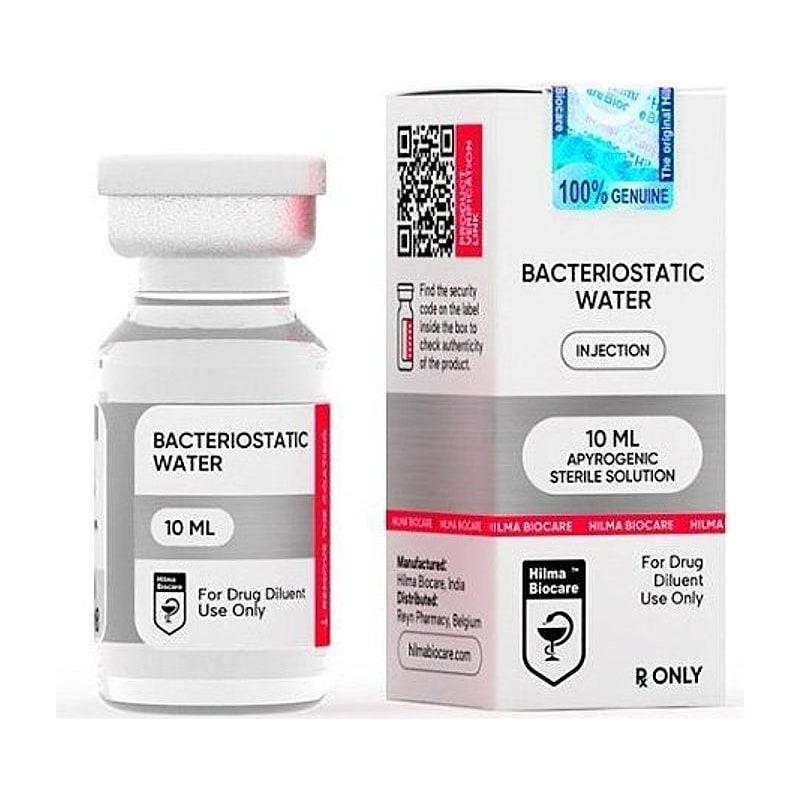
Once reconstituted with bacteriostatic water, TB-500 enters a degradation clock. The aqueous environment reintroduces hydrolysis risk; dissolved oxygen introduces oxidation risk. Benzyl alcohol (0.9% in bacteriostatic water) prevents microbial growth but does not prevent chemical degradation.
Reconstituted stability by storage condition#
| Condition | Estimated Stability |
|---|---|
| 2–8°C (refrigerator) | 4–6 weeks |
| -20°C (frozen, single-use aliquots) | 3–6 months |
| -80°C (frozen, single-use aliquots) | 6–12 months |
| Room temperature (15–25°C) | Use within 24 hours |
| >25°C | Use within a few hours |
Why reconstituted degrades faster#
- The peptide is now dissolved in water → hydrolysis of peptide bonds becomes thermodynamically accessible
- Trace oxygen in the water and headspace → methionine oxidation (TB-500 contains methionine-6 and possibly other oxidation-prone residues)
- Repeated puncture of the vial → atmospheric contamination despite benzyl alcohol
Temperature Sensitivity#
Peptide degradation follows Arrhenius kinetics — degradation rate roughly doubles for every 10°C temperature increase. This means:
| Temperature Comparison | Degradation Rate |
|---|---|
| -20°C vs. 2–8°C | ~5–8× slower at -20°C |
| 2–8°C vs. 25°C | ~5–8× slower at 2–8°C |
| -80°C vs. -20°C | ~4× slower at -80°C |
For critical experiments where dose accuracy matters across a multi-week protocol, -20°C storage of aliquots (not refrigeration) is the appropriate standard.
On-bench stability during experiment#
During a dosing session, reconstituted TB-500 at room temperature is stable for 4–6 hours. Prepare doses at the start of each session and use within this window. Do not pre-prepare doses for later sessions.
Light and Oxidation Sensitivity#
TB-500 contains residues susceptible to photochemical degradation:
- Phenylalanine (Phe): aromatic ring subject to photooxidation under UV (254 nm, lab UV lamps, direct sunlight)
- Methionine (Met): sulfur-containing side chain easily oxidized to methionine sulfoxide (Met-SO)
Methionine oxidation is particularly consequential because Met-6 in the Tβ4 sequence is adjacent to the LKKTETQ actin-binding motif. Oxidation of Met-6 may impair actin binding affinity, reducing the compound's efficacy.
Practical guidance:
- Store in opaque containers (amber glass vials are standard)
- During bench work, keep the vial capped and minimize direct exposure to lab UV (some labs use overhead UV germicidal lamps — turn these off during peptide handling)
- Work quickly during dose preparation — limiting the time the open solution is exposed to air reduces oxidation
Freeze-Thaw Protocol for Multi-Session Research#
If you are running a chronic research protocol (3–6 weeks) and have reconstituted more TB-500 than you can use within 4–6 weeks refrigerated, aliquot and freeze:
Step-by-step aliquoting protocol#
- Reconstitute the full 5 mg vial with bacteriostatic water to your target concentration (e.g., 2 mg/ml with 2.5 ml BAC water)
- Withdraw the full volume using a sterile 3 ml syringe
- Dispense into pre-labeled, low-bind 0.5 ml or 1 ml microcentrifuge tubes — one tube per planned experiment session
- Seal each tube (standard caps — do not use parafilm, which can off-gas)
- Label each tube: "TB-500, 2mg/ml, [date], lot [number], session #N"
- Freeze immediately at -20°C or -80°C (avoid slow cooling — freeze quickly)
Thawing protocol#
- Remove one tube from freezer
- Thaw at 2–8°C (refrigerator) for 30–60 minutes — or at room temperature for 10–15 minutes
- Do not warm-thaw (do not use a 37°C water bath or body heat — this degrades the peptide)
- Gently swirl after thawing to ensure homogeneity
- Use the entire tube within the session — discard any remaining volume
- Never refreeze a thawed aliquot
Why no refreezing#
Each freeze-thaw cycle subjects the peptide solution to:
- Ice crystal formation: mechanical disruption at the molecular level during crystallization
- Concentration changes: as water crystallizes, local solute concentration increases transiently, potentially causing aggregation
- pH shifts: buffers can shift slightly during freezing/thawing
For TB-500 specifically: the ILK-binding domain and the actin-sequestering motif are both in the central helix region. Aggregation during freeze-thaw can impair both binding functions. Single-use aliquots completely eliminate this risk.
Storage Summary Table#
| State | Condition | Temperature | Duration |
|---|---|---|---|
| Lyophilized | Sealed original vial, dark | -20°C | 24+ months |
| Lyophilized | Sealed original vial, dark | 2–8°C | 12–18 months |
| Reconstituted (BAC water) | Sealed vial, dark | 2–8°C | 4–6 weeks |
| Reconstituted (aliquoted) | Low-bind tubes, sealed | -20°C | 3–6 months |
| Reconstituted (aliquoted) | Low-bind tubes, sealed | -80°C | 6–12 months |
| On bench (session) | Open/in use | Room temp | 4–6 hours max |
What Degrades TB-500?#
| Degradation Mode | Trigger | Effect on TB-500 |
|---|---|---|
| Hydrolysis | Water + time | Peptide bond cleavage → fragments |
| Oxidation | O₂, UV, heat | Met-SO, aromatic oxidation → reduced actin binding |
| Aggregation | Freeze-thaw, high concentration | Insoluble aggregates → loss of bioavailable peptide |
| Microbial | Vial contamination (without BAC water) | Protease activity → rapid degradation |
| Deamidation | Time, pH | Asn→Asp conversion in peptide backbone |
| Isomerization | Acidic pH, heat | Asp residue epimerization → structural change |
The most likely degradation modes in practice: oxidation (in reconstituted solutions stored too long), aggregation (from freeze-thaw without aliquoting), and hydrolysis (reconstituted solutions at room temperature).
Frequently Asked Questions#
Can I store reconstituted TB-500 at room temperature for a week? No. Room temperature significantly accelerates degradation. Reconstituted TB-500 at room temperature should be used within 4–6 hours. For longer storage, refrigerate at 2–8°C (up to 6 weeks) or aliquot and freeze (-20°C, up to 6 months).
My TB-500 vial looks slightly yellow after long refrigerated storage. Is it still good? Faint yellow color in reconstituted peptide solutions can be acceptable (trace residual synthesis reagents or very minor oxidation products). However, if the color is pronounced (bright yellow or amber) or if there are visible particles, discard the solution.
What is the difference between bacteriostatic water and sterile water for storage? Bacteriostatic water contains 0.9% benzyl alcohol, which inhibits microbial growth in multi-use vials. Sterile water has no preservative. If you reconstitute with sterile water, treat as single-use — do not store the vial and use it again.
Can I ship my reconstituted TB-500 to another lab site? For short distances (same-day, with cold packs maintaining 2–8°C), reconstituted TB-500 is stable during transport. For shipments longer than 24h or without reliable cold chain, ship the lyophilized powder instead and reconstitute at the destination.
Does the batch number on the vial affect storage recommendations? No. Storage recommendations are based on the compound chemistry, not the batch. However, the batch number on your COA determines how long the material has been in existence — a freshly manufactured batch has more remaining shelf life than a batch manufactured 18 months ago.
Research Use Only: TB-500 and all products referenced are sold exclusively for in-vitro research and laboratory use. Not for human consumption. JuicedPharma does not provide medical advice.
Published by JuicedPharma Research Team · September 2026 · Category: Research Protocols & Science