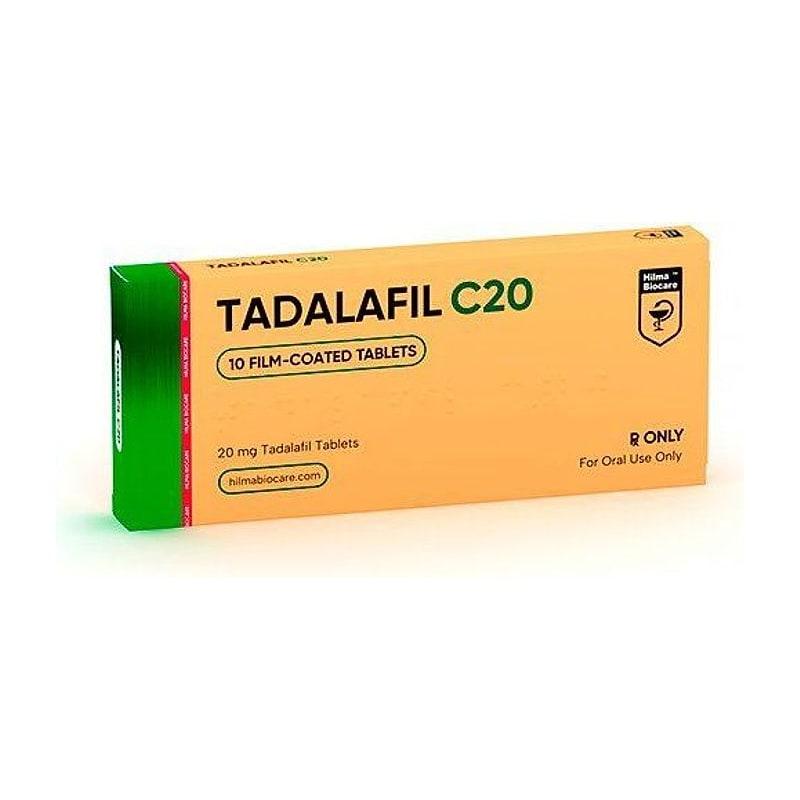
Research Disclaimer: Tadalafil is sold exclusively for in-vitro and laboratory research use. Not for unsupervised use. This content does not constitute medical advice.
Tadalafil (trade name: Cialis; Eli Lilly) is a selective phosphodiesterase type 5 (PDE5) inhibitor that prolongs cGMP signaling in smooth muscle to produce vasodilation. With a half-life of ~17.5 hours — far longer than sildenafil's ~4 hours — tadalafil enables daily dosing and has expanded PDE5 inhibitor applications from acute erectile dysfunction treatment to daily-dosing regimens for erectile dysfunction, pulmonary arterial hypertension (PAH), and benign prostatic hyperplasia (BPH). Its extended PK profile makes it the preferred PDE5 inhibitor for chronic research models.
Table of Contents#
- NO/cGMP/PDE5 Pathway: Foundational Mechanism
- Tadalafil PDE5 Selectivity
- Pharmacokinetics: The Long t½ Advantage
- Research Applications
- Pulmonary Arterial Hypertension (PAH) Research
- BPH Research Models
- Research Protocols
- Key References
NO/cGMP/PDE5 Pathway: Foundational Mechanism#
Step 1: Sexual stimulation → neuronal/endothelial NO release
- Non-adrenergic, non-cholinergic (NANC) neurons in penile tissue → release nitric oxide (NO) synaptically
- Endothelial cells in corpus cavernosum → NO synthase (eNOS) → NO
Step 2: NO → sGC → cGMP
- NO diffuses to corpus cavernosum smooth muscle cells
- Activates soluble guanylyl cyclase (sGC): converts GTP → cyclic GMP (cGMP)
- cGMP → activates protein kinase G (PKG)
- PKG → phosphorylates myosin light chain phosphatase (activates it) + MLCK (inactivates it)
- Net: smooth muscle relaxation → vasodilation → increased blood flow → erection
Step 3: PDE5 degradation of cGMP
- PDE5 (phosphodiesterase type 5) hydrolyzes cGMP → 5'-GMP (inactive)
- This terminates the cGMP signal and returns smooth muscle to contracted state
- PDE5 expression: highest in corpus cavernosum, pulmonary vasculature, platelets, smooth muscle
Tadalafil mechanism: competitive inhibitor of PDE5 → prevents cGMP hydrolysis → prolongs and amplifies cGMP signal → sustained smooth muscle relaxation
Critical point: tadalafil requires endogenous NO release (from sexual stimulation). Without stimulation, there is no cGMP to protect — tadalafil alone does not produce erection.
Tadalafil PDE5 Selectivity#
| PDE subtype | Tadalafil IC50 | Tissue distribution | Consequence of inhibition |
|---|---|---|---|
| PDE5 | ~0.9–5 nM | Corpus cavernosum, pulmonary VSM, platelets | Target effect (ED, PAH, BPH) |
| PDE6 | ~40–100 nM | Retina | Visual disturbance (less than sildenafil) |
| PDE11 | ~37 nM | Testes, skeletal muscle, pituitary | Tadalafil unique: back pain/myalgia |
| PDE1 | ~300 nM | Heart, brain | Minimal at therapeutic doses |
| PDE2,3,4 | >1000 nM | Various | Minimal |
PDE11 binding: tadalafil inhibits PDE11 at lower concentrations than sildenafil (sildenafil PDE11 IC50 ~>1000 nM). This explains tadalafil's unique adverse effect profile — back pain and myalgia (possibly testicular/skeletal muscle PDE11 inhibition). In research, this also means tadalafil cannot be used as a "pure PDE5" tool without considering PDE11 effects.
Pharmacokinetics: The Long t½ Advantage#
| Parameter | Tadalafil | Sildenafil |
|---|---|---|
| Oral bioavailability | ~80% (not affected by food) | ~40% (reduced by high-fat meal) |
| t½ | ~17.5 hours | ~4 hours |
| Tmax | 2–4 hours | 0.5–2 hours |
| Protein binding | ~94% (albumin + α₁-acid glycoprotein) | ~96% |
| Steady-state (daily dosing) | ~5 days | Same (shorter) |
| Metabolism | CYP3A4 → catechol metabolite (inactive) | CYP3A4 + CYP2C9 → active metabolite (N-desmethyl, ~50% potency) |
| Elimination | Feces (61%), urine (36%) | Feces (80%), urine (13%) |
Research advantage of long t½: daily-dosing protocols achieve steady-state cGMP suppression in target tissues — useful for chronic models (BPH, PAH, vascular remodeling). No need for precise pre-procedure dosing timing.
Rodent PK: t½ ~4–6h in rats; daily dosing sufficient for steady-state maintenance.
Research Applications#
1. Erectile dysfunction (ED) research models#
Cavernous nerve stimulation model (gold standard for ED research):
- Anesthetized rat, cavernous nerve surgically exposed, electrical stimulation
- Intracavernous pressure (ICP) response measured via direct pressure transducer
- Tadalafil pre-treatment → augmented ICP response
- Used to test: nerve injury recovery, diabetic ED, aging-related ED
Streptozotocin (STZ) diabetic rat ED model:
- STZ-induced diabetes → endothelial dysfunction → reduced NO/cGMP → ED
- Tadalafil treatment: restores ICP response + improves penile cGMP levels
2. Cardiovascular research#
- Tadalafil → systemic vasodilation → modest BP reduction (~5–8 mmHg systolic in humans)
- Not typically used as antihypertensive (PDE5 primarily in pulmonary/penile vasculature; systemic effect modest)
- Safety note: absolute contraindication with nitrate drugs (additive NO→cGMP → severe hypotension)
Pulmonary Arterial Hypertension (PAH) Research#
Tadalafil is FDA-approved for PAH (Adcirca, 40 mg/day):
- Rationale: pulmonary vascular smooth muscle has high PDE5 expression
- Tadalafil → pulmonary vasodilation → reduced pulmonary vascular resistance → improved right heart function
Rodent PAH models:
- Monocrotaline (MCT) model: MCT injection → pulmonary vascular injury → PAH
- Sugen-hypoxia model: SU5416 (VEGFR inhibitor) + chronic hypoxia → severe PAH
| Parameter | MCT Model |
|---|---|
| Induction | MCT 60 mg/kg SC (single dose) |
| Treatment start | Day 14 (after PAH established) |
| Tadalafil dose | 1 mg/kg/day oral gavage |
| Duration | 14–28 days |
| Endpoints | Right ventricular systolic pressure (RVSP), right ventricle hypertrophy (RV/LV+septum weight ratio = Fulton index), pulmonary vascular morphology (medial wall thickness) |
BPH Research Models#
Tadalafil approved for BPH (5 mg/day):
- PDE5 expression in prostate and bladder smooth muscle
- Tadalafil → prostate/bladder smooth muscle relaxation → reduces bladder outlet obstruction symptoms
- Mechanism distinct from α-blockers (different smooth muscle receptor target)
Rat BPH model (testosterone-induced):
- Adult castrated male rats + testosterone implant → prostate hypertrophy
- Tadalafil 1–5 mg/kg/day × 4 weeks → prostate weight, urodynamics (bladder pressure/flow)
Key References#
-
Corbin JD & Francis SH. (2002). "Pharmacology of phosphodiesterase-5 inhibitors." International Journal of Clinical Practice, 56(6):453–459.
-
Galiè N, et al. (2009). "Tadalafil therapy for pulmonary arterial hypertension." Circulation, 119(22):2894–2903.
-
Gratzke C, et al. (2010). "Anatomy, physiology, and pathophysiology of erectile dysfunction." Journal of Sexual Medicine, 7(1 Pt 2):445–475.
Research Use Only: Tadalafil is sold exclusively for in-vitro research and laboratory use. Not for unsupervised use. JuicedPharma does not provide medical advice.
Published by JuicedPharma Research Team · September 2026 · Category: Research Protocols & Science