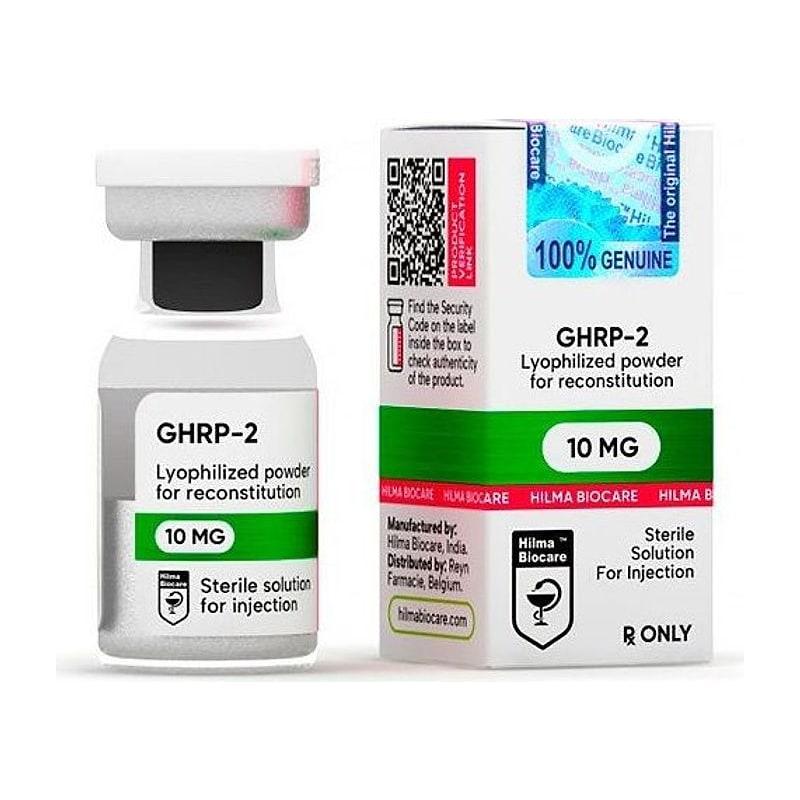
Research Disclaimer: Ipamorelin and GHRP-2 are sold exclusively for in-vitro and laboratory research use. Not approved for human use. This content does not constitute medical advice.
Ipamorelin and GHRP-2 are both synthetic GHS-R1a agonists that stimulate pituitary GH release. They are similar enough that researchers sometimes use them interchangeably — which is a mistake. Their receptor binding profiles, downstream hormonal effects, and research applications differ in ways that matter significantly for experimental design.
This article provides a direct comparison based on published pharmacological and endocrinology research.
Table of Contents#
- Both Are GHS-R1a Agonists — But Not Identical
- GH Release Magnitude
- The Cortisol Problem with GHRP-2
- Prolactin and ACTH Responses
- Appetite and Orexigenic Effects
- Plasma Half-Life Comparison
- Dose-Response Profiles
- Which to Choose: Decision Framework
- Combination Use: When Both Are Appropriate
- Frequently Asked Questions
- Key References
Both Are GHS-R1a Agonists — But Not Identical#
Ipamorelin and GHRP-2 both bind GHS-R1a (the ghrelin receptor) at the pituitary and hypothalamus, producing GH secretion. This shared mechanism makes them functionally similar for basic GH-release studies. The differences emerge from their binding affinities, receptor selectivity, and the downstream signaling pathways they preferentially activate.
Receptor binding affinity comparison (from competition binding assays):
- GHRP-2 has higher binding affinity at GHS-R1a than Ipamorelin (lower Ki)
- This accounts for GHRP-2's higher peak GH magnitude at equivalent molar doses
- Ipamorelin's lower affinity at off-target sites (corticotroph receptors, prolactin pathways) accounts for its superior selectivity
Both are full agonists at GHS-R1a — the pharmacological classification is the same; the off-target pharmacology is not.
GH Release Magnitude#
At equimolar doses, GHRP-2 produces a larger peak GH response than Ipamorelin:
| Dose (SC, rat) | Ipamorelin Peak GH | GHRP-2 Peak GH |
|---|---|---|
| 50 µg/kg | Moderate elevation | High elevation |
| 100 µg/kg | High elevation | Very high elevation |
| 250 µg/kg | Very high elevation | Near-maximal |
Raun et al. (1998) — the definitive selectivity comparison — found GHRP-2 produced approximately 1.5–2× higher peak plasma GH than Ipamorelin at equivalent weight-based doses. This translates to a higher IGF-1 elevation from GHRP-2 in chronic dosing models.
Practical implication: If the research goal is maximum GH pulse amplitude, GHRP-2 outperforms Ipamorelin. If the research goal is GH-selective stimulation without cortisol confounds, Ipamorelin is the appropriate tool.
The Cortisol Problem with GHRP-2#
The most important practical distinction between Ipamorelin and GHRP-2 is cortisol co-release.
GHRP-2 and cortisol#
GHRP-2 stimulates ACTH secretion from the pituitary — independently of GH release, through direct corticotroph activation. ACTH then drives adrenocortical cortisol production. In rats, GHRP-2 at GH-releasing doses produces significant cortisol elevation within 30–60 minutes of injection.
In humans: studies show GHRP-2 elevates plasma cortisol by 50–150% above baseline at doses that also produce robust GH release.
Why cortisol co-release is a research problem#
Cortisol (glucocorticoid) effects include:
- Muscle protein catabolism (anti-anabolic — opposite of GH's anabolic effect)
- Immune suppression
- Lipolysis modulation (different from GH-mediated lipolysis)
- Anti-inflammatory action
- CNS effects (mood, memory, stress signaling)
If your research model is studying GH's effects on muscle protein synthesis, chronic cortisol elevation from GHRP-2 systematically opposes GH's anabolic signal. The net result is a dampened or distorted GH response — you cannot cleanly attribute outcome differences to GH alone.
Ipamorelin and cortisol#
Ipamorelin at equivalent GH-releasing doses produces no statistically significant cortisol elevation (Raun 1998). This was the central finding of the paper introducing Ipamorelin and remains the key reason for choosing it over GHRP-2 in long-term research.
Prolactin and ACTH Responses#
Beyond cortisol, GHRP-2 also produces minor elevations in prolactin and has the ACTH-stimulating effect already described. Ipamorelin's selectivity extends to these as well:
| Hormone | Ipamorelin Response | GHRP-2 Response |
|---|---|---|
| GH | Significant ↑ | Significant ↑ (larger) |
| Cortisol | No significant change | Significant ↑ |
| ACTH | No significant change | Significant ↑ |
| Prolactin | No significant change | Slight ↑ |
| IGF-1 (chronic) | Elevated | Elevated (larger) |
This profile makes Ipamorelin the closest available synthetic analog to pure pituitary GH secretagogue — it mimics the GHRH-ghrelin axis without the HPA axis cross-talk that GHRP-2 produces.
Appetite and Orexigenic Effects#
GHS-R1a in the hypothalamus mediates the hunger-stimulating (orexigenic) effect of ghrelin. GHRPs that engage hypothalamic GHS-R1a alongside pituitary receptors produce appetite stimulation.
| Compound | Orexigenic Effect |
|---|---|
| Ghrelin (endogenous) | Very strong |
| GHRP-6 | Strong |
| GHRP-2 | Moderate |
| Ipamorelin | Minimal |
GHRP-2's moderate appetite stimulation can be a confound in body composition studies: increased food intake contributes independently to changes in lean mass and fat mass, making it difficult to attribute body composition changes purely to GH signaling.
Ipamorelin's minimal orexigenic effect avoids this confound, allowing cleaner interpretation of body composition results in research models.
Plasma Half-Life Comparison#
| Compound | Estimated Plasma t½ |
|---|---|
| Ipamorelin | ~2 hours |
| GHRP-2 | ~20–30 minutes |
Ipamorelin's longer half-life stems from its structural design:
- D-amino acids (D-2-Nal, D-Phe) resist plasma peptidases
- Aib at position 1 is not cleaved by most endopeptidases
- C-terminal amidation prevents exopeptidase cleavage from the C-terminus
GHRP-2's shorter half-life produces a sharper, briefer GH pulse. Ipamorelin's longer half-life extends the GH-releasing signal, potentially producing a broader but lower-amplitude GH pulse.
Research implication: For studies monitoring acute GH pulses at defined time points, GHRP-2's sharp kinetics make sample timing easier. For studies requiring sustained GH elevation, Ipamorelin's extended effect window is advantageous.
Dose-Response Profiles#
Both compounds show dose-dependent GH release up to a plateau:
Ipamorelin#
- Effective range: 50–250 µg/kg SC in rodents
- Plateau: approximately 250 µg/kg (additional dose produces no additional GH)
- EC50 (in vitro, GH secretion): ~1–5 nM
GHRP-2#
- Effective range: 25–200 µg/kg SC in rodents
- Plateau: approximately 200 µg/kg
- EC50 (in vitro): ~0.1–1 nM (higher potency than Ipamorelin at receptor)
GHRP-2's higher receptor potency means effective doses are lower in molar terms. However, since research typically uses weight-based dosing, this difference is expressed as similar mg/kg doses with GHRP-2 producing larger responses.
Which to Choose: Decision Framework#
| Research Question | Recommended Compound |
|---|---|
| GH axis effects in isolation | Ipamorelin |
| Maximum GH pulse amplitude required | GHRP-2 |
| Chronic dosing (>4 weeks) | Ipamorelin (avoids chronic cortisol elevation) |
| Short-term acute GH release study | Either (GHRP-2 for larger signal) |
| Body composition endpoints | Ipamorelin (avoids appetite confound) |
| GH + cortisol co-release study | GHRP-2 (desired effect) |
| Combination with CJC-1295 | Ipamorelin (standard pairing) |
| GI motility study | GHRP-2 or GHRP-6 (stronger gut effects) |
Combination Use: When Both Are Appropriate#
In a small number of protocols, researchers have studied GHRP-2 and Ipamorelin together — using GHRP-2 for maximum acute GH amplitude while Ipamorelin provides a sustained background GH signal. This is niche research design; most protocols use one or the other.
The more common and better-supported combination is Ipamorelin + CJC-1295:
- Ipamorelin provides GHS-R1a activation (clean, no cortisol)
- CJC-1295 provides GHRH receptor activation (amplifies and extends the GH pulse)
- Combined effect: 3–5× larger GH pulse than either alone at equivalent doses
See our Ipamorelin + CJC-1295 stack article for the full combination protocol.
Frequently Asked Questions#
Is GHRP-2 more effective than Ipamorelin? For GH release magnitude: yes. For clean GH-axis research without HPA confounds: no. "More effective" depends entirely on what the research endpoint is.
Can I switch from GHRP-2 to Ipamorelin mid-study? Not without a washout period and a new baseline measurement. The two compounds have different selectivity profiles; mid-study substitution changes the nature of the stimulus, invalidating within-study comparisons.
Does chronic GHRP-2 use cause adrenal fatigue in animal models? Chronic ACTH stimulation can produce adrenal hypertrophy in rodent models. This is a documented side effect of sustained GHRP-2 dosing that does not occur with Ipamorelin. For protocols longer than 4 weeks, Ipamorelin is the appropriate choice.
What about GHRP-6 vs Ipamorelin? GHRP-6 has intermediate selectivity between GHRP-2 and Ipamorelin. It produces more cortisol than Ipamorelin but less than GHRP-2. Its distinctive feature is strong appetite stimulation, making it the GHRP of choice for studies investigating GH's orexigenic axis. See our GHRP-6 article for the full comparison.
Key References#
-
Raun K, et al. (1998). "Ipamorelin, the first selective growth hormone secretagogue." European Journal of Endocrinology, 139(5):552–561.
-
Bowers CY, et al. (1994). "On the in vitro and in vivo activity of a new synthetic hexapeptide that acts on the pituitary to specifically release growth hormone." Endocrinology, 114(5):1537–1545.
-
Arvat E, et al. (1997). "Preliminary evidence that Hexarelin, a synthetic GH-releasing peptide, suppresses endogenous somatostatin release in humans." Journal of Endocrinology Investigation, 20(2):109–112.
-
Kojima M, et al. (1999). "Ghrelin is a growth-hormone-releasing acylated peptide from stomach." Nature, 402(6762):656–660.
-
Ghigo E, et al. (1999). "Growth hormone-releasing peptides." European Journal of Endocrinology, 136(5):445–460.
Research Use Only: Ipamorelin, GHRP-2, and all products referenced are sold exclusively for in-vitro research and laboratory use. Not for human consumption. JuicedPharma does not provide medical advice.
Published by JuicedPharma Research Team · September 2026 · Category: Growth Hormone