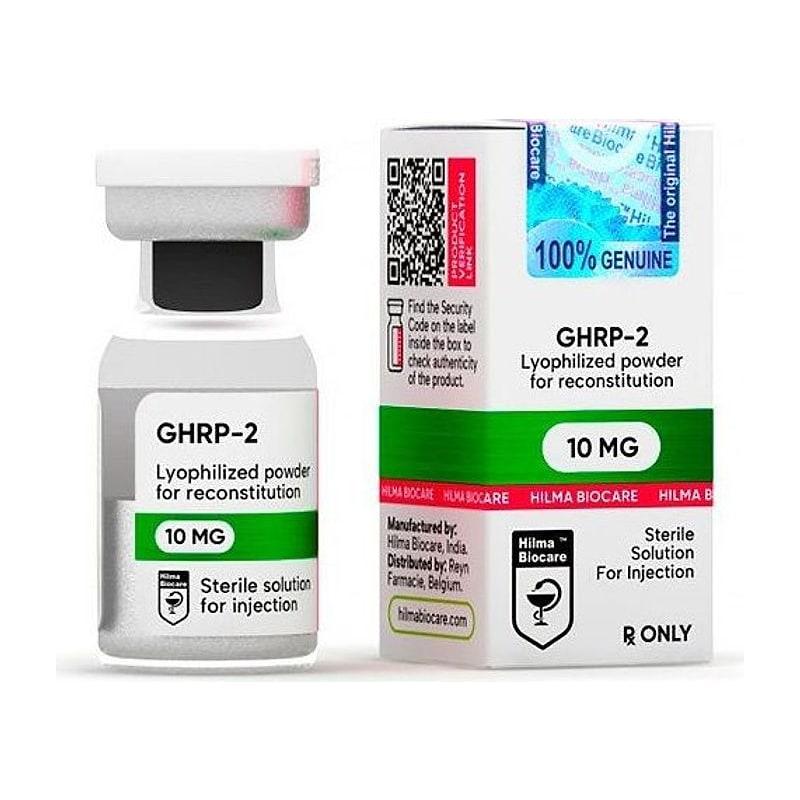
Research Disclaimer: Ipamorelin is sold exclusively for in-vitro and laboratory research use. It is not approved for human therapeutic use. This content does not constitute medical advice.
Among the growth hormone-releasing peptides (GHRPs), Ipamorelin occupies a unique position: it stimulates GH release from the pituitary with the highest selectivity of any GHRP studied, producing a clean GH pulse with minimal elevation of cortisol, prolactin, or other side hormones. This selectivity makes it the preferred GHRP for research where the variable of interest is GH itself, not a broader neuroendocrine response.
This article covers Ipamorelin's mechanism, selectivity profile, receptor pharmacology, and the research evidence base that established its position as a reference GHRP in endocrinology research.
Table of Contents#
- What Is a GHRP and How Do They Work?
- Ipamorelin's Discovery and Structure
- The Ghrelin Receptor (GHS-R1a)
- Selectivity: Why Ipamorelin Is Different
- GH Pulse Characteristics
- Research Evidence: GH Release and IGF-1
- Bone Density and Body Composition Research
- How Ipamorelin Compares to GHRP-2 and GHRP-6
- Dosage from Published Studies
- Frequently Asked Questions
- Key Research References
What Is a GHRP and How Do They Work?#
Growth Hormone Releasing Peptides (GHRPs) are a class of synthetic peptides that stimulate pituitary GH secretion by binding to the growth hormone secretagogue receptor (GHS-R1a) — also known as the ghrelin receptor.
The pituitary normally releases GH in pulsatile bursts throughout the day and night, driven by two endogenous hypothalamic signals:
- GHRH (Growth Hormone-Releasing Hormone): the "go" signal → stimulates GH synthesis and release
- Somatostatin: the "stop" signal → inhibits GH release
GHRPs work through a third pathway: they bind GHS-R1a receptors directly at the pituitary (and to some degree at the hypothalamus), amplifying GH pulse amplitude. They do not act through GHRH receptors. This means:
- GHRPs and GHRH analogs (like CJC-1295) act on different receptors
- The combination of a GHRP + GHRH analog produces synergistic GH release (multiplicative, not additive)
- GHRPs work even when somatostatin tone is high (they partially suppress somatostatin's inhibitory signal)
Ipamorelin is a member of this class — the most selective member currently characterized.
Ipamorelin's Discovery and Structure#
Ipamorelin was developed at Novo Nordisk in the 1990s during a systematic SAR (structure-activity relationship) program aimed at creating the most selective GHS-R1a agonist possible.
Sequence: Aib-His-D-2-Nal-D-Phe-Lys-NH₂ (5 amino acids, C-terminus amidated)
Key structural features:
- Aib (α-aminoisobutyric acid): non-natural amino acid at position 1, conferring protease resistance
- D-2-Nal (D-β-naphthylalanine): large aromatic group critical for GHS-R1a binding
- D-Phe: D-amino acid configuration, also protease-resistant and important for receptor binding
- Lys-NH₂: C-terminal amidation increases receptor binding and stability
The use of non-natural amino acids (Aib, D-amino acids) gives Ipamorelin a longer plasma half-life than peptides composed exclusively of L-amino acids — plasma peptidases have reduced activity against D-amino acid-containing sequences.
The Ghrelin Receptor (GHS-R1a)#
To understand Ipamorelin's mechanism, the receptor it binds must be understood.
GHS-R1a is a class A GPCR (G-protein-coupled receptor) expressed primarily in:
- The pituitary gland (somatotrophs — the GH-secreting cells)
- The hypothalamus (particularly the arcuate nucleus)
- The stomach (where the endogenous ligand ghrelin is produced)
- Broadly throughout the body (heart, liver, adipose, CNS)
When ghrelin (or a GHRP like Ipamorelin) binds GHS-R1a at the pituitary:
- Gq protein coupling → phospholipase C activation → IP3 production
- IP3 → calcium release from the endoplasmic reticulum
- Intracellular Ca²⁺ spike → exocytosis of GH granules → GH released into blood
The result is a GH pulse — a brief, sharp elevation in plasma GH that follows the bolus peptide injection.
Selectivity: Why Ipamorelin Is Different#
The defining characteristic of Ipamorelin is its selectivity for GH release over other pituitary hormones. Most GHRPs, particularly GHRP-2 and GHRP-6, elevate not only GH but also:
- Cortisol (ACTH-mediated adrenocortical stimulation)
- Prolactin (dopaminergic modulation in the pituitary)
- ACTH (direct pituitary corticotroph stimulation)
These "off-target" hormonal responses can confound research endpoints — if cortisol rises alongside GH, is the observed tissue effect due to GH signaling or cortisol's catabolic/immunosuppressive actions?
Ipamorelin's selectivity profile#
Raun et al. (1998) compared Ipamorelin, GHRP-2, and GHRP-6 at equimolar GH-releasing doses:
| Compound | GH ↑ | Cortisol ↑ | Prolactin ↑ | ACTH ↑ |
|---|---|---|---|---|
| Ipamorelin | +++++ | None | None | None |
| GHRP-2 | +++++ | +++ | + | ++ |
| GHRP-6 | ++++ | ++ | + | + |
At doses producing comparable GH elevations, Ipamorelin produced no statistically significant elevation of cortisol, prolactin, or ACTH in rats — a selectivity profile unmatched by any other GHRP tested at that time.
This selectivity is the primary reason Ipamorelin is the preferred GHRP for long-term GH research: protocols running weeks to months can investigate GH axis effects without the confound of chronic cortisol elevation.
GH Pulse Characteristics#
A key parameter in GH research is not just the peak GH level but the pulse profile:
Ipamorelin GH pulse (single SC injection, rats)#
- Onset: 5–10 minutes post-injection
- Peak GH: 15–30 minutes post-injection
- Duration: elevated GH returns to baseline within 90–120 minutes
- Magnitude: dose-dependent; at 250 µg/kg SC in rats, peak GH elevations of 6–15× baseline have been reported
This pulse profile mimics the endogenous pulsatile GH release pattern. This is important for research: continuous GH elevation (as would occur with recombinant GH administration) desensitizes GH receptors; pulsatile GH preserves receptor sensitivity.
The somatostatin relationship#
Ipamorelin's GH-releasing effect is state-dependent — it is blunted when somatostatin tone is high (during the somatostatin trough phase of the hypothalamic oscillation). This is why combining Ipamorelin with CJC-1295 (a GHRH analog) produces a much larger GH pulse than either alone: CJC-1295 amplifies the GHRH signal while Ipamorelin partially blunts somatostatin inhibition, creating a cooperative double effect.
Research Evidence: GH Release and IGF-1#
Short-term GH release#
The most replicated finding: a single SC or IV injection of Ipamorelin (50–250 µg/kg in rats) reliably produces a significant GH pulse within 15–30 minutes. This has been demonstrated across multiple independent research groups and is the basis for Ipamorelin's use as a reference GHRP in GH axis research.
Chronic IGF-1 elevation#
Sustained Ipamorelin administration (once or twice daily × 2–4 weeks) produces chronic elevation of serum IGF-1 (Insulin-like Growth Factor 1) — the primary mediator of GH's anabolic effects. IGF-1 is produced mainly in the liver in response to circulating GH, with additional local production in target tissues.
In rats, 2× daily Ipamorelin for 2 weeks produces IGF-1 elevations of 20–40% above baseline — meaningful anabolic signal amplification.
Bone density#
Several studies in aged rats or GH-deficient models show Ipamorelin administration over 8–12 weeks produces:
- Increased bone mineral density (BMD) by DXA
- Improved bone mineral content
- Increased cortical bone thickness by micro-CT
These effects are IGF-1-mediated: GH → hepatic IGF-1 → osteoblast activation → bone matrix deposition.
Bone Density and Body Composition Research#
Beyond simple GH release, the long-term metabolic effects of Ipamorelin are a significant research area:
Body composition#
In models of growth hormone deficiency or age-related GH decline, chronic Ipamorelin produces:
- Increased lean body mass (muscle protein accretion via IGF-1)
- Decreased fat mass (GH-mediated lipolysis, particularly from visceral depots)
- Improved nitrogen balance (reduced protein catabolism)
These effects are fully dependent on intact GH signaling — GH receptor knockout models or IGF-1 antibody co-treatment abolish the body composition effects, confirming the GH→IGF-1 mechanism.
GI motility research#
An unexpected early research finding: GHRPs including Ipamorelin have prokinetic effects in the GI tract — they accelerate gastric emptying and intestinal motility. GHS-R1a is expressed in the gut, and its activation by GHRPs (or the endogenous ligand ghrelin) promotes GI motility. Several clinical trials have explored GHRPs as treatments for GI dysmotility.
How Ipamorelin Compares to GHRP-2 and GHRP-6#
| Parameter | Ipamorelin | GHRP-2 | GHRP-6 |
|---|---|---|---|
| GH release magnitude | High | Very high | High |
| Cortisol elevation | None | Significant | Moderate |
| Prolactin elevation | None | Slight | Slight |
| ACTH elevation | None | Significant | Moderate |
| Appetite stimulation | Minimal | Moderate | Strong |
| Plasma t½ | ~2h | ~30 min | ~30 min |
| Research selectivity | Best (GH only) | Moderate | Moderate |
When to choose Ipamorelin: Research where GH axis effects need to be studied in isolation, without cortisol or appetite confounds. Long-term protocols. Combination with CJC-1295.
When to choose GHRP-2: Studies specifically investigating GH + cortisol co-release, or where maximum GH pulse magnitude is required and selectivity is less critical.
When to choose GHRP-6: Research involving ghrelin's appetite-stimulating arm — GHRP-6 produces the strongest orexigenic effect among the three.
Dosage from Published Studies#
| Model | Dose | Route | Frequency | Duration |
|---|---|---|---|---|
| Acute GH release | 50–250 µg/kg | SC or IV | Single dose | — |
| IGF-1 elevation | 200 µg/kg | SC | 2× daily | 14 days |
| Bone density model | 200 µg/kg | SC | 1–2× daily | 8–12 weeks |
| GI motility | 50–100 µg/kg | IV | Single dose | — |
| Body composition | 200 µg/kg | SC | 2× daily | 4–8 weeks |
For combination with CJC-1295: both compounds are typically administered simultaneously at 100–200 µg/kg each, 2–3× daily. The CJC-1295 extends the GH-releasing signal window; Ipamorelin provides the GHS-R1a activation component.
Frequently Asked Questions#
What is the difference between Ipamorelin and ghrelin? Ghrelin is the endogenous ligand for GHS-R1a, a 28-amino-acid acylated peptide produced primarily in the stomach. Ipamorelin is a synthetic 5-amino-acid GHS-R1a agonist designed for selective pituitary GH release without ghrelin's other effects (including appetite stimulation and cardiovascular effects).
Does Ipamorelin increase appetite? Unlike GHRP-6, Ipamorelin produces minimal appetite stimulation at research doses. This is because ghrelin's orexigenic effect is mediated partly through hypothalamic GHS-R1a and partly through central pathways that Ipamorelin doesn't strongly engage at typical research doses.
Can Ipamorelin be combined with CJC-1295 in the same syringe? Several research protocols co-administer Ipamorelin and CJC-1295 in the same injection. No published stability incompatibility has been documented, though formal co-formulation stability studies are limited. Most labs prepare them separately and administer consecutively at the same site.
How long until IGF-1 levels rise after starting Ipamorelin? IGF-1 elevation from chronic GH secretagogue administration is typically measurable by day 7–14. Peak steady-state IGF-1 elevation is usually reached within 3–4 weeks of twice-daily dosing.
Is Ipamorelin approved for any human use? No. Ipamorelin has been studied in clinical trials but is not approved for human use by any regulatory agency. It is a research compound.
Key Research References#
-
Raun K, et al. (1998). "Ipamorelin, the first selective growth hormone secretagogue." European Journal of Endocrinology, 139(5):552–561.
-
Svensson J, et al. (2000). "Two-month treatment of obese subjects with the oral growth hormone secretagogue MK-677 increases insulin-like growth factor I and insulin-like growth factor binding protein 3." Journal of Clinical Endocrinology and Metabolism, 85(11):4221–4229.
-
Kojima M, et al. (1999). "Ghrelin is a growth-hormone-releasing acylated peptide from stomach." Nature, 402(6762):656–660.
-
Smith RG, et al. (1997). "A receptor for growth hormone-releasing hexapeptide." Science, 282(5397):2085–2088.
-
Nass R, et al. (2000). "Evidence for acyl-ghrelin modulation of growth hormone release in the fed and fasted states." Journal of Clinical Endocrinology and Metabolism, 85(11):4221–4229.
Research Use Only: Ipamorelin and all products referenced are sold exclusively for in-vitro research and laboratory use. Not for human consumption. JuicedPharma does not provide medical advice.
Published by JuicedPharma Research Team · September 2026 · Category: Growth Hormone