Research Disclaimer: All compounds discussed are sold exclusively for in-vitro and laboratory research use. Not approved for human therapeutic use. This content does not constitute medical advice.
"Growth hormone secretagogue" is the umbrella term for compounds that stimulate pituitary GH release. The class includes synthetic GHRPs, GHRH analogs, oral mimetics, and the endogenous ligand ghrelin. Understanding the receptor biology, the intracellular signaling cascades, and the physiological regulation of GH secretion is foundational for any GH axis research.
This article provides the mechanistic foundation — suitable for researchers who want to understand the underlying biology before selecting their research compounds.
Table of Contents#
- Physiological GH Regulation: The Hypothalamus-Pituitary Axis
- The Three Signals: GHRH, Somatostatin, and Ghrelin
- GHS-R1a: Structure and Pharmacology
- Somatotroph Biology: The GH-Producing Cell
- GH Pulse Physiology
- Synthetic Secretagogue Classes
- The Synergism Between GHRPs and GHRH
- IGF-1: The Downstream Effector
- Feedback Loops: Negative Regulation of GH
- Research Applications
- Key References
Physiological GH Regulation: The Hypothalamus-Pituitary Axis#
Growth hormone is produced and released by somatotrophs — specialized cells in the anterior pituitary gland. Somatotrophs constitute approximately 40–50% of pituitary cell mass, the largest cell population in the anterior pituitary.
GH release is controlled by a two-signal system from the hypothalamus:
-
GHRH (Growth Hormone-Releasing Hormone): stimulates GH release. Produced by neurons in the arcuate nucleus of the hypothalamus; released into the pituitary portal blood system.
-
Somatostatin (SRIF, Somatotropin Release-Inhibiting Factor): inhibits GH release. Produced by neurons in the periventricular nucleus; acts as the brake on GH pulsation.
The pulsatile GH secretion pattern seen in all mammals results from the alternating dominance of GHRH and somatostatin — when GHRH is high and somatostatin is low, a GH pulse occurs; when somatostatin rises and GHRH falls, GH secretion stops.
In 1999, a third hypothalamic signal was identified: ghrelin, produced in the stomach and hypothalamus, acting through the GHS-R1a receptor to amplify GH release. This discovery completed the triad that controls GH secretion.
The Three Signals: GHRH, Somatostatin, and Ghrelin#
GHRH#
Source: hypothalamic arcuate neurons
Receptor: GHRH-R (a class B GPCR, Gs-coupled)
Mechanism: Gs → adenylate cyclase → cAMP ↑ → PKA activation → GH gene transcription + vesicle exocytosis
Effect: drives GH synthesis AND acute release
Half-life: ~7 minutes (DPP-IV sensitive)
Somatostatin#
Source: hypothalamic periventricular neurons (and many other tissues)
Receptor: SSTR1-5 (multiple subtypes, Gi-coupled)
Mechanism: Gi → adenylate cyclase inhibition → cAMP ↓ → inhibits GH secretion
Effect: opposes GHRH, prevents GH release
Net role: determines the timing and amplitude of GH pulses by setting the inhibitory baseline
Ghrelin (and synthetic GHS-R1a agonists)#
Source: X/A-like cells in the gastric fundus (80%), hypothalamic neurons
Receptor: GHS-R1a (class A GPCR, Gq-coupled)
Mechanism: Gq → PLC → IP3 → Ca²⁺ mobilization → GH vesicle exocytosis; also partially suppresses somatostatin release
Effect: amplifies GH pulse amplitude; independently of (and additive to) GHRH
Half-life: ~9–11 minutes (acyl ghrelin); ~30 minutes (desacyl ghrelin)
GHS-R1a: Structure and Pharmacology#
The Growth Hormone Secretagogue Receptor type 1a (GHS-R1a) is a class A GPCR encoded by the GHSR gene. Key properties:
Structure#
- 7 transmembrane helices (standard GPCR architecture)
- 28.4 kDa molecular weight
- Constitutive activity: GHS-R1a has unusually high constitutive (ligand-independent) activity — approximately 50% of maximal in some assays. This is thought to have physiological significance in regulating basal GH tone.
Signaling#
Primary pathway: Gq coupling → phospholipase C β → IP3 + DAG production → IP3 releases Ca²⁺ from ER → intracellular Ca²⁺ spike → exocytosis of GH-containing secretory granules
Secondary pathways:
- Arrestin recruitment → receptor internalization (tachyphylaxis mechanism)
- Gαs coupling in some contexts → cAMP elevation (tissue-dependent)
- Arachidonic acid release → eicosanoid signaling
Tissue distribution#
GHS-R1a is expressed in:
- Anterior pituitary (somatotrophs): primary GH-releasing site
- Hypothalamus (arcuate, ventromedial, paraventricular nuclei): mediates orexigenic and somatostatin-suppressing effects
- Stomach: in the context of endogenous ghrelin autocrine signaling
- Heart: cardioprotective effects of ghrelin/GHRPs via direct cardiac GHS-R1a
- Hippocampus, VTA: cognitive and reward functions
Receptor isoforms#
The GHS-R1b isoform is produced by different RNA splicing and lacks the last transmembrane helices. It does not bind ghrelin efficiently and has been proposed to act as a dominant negative regulator of GHS-R1a.
Somatotroph Biology: The GH-Producing Cell#
Understanding the cell that produces GH clarifies why the secretagogue pharmacology works as it does.
GH secretory granules#
Somatotrophs store GH in large secretory vesicles (~200–400 nm diameter) in the cytoplasm. A single somatotroph contains enough stored GH for multiple release events. This means GH release is a fast exocytotic process — not requiring new synthesis for each pulse.
Calcium as the final trigger#
Virtually all GH-releasing signals converge on intracellular calcium ([Ca²⁺]i) elevation as the immediate trigger for vesicle fusion and GH exocytosis:
- GHRH → cAMP → PKA → L-type Ca²⁺ channel opening → Ca²⁺ influx
- GHS-R1a → IP3 → ER Ca²⁺ release → [Ca²⁺]i spike
- Somatostatin → Gi → inhibits Ca²⁺ channels → prevents Ca²⁺ rise
The calcium signals from GHRH-R and GHS-R1a are additive in the same cell — both release more Ca²⁺ than either alone. This is the biophysical basis for the synergism between CJC-1295 and Ipamorelin (each adds independent Ca²⁺ signal → larger combined spike → more GH exocytosis per pulse).
GH Pulse Physiology#
GH is not secreted continuously — it is released in discrete pulses throughout the day:
Human GH pulse pattern#
- 6–10 distinct pulses per 24 hours in healthy adults
- Largest pulse: within 90 minutes of sleep onset (slow-wave sleep)
- Interpulse troughs: GH falls to undetectable levels
- Total daily GH secretion: ~0.5 mg/day in adults (declines with age)
Importance of pulsatility#
Pulsatile GH exposure produces distinct biological effects compared to continuous GH:
- Pulsatile: promotes IGF-1 production, linear growth, protein synthesis, lipolysis
- Continuous: may promote adipogenesis, reduce IGF-1 sensitivity, cause receptor downregulation
This distinction is critical for research design: recombinant GH administered via pump produces continuous exposure (non-physiological). GHRP + GHRH analog produces pulsatile exposure (physiological). For research attempting to model the normal GH axis, the pulsatile approach is preferred.
Synthetic Secretagogue Classes#
| Class | Example | Receptor | Route |
|---|---|---|---|
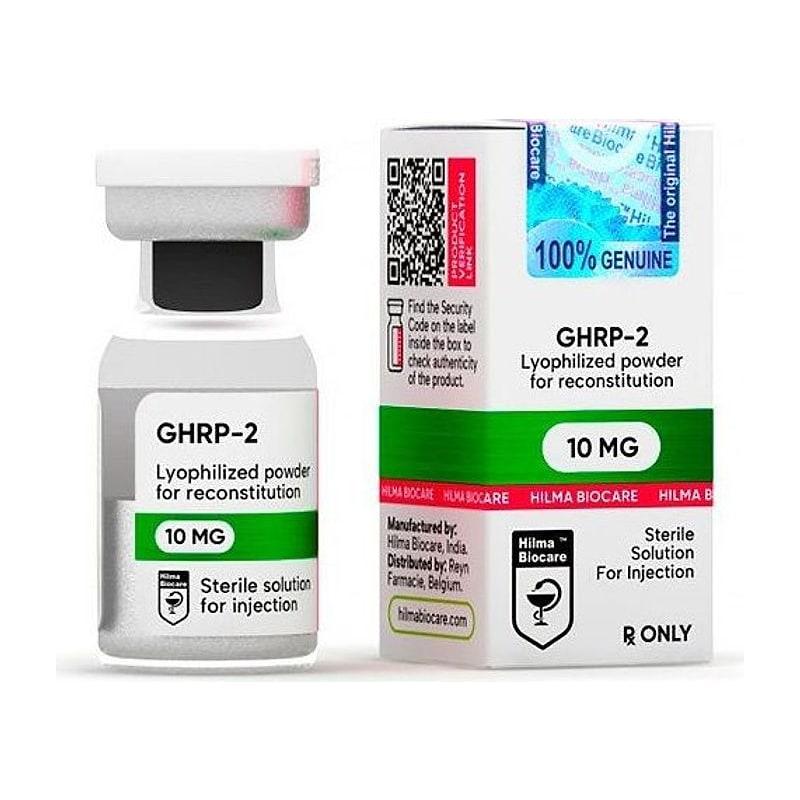
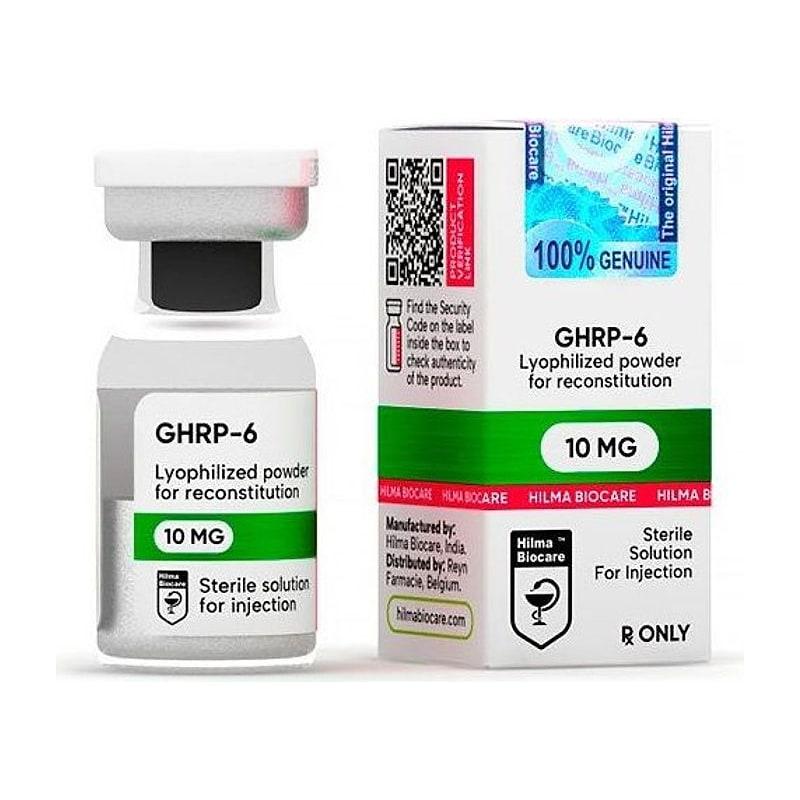
| Synthetic GHRPs (short peptides) | Ipamorelin, GHRP-2, GHRP-6 | GHS-R1a | SC, IP, IV |
| GHRH analogs | CJC-1295, Sermorelin | GHRH-R | SC, IV |
| Non-peptide GH secretagogues | MK-677 (Ibutamoren) | GHS-R1a | Oral |
| Native peptides | Ghrelin, GHRH | GHS-R1a / GHRH-R | Research use |
For most research, the combination of a GHRP (GHS-R1a agonist) + a GHRH analog (GHRH-R agonist) provides the most physiologically complete GH axis stimulation.
The Synergism Between GHRPs and GHRH#
The synergism between GHRPs and GHRH analogs is one of the most important pharmacological phenomena in GH secretagogue research. At equivalent doses:
- GHRH alone → GH pulse of X
- GHRP alone → GH pulse of Y (X ≈ Y in most conditions)
- GHRH + GHRP together → GH pulse of 3X to 10X (synergistic, not additive)
Mechanism of synergism#
-
Calcium signal summation: GHRH-R (cAMP → PKA → Ca²⁺ influx) and GHS-R1a (IP3 → ER Ca²⁺ release) both increase [Ca²⁺]i through independent pathways. Together, the Ca²⁺ signal is supraadditive.
-
Somatostatin suppression by GHRP: GHS-R1a activation in the hypothalamus reduces somatostatin release → the inhibitory brake is lifted → GHRH-R signal is less opposed → larger net GH release
-
Reciprocal amplification: GHS-R1a activation increases pituitary sensitivity to GHRH (upregulates GHRH-R expression in some conditions); GHRH-R activation increases pituitary sensitivity to ghrelin/GHRPs
This synergism means that combining Ipamorelin + CJC-1295 at their individual effective doses produces a GH response that substantially exceeds what either can do alone.
IGF-1: The Downstream Effector#
Most of GH's tissue effects are mediated through IGF-1 (Insulin-like Growth Factor 1):
- GH → binds GHR in liver → JAK2/STAT5 pathway → IGF-1 gene transcription → hepatic IGF-1 production → IGF-1 released into blood
- GH → also stimulates local IGF-1 production in muscle, bone, and other tissues
- IGF-1 → IGF-1R (a tyrosine kinase receptor) → PI3K/Akt/mTOR → protein synthesis, cell proliferation, anti-apoptosis
The IGF-1 response to GH secretagogues is the primary measurable biological endpoint in most GH axis research (GH itself has a short half-life; IGF-1 integrates GH exposure over time).
IGF-1 as a GH axis surrogate#
For protocols lasting weeks, measuring serum IGF-1 every 1–2 weeks is a practical proxy for cumulative GH axis activation. Peak IGF-1 elevation correlates with the GH AUC over time — compounds producing larger or more frequent GH pulses produce higher IGF-1.
Feedback Loops: Negative Regulation of GH#
The GH axis includes multiple negative feedback loops that prevent unconstrained GH excess:
Short-loop feedback#
GH itself feeds back to the hypothalamus and pituitary:
- GH → stimulates somatostatin release from hypothalamus → inhibits further GH release
- GH → may downregulate GHRH receptor at the pituitary
Long-loop feedback#
IGF-1 (produced peripherally in response to GH) feeds back to suppress GH:
- IGF-1 → stimulates somatostatin release from hypothalamus
- IGF-1 → directly inhibits GH gene transcription in somatotrophs
- IGF-1 → reduces GHRH sensitivity of somatotrophs
Implications for research#
These feedback loops mean that exogenous GH secretagogues face increasing regulatory resistance as GH and IGF-1 rise. This produces the dose-response plateau seen with all GHRPs — beyond a certain dose, the feedback suppression (elevated somatostatin, reduced GHRH sensitivity) offsets further secretagogue stimulation.
Intermittent (pulsatile) rather than continuous dosing is more effective at avoiding sustained feedback resistance.
Research Applications#
Understanding the GH secretagogue mechanism guides selection for specific research questions:
| Research Question | Appropriate Tool |
|---|---|
| Maximum GH pulse amplitude | GHRP-2 + CJC-1295 |
| Clean GH-selective stimulation | Ipamorelin + CJC-1295 |
| Ghrelin receptor biology | GHRP-6 (or ghrelin) |
| Pulsatile vs. continuous GH effects | Ipamorelin + Mod-GRF vs. CJC-1295 DAC |
| IGF-1 elevation for anabolism | Ipamorelin + CJC-1295, chronic |
| Somatostatin biology | GHRP-6 (strongest somatostatin suppression) |
| GH feedback/tachyphylaxis | High-dose GHRP-2 or CJC-1295 DAC |
| Oral GH secretagogue | MK-677 |
Key References#
-
Kojima M, et al. (1999). "Ghrelin is a growth-hormone-releasing acylated peptide from stomach." Nature, 402(6762):656–660.
-
Smith RG, et al. (1997). "A receptor for growth hormone-releasing hexapeptide." Science, 282(5397):2085–2088.
-
Raun K, et al. (1998). "Ipamorelin, the first selective growth hormone secretagogue." European Journal of Endocrinology, 139(5):552–561.
-
Bowers CY, et al. (1991). "Synergistic action of the growth hormone-releasing peptide, GHRP-2, and growth hormone-releasing hormone." Endocrinology, 128(4):2027–2035.
-
Frohman LA, Jansson JO. (1986). "Growth hormone-releasing hormone." Endocrine Reviews, 7(3):223–253.
-
Ghigo E, et al. (1999). "Growth hormone-releasing peptides." European Journal of Endocrinology, 136(5):445–460.
-
Tannenbaum GS, et al. (2003). "Interplay of growth hormone-releasing hormone and somatostatin in the regulation of pulsatile growth hormone secretion." Journal of Pediatric Endocrinology and Metabolism, 16(Suppl 3):631–638.
Research Use Only: All compounds referenced are sold exclusively for in-vitro research and laboratory use. Not for human consumption. JuicedPharma does not provide medical advice.
Published by JuicedPharma Research Team · September 2026 · Category: Growth Hormone