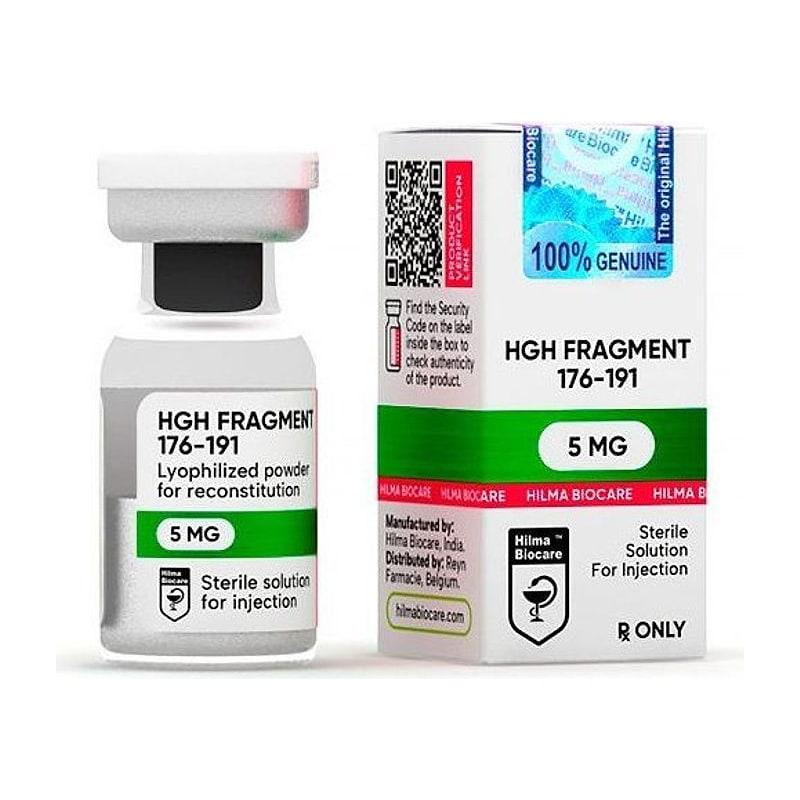
Research Disclaimer: Recombinant human growth hormone and all compounds referenced are sold exclusively for in-vitro and laboratory research use. Not approved for human therapeutic use except where licensed. This content does not constitute medical advice.
Recombinant human growth hormone (rhGH, somatropin) is the synthetic version of the endogenous 22 kDa pituitary GH protein. Produced by recombinant DNA technology in E. coli or mammalian cell lines, rhGH is identical in amino acid sequence to endogenous GH and binds the same GH receptor (GHR). It is the gold-standard positive control in GH biology research and the reference compound for comparing the effects of GH secretagogues.
This overview covers rhGH's structure, receptor pharmacology, downstream signaling, and how it fits into the research toolkit alongside GH secretagogues.
Table of Contents#
- Structure and Production of rhGH
- The GH Receptor (GHR): Binding and Activation
- JAK2/STAT5: The Primary GH Signaling Pathway
- IGF-1: The Principal Downstream Mediator
- GH vs. IGF-1 Direct Effects
- Pulsatile vs. Continuous GH: Critical Distinction
- rhGH vs. GH Secretagogues in Research
- Research Applications of rhGH
- GH Isoforms and Assay Considerations
- Key References
Structure and Production of rhGH#
Primary structure#
Human GH is a 191 amino acid, single-chain polypeptide with:
- Molecular weight: 22,124 Da (22 kDa isoform)
- Two disulfide bonds: Cys53–Cys165 and Cys182–Cys189 (essential for bioactivity)
- Four-helix bundle tertiary structure: helices 1, 2, 3, and 4 form the core functional domain
- Two receptor binding sites: site 1 (high affinity, helix 3/4) and site 2 (lower affinity, opposite face)
The four-helix bundle fold is characteristic of the type 1 cytokine superfamily — the same class as prolactin, erythropoietin, and several interleukins.
Alternative isoforms#
The pituitary secretes multiple GH isoforms from the same gene:
- 22 kDa: the major form (~85–90% of secreted GH); the form used in rhGH preparations
- 20 kDa: alternatively spliced form (~10%); slightly different bioactivity profile
- Other variants: glycosylated, oligomeric, acetylated forms in smaller quantities
Commercially available rhGH (somatropin) is the 22 kDa recombinant form.
Recombinant production#
rhGH is produced primarily in:
- E. coli expression systems: produce unglycosylated 22 kDa protein (identical to pituitary 22 kDa GH, which is also unglycosylated)
- Mammalian cell lines (CHO, COS): can produce glycosylated variants, though native GH is not glycosylated at the canonical N-glycosylation sites
The E. coli product is refolded post-expression to achieve the correct disulfide bond pattern and four-helix bundle structure. Correctly folded rhGH has full bioactivity at the GH receptor.
The GH Receptor (GHR): Binding and Activation#
GHR structure#
The GH receptor (GHR) is a type 1 cytokine receptor:
- Single transmembrane domain
- Extracellular N-terminal ligand-binding domain
- Intracellular C-terminal signaling domain
- ~620 amino acids (mature form)
GHR does not have intrinsic kinase activity. Signal transduction requires JAK2 (Janus kinase 2), which is constitutively associated with the intracellular domain.
The 2:1 binding model#
GH binds two GHR molecules sequentially in the classic sequential receptor dimerization mechanism:
- GH site 1 binds the first GHR (high affinity, Kd ~0.1–1 nM)
- GH site 2 recruits a second GHR (lower affinity, but stabilized by the complex)
- GHR dimerization brings the two associated JAK2 molecules into proximity
- JAK2-JAK2 transphosphorylation activates the kinases → downstream signaling cascade
This 1 GH:2 GHR stoichiometry is important for understanding GH pharmacology — GH analogs that bind only one receptor (truncated forms, competitive antagonists) can block GH signaling rather than activating it.
GHR distribution#
GHR is expressed in:
- Liver: the major site of GH-driven IGF-1 production
- Muscle: direct anabolic effects
- Adipose tissue: lipolysis
- Bone: growth plate and osteoblast regulation
- Brain, kidney, heart: various organ-specific effects
JAK2/STAT5: The Primary GH Signaling Pathway#
JAK2 activation#
GHR dimerization → JAK2 transphosphorylation → JAK2 phosphorylates GHR intracellular tyrosines → creates docking sites for signaling proteins including STAT5.
STAT5 pathway (primary anabolic pathway)#
STAT5 (Signal Transducer and Activator of Transcription 5) is the dominant GH signaling mediator:
- JAK2 phosphorylates STAT5a and STAT5b
- Phospho-STAT5 dimerizes and translocates to the nucleus
- Phospho-STAT5 binds GAS (gamma-activated sequence) elements in gene promoters
- Target genes: IGF1 (most important), IGFBP3, acid-labile subunit (ALS), GH-inducible genes in liver and muscle
STAT5b knockout mice have markedly reduced IGF-1 levels and growth retardation, confirming STAT5 as the critical mediator of GH's growth-promoting effects.
Secondary pathways#
Beyond JAK2/STAT5:
- MAPK/ERK: cell proliferation, differentiation
- PI3K/Akt: anti-apoptotic, metabolic
- PLC/PKC: calcium-mediated effects (tissue-dependent)
- SOCS proteins (suppressors of cytokine signaling): negative feedback, GH receptor desensitization
The SOCS proteins (particularly SOCS1 and SOCS3) are induced by GH itself via STAT5 — they inhibit JAK2 and reduce GHR signaling. This is the molecular mechanism for GH tachyphylaxis with continuous exposure.
IGF-1: The Principal Downstream Mediator#
Hepatic IGF-1 production#
Approximately 75–80% of circulating IGF-1 is produced in the liver in response to GH→JAK2/STAT5→IGF-1 gene transcription. Hepatic IGF-1 production is the primary driver of the anabolic, growth-promoting, and body composition effects of GH.
IGF-1 binding proteins (IGFBPs)#
Circulating IGF-1 is >99% bound to insulin-like growth factor binding proteins (IGFBP-1 through IGFBP-6). The major carrier complex is a ternary complex: IGF-1 + IGFBP-3 + ALS (acid-labile subunit), which has a half-life of ~15 hours, dramatically extending IGF-1's effective half-life beyond its ~10 minute free half-life.
GH also drives hepatic IGFBP-3 and ALS production — so GH increases both the production and the carrier protein for IGF-1.
IGF-1 receptor (IGF-1R) signaling#
IGF-1 binds IGF-1R (a receptor tyrosine kinase homologous to the insulin receptor):
- PI3K/Akt/mTOR: drives protein synthesis (mTORC1), inhibits protein breakdown (FoxO transcription factors), promotes cell survival
- MAPK/ERK: cell proliferation, differentiation
- IRS-1/IRS-2: central adapter proteins linking IGF-1R to both PI3K and MAPK pathways
The mTORC1 arm of IGF-1 signaling is the molecular driver of muscle protein anabolism — it phosphorylates S6K1 and 4EBP1 to activate ribosomal protein synthesis.
GH vs. IGF-1 Direct Effects#
Not all GH effects are mediated by IGF-1. GH has important direct effects at target tissues:
| Effect | GH-Direct | IGF-1-Mediated |
|---|---|---|
| Lipolysis (fat mobilization) | ✅ Primary | Minor |
| Insulin antagonism | ✅ Yes | Counter (IGF-1 is insulin-like) |
| Muscle protein synthesis | Some | ✅ Primary |
| Linear bone growth | ✅ Growth plate | ✅ IGF-1 drives chondrocyte proliferation |
| Sodium retention | ✅ Yes | Minor |
| IGF-1 production | ✅ Drives | — |
For research distinguishing GH-direct from IGF-1-mediated effects: GH-deficient + IGF-1 infusion models vs. IGF-1-deficient + GH infusion models have been used to dissect this. The relevant finding: lipolysis is primarily GH-direct; muscle anabolism requires both but is primarily IGF-1-mediated.
Pulsatile vs. Continuous GH: Critical Distinction#
This is one of the most important variables in GH research design. The biological effects of pulsatile vs. continuous GH exposure are substantially different:
| Parameter | Pulsatile GH | Continuous GH |
|---|---|---|
| IGF-1 production | High | Lower (receptor desensitization) |
| Lipolysis | Strong | Diminished over time |
| Insulin resistance | Intermittent | Persistent |
| GHR expression | Maintained | Downregulated |
| SOCS induction | Episodic reset | Chronic suppression |
| Anabolic effect | Optimal | Suboptimal |
Natural GH secretion is pulsatile (6–10 pulses/day; troughs are near-zero). The biological machinery is optimized for this pattern. rhGH administered continuously (via minipump) produces a pharmacological profile distinct from both natural GH pulsation and the pulsatile profile produced by GH secretagogues.
For research attempting to model physiological GH axis activation: GH secretagogues (Ipamorelin + CJC-1295) produce pulsatile GH that more closely resembles endogenous secretion. rhGH bolus injections (once or twice daily) produce a semi-pulsatile profile. rhGH via osmotic pump produces continuous non-pulsatile exposure.
rhGH vs. GH Secretagogues in Research#
| Parameter | rhGH (Somatropin) | GH Secretagogues (Ipamorelin + CJC-1295) |
|---|---|---|
| GH source | Exogenous (administered) | Endogenous (pituitary release) |
| Pulsatility | Depends on administration | Pulsatile (mimics physiology) |
| Feedback loop | Bypasses hypothalamic feedback | Preserved (normal feedback operates) |
| Insulin resistance risk | Higher (continuous high GH) | Lower (pulsatile, feedback-regulated) |
| Tachyphylaxis | Yes (SOCS induction, GHR downregulation) | Less common (pulsatile dosing) |
| IGF-1 isoform profile | May differ from endogenous | More physiological |
| Research question served | Direct GH dose-response | GH axis modulation |
Choose rhGH when: you need precise control over GH dose, you're studying direct GH pharmacology at the receptor level, or you need to rescue GH-deficient animals with a known dose.
Choose secretagogues when: you're studying the GH axis in a context closer to physiological, you want to stimulate endogenous GH production, or you're investigating the pituitary-hypothalamic regulatory loop.
Research Applications of rhGH#
GH deficiency models#
Hypophysectomized (pituitary-removed) rodents are a standard model for GH-deficiency research. rhGH replacement in these animals:
- Restores IGF-1 levels in a dose-dependent manner
- Rescues growth rate
- Reverses fat accumulation and muscle wasting
- Allows dissection of pituitary hormones (by adding back individual hormones)
Body composition#
Chronic rhGH in GH-replete or GH-deficient animals:
- Increases lean mass via IGF-1→mTOR
- Decreases fat mass via direct lipolysis
- Increases bone mineral density via IGF-1→osteoblast activation
IGF-1 axis studies#
rhGH is the standard tool for dose-response studies of the GH→IGF-1 axis — the dose of rhGH can be precisely controlled, and the resulting IGF-1 elevation measured, to generate quantitative GH→IGF-1 dose-response curves.
GH Isoforms and Assay Considerations#
Immunoassay interference#
Standard GH immunoassays (ELISA, RIA) are calibrated for the 22 kDa isoform. After rhGH administration:
- Serum GH spikes dramatically
- The administered rhGH (22 kDa) is measured alongside endogenous GH (22 kDa + 20 kDa + other forms)
- Differential assays (22 kDa-specific vs. total GH) can distinguish recombinant from endogenous
IGF-1 as the preferred endpoint for chronic studies#
Because rhGH has a short plasma half-life (~20 minutes), IGF-1 (half-life ~15 hours as IGFBP-3 complex) is the preferred biomarker for chronic GH exposure. A single rhGH injection is largely cleared before the next planned injection — but IGF-1 integrates the cumulative GH signal over hours.
Key References#
-
Kopchick JJ, Andry JM. (2000). "Growth hormone (GH), GH receptor, and signal transduction." Molecular Genetics and Metabolism, 71(1-2):293–314.
-
Dehkhoda F, et al. (2018). "The growth hormone receptor: mechanism of receptor activation, cell signaling and therapeutic targets." Frontiers in Endocrinology, 9:35.
-
Wilkinson IR, et al. (2007). "A new structural mechanism for GH receptor activation: prolactin and GH receptor signaling." Nature Structural & Molecular Biology, 14(7):669–670.
-
Pal H, et al. (2018). "The GH-IGF-1 axis in metabolism." Growth Hormone & IGF Research, 40:1–11.
-
Baik M, et al. (1996). "STAT5b and STAT5a-related transcription factors mediate growth hormone signaling." Molecular Endocrinology, 10(9):1224–1234.
Research Use Only: Recombinant growth hormone and all products referenced are sold exclusively for in-vitro research and laboratory use. Not for human consumption except where licensed. JuicedPharma does not provide medical advice.
Published by JuicedPharma Research Team · September 2026 · Category: Growth Hormone