Research Disclaimer: All compounds referenced are sold exclusively for in-vitro and laboratory research use. Not approved for human therapeutic use. This content does not constitute medical advice.
Growth hormone's effects on body composition — reducing fat mass and increasing lean mass simultaneously — are among the most studied and reproduced phenomena in endocrinology. Understanding the mechanisms driving these effects, and the evidence from published research, is foundational for interpreting any GH axis study or designing a GH body composition protocol.
Table of Contents#
- Overview: Why GH Changes Body Composition
- GH-Driven Lipolysis: Mechanism
- GH/IGF-1 and Lean Mass: Mechanism
- Published Body Composition Data
- Regional Fat Distribution: Why Visceral Fat Responds Best
- Insulin Resistance: The GH–Insulin Trade-off
- GH Secretagogues vs. rhGH in Body Composition Research
- Protocol Design for Body Composition Studies
- Confounds and Experimental Controls
- Key References
Overview: Why GH Changes Body Composition#
GH is the primary endogenous hormone that simultaneously:
- Mobilizes fat (lipolysis, direct GHR-mediated HSL activation)
- Preserves or builds lean mass (IGF-1-driven protein synthesis and satellite cell activation)
This combination — burning fat while sparing muscle — makes GH unique among lipolytic compounds. Catecholamines also mobilize fat, but they don't drive muscle protein synthesis. Insulin drives protein synthesis but promotes fat storage. Only GH drives both.
The biochemical logic: GH-driven fat mobilization provides free fatty acids as energy substrate. GH/IGF-1-driven protein synthesis uses amino acids (from diet) to build muscle. The net result with adequate protein intake: fat decreases, lean mass increases.
GH-Driven Lipolysis: Mechanism#
Direct GH–HSL activation#
GH does not stimulate lipolysis via IGF-1 — this is a GH-direct effect:
- GH binds GHR on adipocytes → GHR dimerization
- JAK2 phosphorylation → downstream signaling including IRS-1 serine phosphorylation (which inhibits insulin signaling in adipocytes, contributing to the insulin-resistant state in fat tissue during GH elevation)
- GH → activates hormone-sensitive lipase (HSL) via cAMP/PKA pathway in adipocytes
- HSL hydrolyzes stored triglycerides → glycerol + NEFA (non-esterified fatty acids) released to circulation
Key point: this pathway is HSL-dependent and occurs even in the absence of IGF-1. Liver-specific IGF-1 knockout mice have normal GH-driven lipolysis despite very low circulating IGF-1.
Timing: GH lipolysis is post-prandial#
GH-driven lipolysis is maximized in the fasted state because:
- Insulin (the anti-lipolytic hormone) is low in fasting → HSL is not suppressed by insulin signaling
- GH pulse amplitude is larger during fasting (lower glucose → less somatostatin → bigger GH pulses)
- The morning GH surge (correlated with sleep onset in humans) occurs in the early fasting window
In fed states (high insulin), GH-driven lipolysis is blunted by insulin's anti-HSL effect. This is one reason GH's lipolytic efficacy is diminished in obesity (chronic hyperinsulinemia).
NEFA kinetics after GH#
After a GH pulse, serum NEFA rise with a ~3–5 hour lag (GH → receptor activation → HSL activation → TG hydrolysis → NEFA release into circulation). Peak NEFA from a GH pulse occurs 3–6 hours after the GH peak. This NEFA is taken up by muscle and liver for oxidation.
GH/IGF-1 and Lean Mass: Mechanism#
IGF-1→mTOR→muscle protein synthesis#
The primary anabolic pathway for lean mass:
- Elevated GH → hepatic IGF-1 production → circulating IGF-1 elevation
- IGF-1 → IGF-1R on myocytes → IRS-1/PI3K/Akt → mTORC1 activation
- mTORC1 → S6K1 phosphorylation → ribosomal protein synthesis rates increase
- mTORC1 → 4EBP1 phosphorylation → cap-dependent mRNA translation initiation
- Net: muscle protein synthesis rate increases above breakdown rate → net anabolism
IGF-1 and satellite cell biology#
IGF-1 also drives lean mass through satellite cell activation and fusion:
- Systemic IGF-1: drives satellite cell proliferation and differentiation (later repair stages)
- Local IGF-1Ec/MGF (from mechanical stress or GH-driven local IGF-1 production): activates quiescent satellite cells
- Satellite cells → fuse into myofibers → increases myonuclear number → supports muscle hypertrophy
Anti-catabolic effect#
IGF-1→Akt → phosphorylation of FoxO transcription factors → nuclear exclusion → suppression of MuRF-1 and MAFbx (the E3 ubiquitin ligases mediating muscle protein ubiquitination and proteasomal degradation). This anti-catabolic effect is independent of — and additive to — the anabolic protein synthesis effect.
Published Body Composition Data#
Healthy GH-replete adults (Rudman et al. 1990, landmark study)#
| Endpoint | Change at 6 months |
|---|---|
| Lean body mass | +8.8% |
| Fat mass | −14.4% |
| Skin thickness | Increased |
| Lumbar vertebral density | Trends positive |
| GH dose | 0.03 mg/kg three times per week SC |
Side effects at this dose: edema, carpal tunnel syndrome, arthralgias in some subjects — consistent with supraphysiological IGF-1 elevation.
GH-deficient adults (established clinical data)#
In adults with pathological GHD treated with replacement rhGH:
- Lean mass: +3–6 kg over 12 months
- Fat mass: −3–5 kg over 12 months
- Effects are sustained with continued treatment
- Quality of life and exercise capacity improve
Rodent models#
In hypophysectomized (GHD) rats receiving rhGH:
- 50 µg/kg twice daily × 4 weeks: normalized lean mass and fat depot weights vs. controls
In high-fat diet obese rats:
- 100 µg/kg daily × 6 weeks: −15–25% fat mass, maintained lean mass
- Combined with caloric restriction: synergistic fat reduction, better lean mass preservation than restriction alone
Regional Fat Distribution: Why Visceral Fat Responds Best#
GH's lipolytic effect is not uniform across fat depots:
| Fat Depot | GHR Expression | GH Lipolytic Response |
|---|---|---|
| Visceral (intra-abdominal) | High | Strongest |
| Subcutaneous abdominal | Moderate | Moderate |
| Peripheral subcutaneous | Lower | Weaker |
| Intramuscular | Low | Minimal |
Visceral fat has:
- Highest GHR density
- Highest HSL and β3-adrenergic receptor expression
- Most portal drainage (products of visceral lipolysis drain to liver directly)
- Most metabolically active depot (highest inflammatory cytokine output)
This means GH axis activation (via rhGH or secretagogues) preferentially reduces the most metabolically harmful fat depot — visceral adiposity — rather than peripheral subcutaneous fat.
In GH-deficiency, visceral fat accumulation is the predominant body composition abnormality. GH replacement in GHD adults reverses visceral fat preferentially.
Insulin Resistance: The GH–Insulin Trade-off#
GH's lipolytic effect comes with a metabolic cost: elevated free fatty acids from lipolysis → Randle cycle (fatty acid-glucose competition) → reduced glucose utilization → insulin resistance.
Mechanisms#
- Direct GH effect: GH → IRS-1 serine phosphorylation in muscle → inhibits insulin signaling
- Elevated NEFA: inhibits pyruvate dehydrogenase → reduces glucose oxidation → impairs insulin-stimulated glucose uptake
Magnitude in research#
At research doses in rodents (50–150 µg/kg daily):
- Fasting blood glucose: typically unchanged or mildly elevated
- Insulin: elevated in response to GH-induced insulin resistance
- Full insulin resistance syndrome: more common at doses producing supraphysiological IGF-1
Mitigation strategies in research#
- Pulsatile dosing (twice-daily vs. continuous): pulsatile GH produces intermittent insulin resistance; continuous causes sustained
- GH secretagogues vs. rhGH: secretagogues produce lower peak GH and operate within feedback constraints → milder insulin resistance
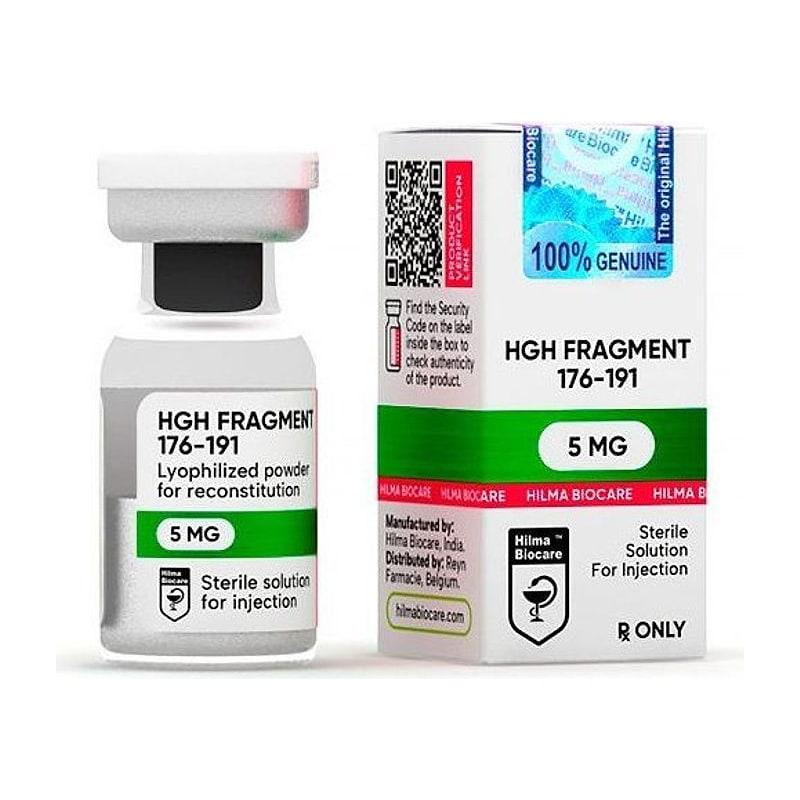
- HGH Fragment 176-191: selective lipolytic peptide that activates HSL without the GH-direct insulin resistance signaling → best option when lipolysis without metabolic cost is the research goal
GH Secretagogues vs. rhGH in Body Composition Research#
| Parameter | rhGH | Ipamorelin + CJC-1295 |
|---|---|---|
| Fat reduction | Significant (direct HSL activation) | Moderate (via pituitary GH → HSL) |
| Lean mass gain | Significant (high IGF-1) | Moderate (lower IGF-1 than high-dose rhGH) |
| IGF-1 elevation | Dose-controlled, can be supraphysiological | Capped by feedback (physiological ceiling) |
| Insulin resistance | Dose-dependent, can be significant | Milder (feedback limits GH elevation) |
| Pulsatility | Semi-pulsatile (bolus injection) | Pulsatile (endogenous pulses) |
| Research confounds | Bypasses GH axis regulation | Retains axis regulation |
| Use case | Precise dose-response, GHD models | Physiological GH axis modulation |
For research where precise control of GH dose is needed: rhGH.
For research modeling physiological GH axis modulation, or when minimizing insulin resistance confounds is important: GH secretagogues.
Protocol Design for Body Composition Studies#
Rodent 6-week body composition protocol (secretagogue)#
| Parameter | Specification |
|---|---|
| Compound | Ipamorelin 100 µg/kg + CJC-1295 (no DAC) 100 µg/kg |
| Route | SC injection, both compounds together |
| Frequency | 2× daily (onset of dark cycle + 8h later) |
| Duration | 6 weeks |
| Diet | Standard chow or high-fat diet (specify) |
| Primary endpoints | DXA scan at weeks 0, 3, 6 (lean mass, fat mass); serum IGF-1 weeks 1, 3, 6 |
| Secondary endpoints | Fasting glucose and insulin (glucose tolerance test week 6); organ weights |
Rodent 4-week body composition protocol (rhGH)#
| Parameter | Specification |
|---|---|
| Compound | rhGH (somatropin) |
| Dose | 50–150 µg/kg SC |
| Frequency | Twice daily |
| Duration | 4 weeks |
| Primary endpoints | DXA lean/fat, serum IGF-1 |
| Secondary | Glucose tolerance, liver weight, plasma NEFA |
Confounds and Experimental Controls#
Common body composition confounds to control:
| Confound | How to Control |
|---|---|
| Food intake | Pair-feed control group (feed controls same amount as GH-treated group ate) |
| Water intake | Monitor; GH may increase thirst |
| Activity level | Standardize caging, exclude from analysis if free access to running wheel |
| Pre-existing body weight difference | Randomize by body weight at start |
| GH contamination of other hormones (secretagogue protocols) | No contamination — secretagogues act only via pituitary |
| Age-related decline | Use same-age cohort; avoid mixing young and old animals |
Key References#
-
Rudman D, et al. (1990). "Effects of human growth hormone in men over 60 years old." New England Journal of Medicine, 323(1):1–6.
-
Vahl N, et al. (1997). "Abdominal adiposity rather than age and sex predicts mass and regularity of GH secretion in healthy adults." American Journal of Physiology, 272(6 Pt 1):E1108–E1116.
-
Rosen T, Bengtsson B. (1990). "Premature mortality due to cardiovascular disease in hypopituitarism." Lancet, 336(8710):285–288.
-
Heffernan MA, et al. (2001). "The effects of human GH and its lipolytic fragment (AOD9604) on lipid metabolism following chronic treatment in obese mice." Endocrinology, 142(12):5182–5189.
-
Raun K, et al. (1998). "Ipamorelin, the first selective growth hormone secretagogue." European Journal of Endocrinology, 139(5):552–561.
Research Use Only: All compounds referenced are sold exclusively for in-vitro research and laboratory use. Not for human consumption. JuicedPharma does not provide medical advice.
Published by JuicedPharma Research Team · September 2026 · Category: Growth Hormone