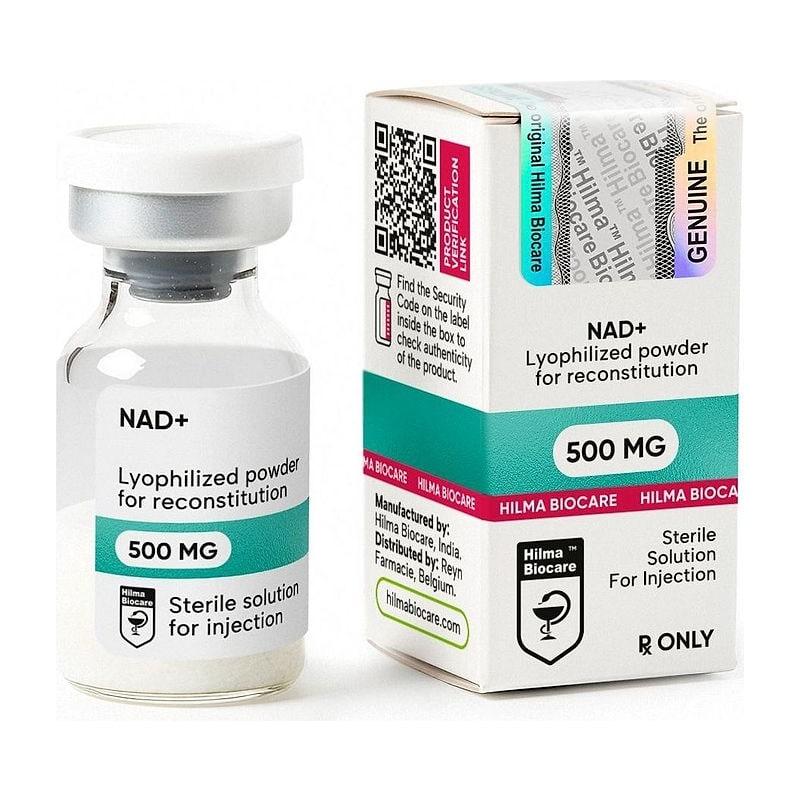
Research Disclaimer: All compounds referenced are sold exclusively for in-vitro and laboratory research use. Not approved for human therapeutic use. This content does not constitute medical advice.
NAD+ (nicotinamide adenine dinucleotide) is a coenzyme found in every living cell. It serves as the central carrier molecule of cellular energy metabolism, the essential substrate for sirtuin longevity enzymes, and a critical cofactor for DNA repair machinery. Unlike most metabolic molecules, NAD+ levels decline substantially with age across virtually all tissues studied — a decline that parallels (and mechanistically contributes to) the functional deterioration characteristic of aging.
The identification of NAD+'s role in sirtuin activation and its age-related decline sparked one of the most active areas of longevity research of the last decade.
Table of Contents#
- What Is NAD+ and Why Does It Matter?
- NAD+ in Energy Metabolism: The Redox Carrier
- NAD+ in Sirtuins: The Longevity Connection
- NAD+ in PARP-Mediated DNA Repair
- NAD+ in CD38 and Cyclic ADP-Ribose Signaling
- Why NAD+ Declines with Age
- Consequences of NAD+ Decline
- NAD+ Precursor Research: NMN and NR
- NAD+ Restoration in Aging Models
- Key References
What Is NAD+ and Why Does It Matter?#
NAD+ (oxidized form) and NADH (reduced form) form a redox couple that serves as the central electron carrier in cellular metabolism. NAD+ accepts electrons (becomes NADH); NADH donates electrons to the electron transport chain to generate ATP.
Dual function: metabolic and signaling#
NAD+ is unique in that it plays both:
- Metabolic role: redox carrier (glycolysis, TCA cycle, fatty acid oxidation, oxidative phosphorylation)
- Signaling role: consumed as a substrate by several regulatory enzymes:
- Sirtuins (SIRT1–7): NAD+-dependent deacetylases and ADP-ribosyltransferases
- PARPs (PARP1, PARP2): NAD+-consuming DNA repair enzymes
- CD38/CD157: NAD+ glycohydrolases producing cyclic ADP-ribose (calcium signaling)
Why "consumed"?#
When sirtuins, PARPs, and CD38 use NAD+, they break the glycosidic bond between nicotinamide and ADP-ribose — releasing nicotinamide (which goes to NAD+ biosynthesis) and ADP-ribose (which goes to signaling). This consumption means that high rates of DNA damage (requiring PARP) or inflammation (upregulating CD38) can deplete NAD+ pools.
This is why aging tissues often have low NAD+ despite having normal capacity for NAD+ synthesis — competing consumption pathways outpace synthesis.
NAD+ in Energy Metabolism: The Redox Carrier#
Glycolysis#
- Glucose → pyruvate: NAD+ is reduced to NADH at the glyceraldehyde-3-phosphate dehydrogenase step
- Net: 2 NADH produced per glucose molecule in glycolysis (cytoplasmic)
TCA cycle (Krebs cycle)#
- Pyruvate → Acetyl-CoA → TCA cycle: 3 NADH and 1 FADH₂ produced per acetyl-CoA molecule
- NADH is the primary electron donor to the electron transport chain
Oxidative phosphorylation#
- NADH donates electrons to Complex I of the mitochondrial ETC
- Electron flow through ETC → proton gradient → ATP synthase → ATP production
- 1 NADH → ~2.5 ATP (under standard physiological conditions)
Why NAD+/NADH ratio matters#
The NAD+/NADH ratio is a readout of cellular metabolic state:
- High NAD+/NADH: fasted state, aerobic metabolism active, sirtuins active
- Low NAD+/NADH (NADH-heavy): fed/obese state, glycolysis dominant, sirtuin activity reduced
- Caloric restriction (one of the best-validated longevity interventions) → elevated NAD+/NADH ratio → increased sirtuin activity → longevity-associated gene expression changes
NAD+ in Sirtuins: The Longevity Connection#
Sirtuins are a family of seven NAD+-dependent enzymes (SIRT1–7) with roles in:
- Gene silencing (SIRT1, SIRT2, SIRT3)
- Mitochondrial biogenesis (SIRT1→PGC-1α)
- DNA repair (SIRT1, SIRT6, SIRT7)
- Metabolic regulation (SIRT3, SIRT4, SIRT5 in mitochondria)
- Inflammation suppression (SIRT1→NF-κB)
The sirtuin–NAD+ connection#
Sirtuins use NAD+ as a cosubstrate (not cofactor) — each catalytic cycle consumes one NAD+ molecule:
Protein-acetyl-lysine + NAD+ → Protein-lysine + 2'-O-acetyl-ADP-ribose + nicotinamide
Critically: sirtuin activity is directly proportional to NAD+ concentration (in the physiologically relevant concentration range). When NAD+ is abundant → sirtuins are active → longevity-protective gene programs are expressed. When NAD+ declines (with age) → sirtuins lose activity → these programs are suppressed.
SIRT1: the master metabolic sirtuin#
SIRT1 deacetylates:
- PGC-1α: activates it → mitochondrial biogenesis, fatty acid oxidation
- p53: reduces apoptosis in healthy cells (anti-cancer function → genomic stability)
- NF-κB: suppresses inflammatory gene expression
- FOXO1/3: activates stress-resistance gene expression
SIRT1 activity is the downstream effector of the caloric restriction longevity response — and it requires NAD+ to work.
SIRT3: mitochondrial guardian#
SIRT3 deacetylates multiple mitochondrial enzymes:
- Complex I of ETC: deacetylation maintains complex I activity and efficiency
- SOD2 (MnSOD): deacetylation activates SOD2 → reduces mitochondrial ROS
- LCAD (long-chain acyl CoA dehydrogenase): activates fatty acid oxidation
With age, declining mitochondrial NAD+ → SIRT3 less active → less SOD2 activation → more ROS → mitochondrial dysfunction — a key aging mechanism.
NAD+ in PARP-Mediated DNA Repair#
PARP1 (poly-ADP-ribose polymerase 1) is activated by DNA single-strand breaks:
- DNA damage → PARP1 binds break → PARP1 consumes NAD+ to add PAR (poly-ADP-ribose) chains to histones and itself
- PAR chains signal repair machinery to the break site → base excision repair proceeds
- PARP1 autoPARylation (self-modification) eventually causes PARP1 to release the break → repair continues
The NAD+ cost of DNA repair: each DNA repair event consumes multiple NAD+ molecules via PARP. In aged cells with more DNA damage → more PARP activation → more NAD+ consumed → depleted NAD+ → less sirtuin activity → further loss of genomic maintenance.
This creates a vicious cycle: aging DNA damage → more PARP consumption of NAD+ → less SIRT1/SIRT6 → less DNA repair fidelity → more DNA damage.
NAD+ in CD38 and Cyclic ADP-Ribose Signaling#
CD38 is a multifunctional enzyme that:
- Hydrolyzes NAD+ to ADP-ribose + nicotinamide
- Cyclizes NAD+ to cyclic ADP-ribose (cADPR) — a second messenger for calcium release from ER
- Produces NAADP (nicotinic acid adenine dinucleotide phosphate) — another calcium mobilizer
CD38 is expressed in immune cells and is upregulated in aging and inflammation. The age-related increase in CD38 activity is one of the primary causes of NAD+ decline in aging tissues:
- More CD38 activity → more NAD+ consumed → less NAD+ available for sirtuins and PARPs
- CD38 inhibition (e.g., apigenin, quercetin in preclinical studies) → restored NAD+ levels in aged tissues
Why NAD+ Declines with Age#
The age-related NAD+ decline is well documented in rodents and humans across multiple tissue types:
| Tissue | NAD+ decline magnitude |
|---|---|
| Muscle | 30–50% by age 60 vs. young adults |
| Brain | 20–40% |
| Liver | 40–60% |
| Adipose tissue | 30–50% |
| Blood (NAD in PBMCs) | ~40% between ages 30 and 60 |
Contributing mechanisms#
- Increased CD38 expression and activity: inflammatory senescent cells upregulate CD38 → systemic NAD+ drain
- Increased PARP activation: more DNA damage in aged cells → more PARP consumption
- Reduced NAMPT activity: NAMPT (nicotinamide phosphoribosyltransferase) is the rate-limiting enzyme in the salvage pathway (the main NAD+ synthesis route in mammals). NAMPT expression declines with age in some tissues.
- Mitochondrial dysfunction: impaired mitochondrial metabolism reduces the NAD+/NADH cycling efficiency
Consequences of NAD+ Decline#
Low NAD+ in aged tissues produces:
- Reduced sirtuin activity → reduced mitochondrial function, impaired DNA repair, increased inflammation
- Impaired DNA repair → genomic instability → cellular senescence
- Mitochondrial dysfunction → reduced ATP production, increased ROS
- Metabolic inflexibility → impaired fat oxidation (requires NAD+ for fatty acid β-oxidation)
- Increased senescent cell burden → SASP (senescence-associated secretory phenotype) → systemic inflammation
NAD+ Precursor Research: NMN and NR#
Since NAD+ does not efficiently enter cells directly (it cannot cross the plasma membrane and must be synthesized intracellularly), research on NAD+ restoration focuses on precursors that are cell-permeable and converted to NAD+ intracellularly:
| Precursor | Full Name | Entry into NAD+ pathway | Bioavailability |
|---|---|---|---|
| NMN | Nicotinamide Mononucleotide | Directly to NAD+ (via NMNAT) | Good SC/IV; oral partially absorbed |
| NR | Nicotinamide Riboside | → NMN → NAD+ (via NRK1/2) | Oral bioavailability validated |
| Nicotinamide (NAM) | Niacinamide (vitamin B3) | Via NAMPT salvage → NMN → NAD+ | Oral, inexpensive, but inhibits sirtuins at high dose |
| Nicotinic acid (NA) | Niacin (vitamin B3) | Preiss-Handler pathway → NAD+ | Flushing side effect |
For research, NMN (SC or IV) provides the most direct NAD+ precursor route with established tissue-level NAD+ elevation data.
NAD+ Restoration in Aging Models#
Rodent aging studies#
Yoshino et al. (2011) showed:
- NMN administration to aged mice: restored NAD+ levels toward young-mouse levels
- Improved energy metabolism, insulin sensitivity, muscle function
- Reversed age-related mitochondrial dysfunction
Gomes et al. (2013) showed:
- SIRT1→HIF-1α pathway mediates muscle pseudohypoxia in aging (NAD+ decline → SIRT1 less active → HIF-1α acetylated → pseudohypoxic gene expression)
- NMN supplementation reversed this → improved muscle mitochondrial function
Mills et al. (2016) — oral NMN in mice:
- Improved energy metabolism, insulin sensitivity, bone density, immune function, body weight, eye function
- No adverse effects at tested doses
Human data#
Yoshino et al. (2021) — first randomized human trial of NMN:
- Postmenopausal women with pre-diabetes
- 250 mg/day NMN × 10 weeks
- Muscle NAD+ elevated (by biopsy + P-MRS)
- Improved muscle insulin sensitivity
- No adverse effects
Key References#
-
Yoshino J, et al. (2011). "Nicotinamide mononucleotide, a key NAD+ intermediate, treats the pathophysiology of diet- and age-induced diabetes in mice." Cell Metabolism, 14(4):528–536.
-
Gomes AP, et al. (2013). "Declining NAD+ induces a pseudohypoxic state disrupting nuclear-mitochondrial communication during aging." Cell, 155(7):1624–1638.
-
Mills KF, et al. (2016). "Long-term administration of nicotinamide mononucleotide mitigates age-associated physiological decline in mice." Cell Metabolism, 24(6):795–806.
-
Yoshino M, et al. (2021). "Nicotinamide mononucleotide increases muscle insulin sensitivity in prediabetic women." Science, 372(6547):1224–1229.
-
Camacho-Pereira J, et al. (2016). "CD38 dictates age-related NAD decline and mitochondrial dysfunction through an SIRT3-dependent mechanism." Cell Metabolism, 23(6):1127–1139.
-
Verdin E. (2015). "NAD+ in aging, metabolism, and neurodegeneration." Science, 350(6265):1208–1213.
Research Use Only: NAD+, NMN, and all referenced compounds are sold exclusively for in-vitro research and laboratory use. Not for human consumption. JuicedPharma does not provide medical advice.
Published by JuicedPharma Research Team · September 2026 · Category: Research Protocols & Science