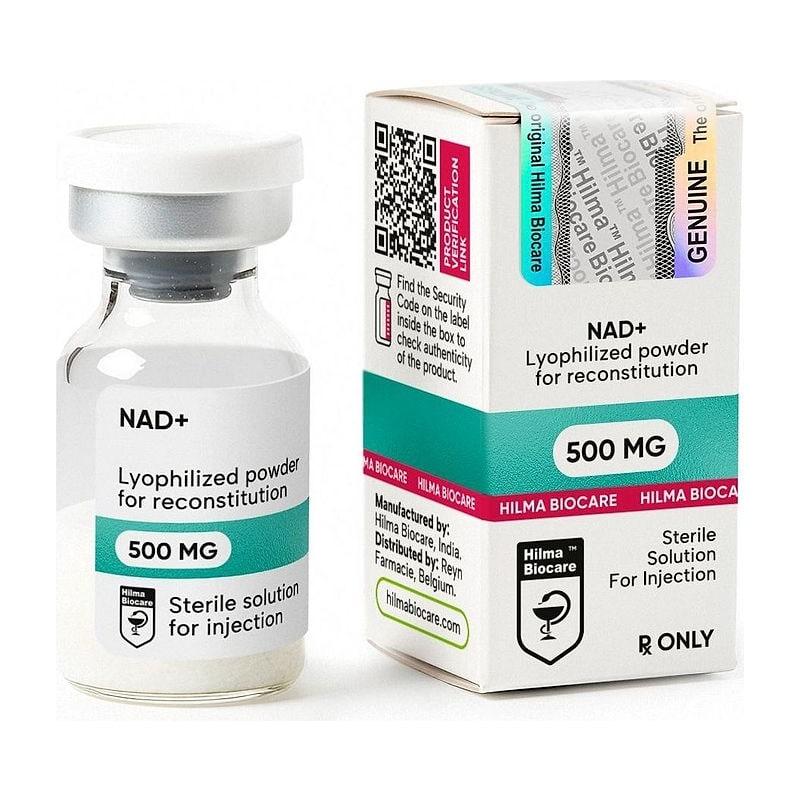
Research Disclaimer: All compounds referenced are sold exclusively for in-vitro and laboratory research use. Not approved for human therapeutic use. This content does not constitute medical advice.
Sirtuins are a family of seven NAD+-dependent enzymes that regulate gene expression, DNA repair, metabolism, and stress responses. First identified as lifespan regulators in yeast (Sir2), the mammalian sirtuin family (SIRT1–7) has been extensively studied as a key mechanistic link between cellular energy status (sensed via the NAD+/NADH ratio) and longevity-associated gene expression programs.
The critical insight: because sirtuins require NAD+ as a cosubstrate, their activity is directly coupled to cellular NAD+ availability — and NAD+ declines with age. Restoring NAD+ in aged cells via NMN or NR reactivates sirtuin-dependent programs that were suppressed by the NAD+ deficit.
Table of Contents#
- The Sirtuin Family: Overview
- Deacetylase Mechanism: How Sirtuins Work
- SIRT1: Metabolic Master Regulator
- SIRT2: Cytoskeletal and Mitotic Roles
- SIRT3: Mitochondrial Antioxidant Defense
- SIRT4, SIRT5: Mitochondrial Metabolism
- SIRT6: Genome Stability and Inflammation
- SIRT7: Ribosome Biogenesis and Stress
- NAD+ Dose-Response: Concentration Dependence of Sirtuin Activity
- Research Applications: Activating vs. Inhibiting Sirtuins
- Key References
The Sirtuin Family: Overview#
| Sirtuin | Localization | Primary Activity | Key Substrates | Major Functions |
|---|---|---|---|---|
| SIRT1 | Nucleus/cytoplasm | Deacetylase | p53, PGC-1α, FOXO, NF-κB, HIF-1α | Metabolism, DNA repair, inflammation |
| SIRT2 | Cytoplasm | Deacetylase | α-tubulin, FOXO3a, H4K16 | Mitosis, cytoskeleton, differentiation |
| SIRT3 | Mitochondria | Deacetylase | Complex I, SOD2, LCAD, IDH2 | Mitochondrial function, ROS defense |
| SIRT4 | Mitochondria | ADP-ribosyltransferase | GDH, IDH2 | Amino acid metabolism, insulin |
| SIRT5 | Mitochondria | Desuccinylase/demalonylase | CPS1, SDH, SOD1 | Urea cycle, fatty acid metabolism |
| SIRT6 | Nucleus | Deacetylase/ADP-ribosylase | H3K9ac, H3K56ac, PARP1, HIF-1α | Telomere integrity, DNA repair |
| SIRT7 | Nucleolus | Deacetylase | H3K18ac, RNA pol I | rRNA transcription, ribosome biogenesis |
Deacetylase Mechanism: How Sirtuins Work#
The reaction#
Sirtuins catalyze the deacetylation of lysine residues on target proteins. The reaction requires NAD+ as a cosubstrate:
Protein-Acetyl-Lys + NAD+ → Protein-Lys + 2'-O-Acetyl-ADP-Ribose + Nicotinamide
Unlike HDAC (histone deacetylase) enzymes that use water for deacetylation, sirtuins transfer the acetyl group to ADP-ribose, consuming one NAD+ per catalytic cycle.
Products of sirtuin catalysis#
- Deacetylated protein: the functional output (protein activity changed)
- 2'-O-Acetyl-ADP-Ribose (OAADPR): a metabolite with possible signaling roles (binds MACA domain proteins)
- Nicotinamide (NAM): recycled back into the NAD+ salvage pathway via NAMPT; also a weak sirtuin inhibitor (product inhibition)
Km for NAD+#
SIRT1's Km for NAD+ is approximately 80–200 µM — close to physiological intracellular NAD+ concentrations (~100–500 µM in healthy cells). This means that:
- At young-adult NAD+ levels (~500 µM): SIRT1 operates near-saturated → high activity
- At aged NAD+ levels (~200–300 µM): SIRT1 operates at Km → activity is significantly reduced
- Raising NAD+ from 200 to 500 µM in aged tissue → SIRT1 activity increases proportionally
This is the mechanistic basis for NAD+ restoration as a sirtuin activator in aged tissues.
SIRT1: Metabolic Master Regulator#
SIRT1 is the most studied mammalian sirtuin and the closest functional homolog to yeast Sir2, which was first linked to lifespan extension.
Metabolic substrates#
PGC-1α deacetylation (the central function):
- PGC-1α is the master coactivator of mitochondrial biogenesis
- Acetylated PGC-1α is inactive; SIRT1 deacetylation activates it
- Active PGC-1α → drives expression of TFAM, NRF1, NRF2 → mitochondrial biogenesis
- NAD+ elevation → SIRT1 → PGC-1α → more mitochondria → better energy production
- This is the primary mechanism by which caloric restriction and exercise (both NAD+-elevating) improve mitochondrial function
FOXO1/3 deacetylation:
- FOXO transcription factors activate stress-resistance genes (SOD2, catalase, GADD45)
- Acetylated FOXO is less active; SIRT1 deacetylation enhances FOXO's transcriptional activity for some targets
- Net: SIRT1 → FOXO → enhanced ROS detoxification, enhanced DNA repair
p53 deacetylation:
- Acetylated p53 is fully active as a pro-apoptotic factor
- SIRT1 deacetylation reduces p53's ability to trigger apoptosis
- Nuance: this protects healthy cells from unnecessary apoptosis; in cancer cells, SIRT1's deacetylation of p53 can be tumor-promoting — important caveat for cancer research
NF-κB deacetylation:
- NF-κB RelA subunit deacetylation at K310 by SIRT1 → reduces NF-κB target gene transcription
- Effect: anti-inflammatory. SIRT1 activity suppresses inflammatory gene expression
- Aging → NAD+ decline → SIRT1 less active → NF-κB more active → chronic low-grade inflammation (inflammaging)
HIF-1α deacetylation:
- HIF-1α is the master transcription factor for hypoxic gene expression
- SIRT1 deacetylates HIF-1α → reduces its transcriptional activity in normoxia
- Age-related NAD+ decline → SIRT1 less active → HIF-1α inappropriately active even in normoxia → "pseudohypoxia" in aged muscle → metabolic dysfunction
SIRT2: Cytoskeletal and Mitotic Roles#
SIRT2 is primarily cytoplasmic and deacetylates:
- α-tubulin at K40: major cytoskeletal substrate; SIRT2 deacetylation changes microtubule dynamics
- FOXO3a: nuclear entry triggered by SIRT2 during oxidative stress → FOXO3 stress response
- H4K16ac: SIRT2 enters the nucleus during mitosis to deacetylate H4K16, regulating chromosome condensation
Relevance for research: SIRT2 activity links cytoskeletal function to energy status. In aged neurons, dysregulated SIRT2 activity has been implicated in neurodegeneration. SIRT2 inhibitors are under investigation for Parkinson's and Alzheimer's disease research.
SIRT3: Mitochondrial Antioxidant Defense#
SIRT3 is the dominant mitochondrial sirtuin and is essential for mitochondrial function and ROS control:
Key substrates#
Complex I deacetylation: SIRT3 deacetylates NDUFA9 (a Complex I subunit) → increased Complex I activity → more efficient NADH oxidation → less superoxide generation at Complex I
SOD2 (MnSOD) at K68:
- Acetylated SOD2: reduced activity (~30% of deacetylated activity)
- SIRT3 deacetylation → full SOD2 activation → converts mitochondrial superoxide to H₂O₂ → further processed to H₂O by catalase/GPx
- Age-related effect: declining mitochondrial NAD+ → SIRT3 less active → SOD2 underactivated → superoxide accumulates → oxidative damage to mtDNA and proteins
IDH2 at K413:
- Isocitrate dehydrogenase 2 (IDH2) generates NADPH in mitochondria → required for glutathione reductase (reducing glutathione/GSSG back to GSH)
- SIRT3 activates IDH2 → more mitochondrial NADPH → more GSH → better antioxidant defense
LCAD (long-chain acyl-CoA dehydrogenase):
- SIRT3 deacetylation activates LCAD → enhanced fatty acid β-oxidation → better fat utilization
SIRT3 and aging#
SIRT3 knockout mice show:
- Accelerated ROS accumulation
- Mitochondrial dysfunction
- Metabolic syndrome features
- Earlier cancer development
SIRT3 overexpression in rodents → extended lifespan in some studies, reduced age-related hearing loss (spiral ganglion neuron preservation).
SIRT4, SIRT5: Mitochondrial Metabolism#
SIRT4#
SIRT4 is the most unusual sirtuin — it primarily uses ADP-ribosylation (not deacetylation) as its enzymatic activity:
- Inhibits GDH (glutamate dehydrogenase) via ADP-ribosylation → reduces amino acid-stimulated insulin secretion
- Inhibits PDH (pyruvate dehydrogenase) → reduces glucose oxidation → metabolic switch
- SIRT4 is upregulated by DNA damage → redirects cellular resources from metabolism to DNA repair
SIRT5#
SIRT5 is primarily a desuccinylase and demalonylase (removes succinyl and malonyl groups from lysine):
- CPS1 (carbamoyl phosphate synthetase 1): SIRT5 desuccinylation activates CPS1 → urea cycle function
- SDH (succinate dehydrogenase/Complex II): SIRT5 regulates SDH activity
- SIRT5 knockout mice: hyperammonemia (impaired urea cycle)
SIRT6: Genome Stability and Inflammation#
SIRT6 operates in the nucleus and is perhaps the most directly anti-aging sirtuin in mammalian models:
SIRT6 and lifespan#
- SIRT6 knockout mice: show an accelerated aging syndrome — progressive metabolic dysfunction, genomic instability, premature death
- SIRT6 overexpression (Kanfi et al. 2012): male mice live ~15% longer; improved glucose metabolism, reduced IGF-1 signaling
Substrates and functions#
H3K9ac deacetylation: silences transposable elements and repetitive sequences → prevents genomic instability from retrotransposon activation (a major driver of aging)
H3K56ac deacetylation: at DNA double-strand breaks → facilitates DNA repair (DSB repair requires local chromatin decompaction; SIRT6 controls the extent)
HIF-1α co-repression: SIRT6 + SIRT1 together oppose HIF-1α transcriptional activity → prevent pseudohypoxia
PARP1 ADP-ribosylation: SIRT6 directly activates PARP1 by ADP-ribosylating it → enhanced DNA repair
SIRT7: Ribosome Biogenesis and Stress#
SIRT7 localizes to the nucleolus and regulates:
- H3K18ac deacetylation: histone modification at RNA Pol I promoters → represses rDNA transcription (paradoxically, SIRT7 suppresses ribosome biogenesis under stress — a protective response)
- Stress response: SIRT7 deacetylates hypoxia-response transcription factors and interacts with the unfolded protein response
- SIRT7 knockout: shortened lifespan in mice, cardiac dysfunction, inflammatory cardiomyopathy
NAD+ Dose-Response: Concentration Dependence of Sirtuin Activity#
The key pharmacological principle:
| Intracellular NAD+ | SIRT1 Activity | Notes |
|---|---|---|
| <100 µM | Near-zero | Below Km — minimal activity |
| 150–250 µM | ~50% maximal | Young adults, sedentary, some tissues |
| 300–500 µM | 70–90% maximal | Healthy young adults, active |
| >500 µM | Near-maximal | Exceeds Km; exercise, caloric restriction |
Aging → NAD+ falls from 300–500 µM to 150–250 µM in many tissues → SIRT1 loses ~50–70% activity.
NMN or NR supplementation → can restore NAD+ to 300–400 µM in aged rodent tissues → partial sirtuin activity restoration.
The response is tissue-specific: liver tends to have high baseline NAD+ with good restoration response; muscle and brain show more dramatic age-related declines and restoration benefits.
Research Applications: Activating vs. Inhibiting Sirtuins#
Activation research (NAD+ precursor supplementation)#
Primary tools:
- NMN (SC or IV in rodents): directly elevates tissue NAD+, bypasses NAMPT rate limit
- NR (oral): elevates blood and muscle NAD+; best validated oral NAD+ precursor
- NAD+ (IV): direct supplementation; quickly taken up in some tissues
Use when: investigating longevity pathways, metabolic improvement, mitochondrial function restoration, DNA repair capacity.
Inhibition research#
For understanding sirtuin biology via loss-of-function:
- Sirtinol, EX-527: SIRT1/2 inhibitors
- 3-TYP: SIRT3 inhibitor
- SIRT6-specific inhibitors: under development
Use when: characterizing which sirtuin mediates a specific effect; cancer biology (some cancers are sirtuin-dependent); investigating the SIRT1-HIF-1α–metabolism axis.
Key References#
-
Haigis MC, Guarente LP. (2006). "Mammalian sirtuins — emerging roles in physiology, aging, and calorie restriction." Genes & Development, 20(21):2913–2921.
-
Kanfi Y, et al. (2012). "The sirtuin SIRT6 regulates lifespan in male mice." Nature, 483(7388):218–221.
-
Hirschey MD, et al. (2010). "SIRT3 regulates mitochondrial fatty-acid oxidation by reversible enzyme deacetylation." Nature, 464(7285):121–125.
-
Onyango P, et al. (2002). "SIRT3, a human SIR2 homologue, is an NAD-dependent deacetylase localized to mitochondria." PNAS, 99(21):13653–13658.
-
Guarente L. (2013). "Calorie restriction and sirtuins revisited." Genes & Development, 27(19):2072–2085.
-
Kaeberlein M, McVey M, Guarente L. (1999). "The SIR2/3/4 complex and SIR2 alone promote longevity in Saccharomyces cerevisiae by two different mechanisms." Genes & Development, 13(19):2570–2580.
Research Use Only: NAD+, NMN, and all referenced compounds are sold exclusively for in-vitro research and laboratory use. Not for human consumption. JuicedPharma does not provide medical advice.
Published by JuicedPharma Research Team · September 2026 · Category: Research Protocols & Science