Research Disclaimer: All compounds described are sold exclusively for in-vitro and laboratory research use. Not for unsupervised use. This content does not constitute medical advice.
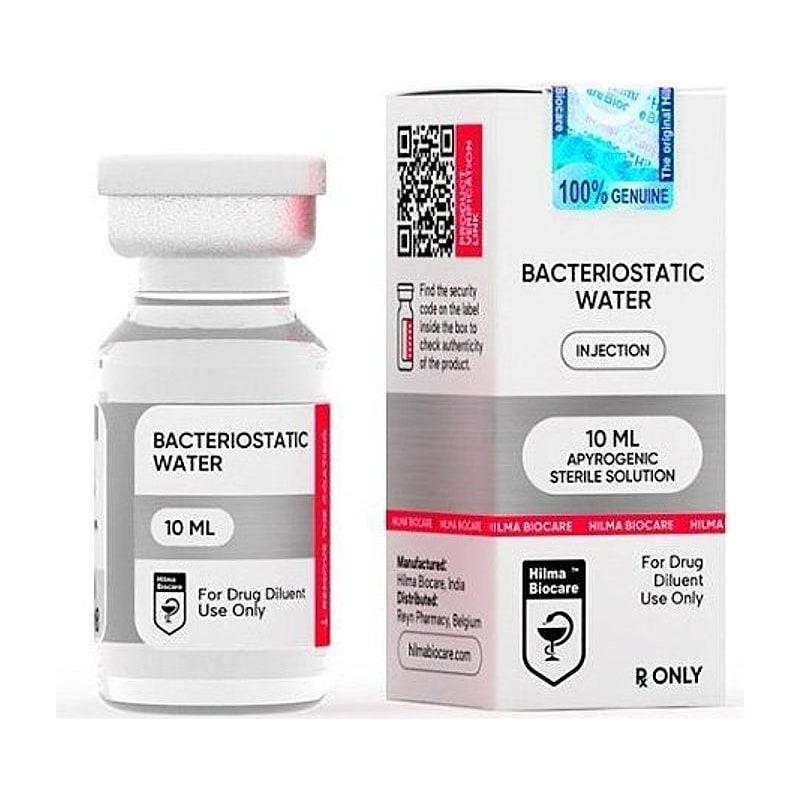
The choice of reconstitution solvent is a critical variable in research peptide preparation that affects both peptide stability and the duration over which a reconstituted vial can be used in research protocols. Bacteriostatic water (BAC water) — sterile water containing 0.9% benzyl alcohol — is the standard solvent for most lyophilized research peptides. Understanding why, and when alternatives are appropriate, is essential for reliable experimental design.
What Bacteriostatic Water Is#
Composition:
- Water for injection (WFI): ultra-pure water meeting USP/Ph.Eur. monograph for injection-grade purity
- Benzyl alcohol: 0.9% (9 mg/mL) as bacteriostatic preservative
- No other additives (no salts, no buffers, no tonicity agents)
Benzyl alcohol mechanism: Benzyl alcohol is a broad-spectrum antimicrobial. At 0.9% concentration it inhibits bacterial growth without denaturing most research peptides. It disrupts bacterial cell membranes, preventing proliferation in multi-use vials over 28 days at 2–8°C storage.
pH: BAC water is slightly acidic (pH 4.5–7.0 per USP) — compatible with most research peptides whose stability range is pH 4–7.
Normal Saline (0.9% NaCl): When It Works and When It Doesn't#
Composition: 0.9% sodium chloride (154 mEq/L Na+, 154 mEq/L Cl−) — isotonic with physiological fluids
Why saline is NOT ideal for most research peptides:
- No bacteriostatic preservative → single-use only (24–48h shelf life after reconstitution)
- Ionic strength effects: High sodium chloride concentration can reduce solubility of some peptides (salting-out effect)
- Some peptides precipitate in saline: particularly at higher concentrations; most notable with BPC-157 and some GH secretagogues
- pH 5.0–7.0 without buffering → pH drift over time in open/multi-draw vials
When saline is appropriate:
- Immediate-use reconstitution (single dose, same day)
- Cell culture studies where BAC water's benzyl alcohol would be cytotoxic to cells in the assay
- Specific protocols explicitly requiring isotonic solution
Sterile Water for Injection: Single-Use Standard#
Composition: Pure WFI, no additives
Properties:
- No preservative → supports microbial growth if contaminated
- Hypotonic (no tonicity agent)
- Shelf life after opening vial: 24h
Use case: Single-use experimental protocols requiring no preservative (e.g., cell viability assays where benzyl alcohol at final dilution may affect results)
Limitation: For multi-timepoint research protocols, must prepare fresh each use → reduces reproducibility if concentration accuracy varies between preparations.
Acetic Acid Solutions for Specific Peptides#
0.1% acetic acid (AA):
- Used specifically for: growth factors (IGF-1, MGF), some GH analogs
- Rationale: These proteins are more soluble and stable at low pH (~3.5–4.0)
- BAC water may be too high pH for optimal solubility of these compounds
How to prepare 0.1% AA: Dilute glacial acetic acid 1:1000 in sterile water (0.1 mL acetic acid in 99.9 mL sterile water); filter through 0.22 µm PVDF membrane filter.
Side-by-Side Comparison#
| Property | BAC Water | Normal Saline | Sterile Water | 0.1% Acetic Acid |
|---|---|---|---|---|
| Preservative | 0.9% benzyl alcohol | None | None | None (low pH is antimicrobial) |
| Shelf life (2–8°C) | Up to 28 days | 24–48h | 24h | 3–5 days |
| Ionic strength | Low | High (isotonic) | None | Low |
| Best for peptides | Most research peptides | Immediate use only | Single-use; no benzyl alcohol tolerance | Growth factors, IGF-1 |
| Cell assay compatible | No (BA cytotoxic at high dose) | Yes | Yes | Depends on dilution |
| pH | 4.5–7.0 | 5.0–7.0 | 5.5–7.0 | ~3.5–4.0 |
Benzyl Alcohol Concentration in Research Assays#
An important consideration for cell-based assays:
BAC water contains 0.9% BA. When reconstituting 5 mg BPC-157 in 2 mL BAC water, the reconstituted solution contains 0.9% BA. However:
- In animal research (subcutaneous, intraperitoneal): 0.9% BA in the administered volume is well-tolerated and consistent with USP standards for injection vehicles
- In cell culture: final BA concentration at working dose matters. If you add 10 µL of reconstituted peptide to 1 mL cell media, final BA = 0.009% — typically below cytotoxic threshold for most cell lines
- If higher volumes are used in cell assays, consider sterile water reconstitution and immediate use to avoid BA interference with cell viability
JuicedPharma Recommendation#
For most research peptide protocols: bacteriostatic water is the standard choice. It provides:
- 28-day refrigerated shelf life after reconstitution
- Broad-spectrum antimicrobial protection in multi-draw vials
- Compatibility with all major research peptides (BPC-157, TB-500, ipamorelin, CJC-1295, PT-141, semaglutide)
We supply research-grade BAC water (30 mL multi-dose vials, 0.9% benzyl alcohol, WFI base) alongside all lyophilized peptide products.
Research Use Only. JuicedPharma does not provide medical advice.
Published by JuicedPharma Research Team · September 2026 · Category: Research Protocols & Science