Research Disclaimer: All information is for research use only. Not for unsupervised use. This content does not constitute medical advice.
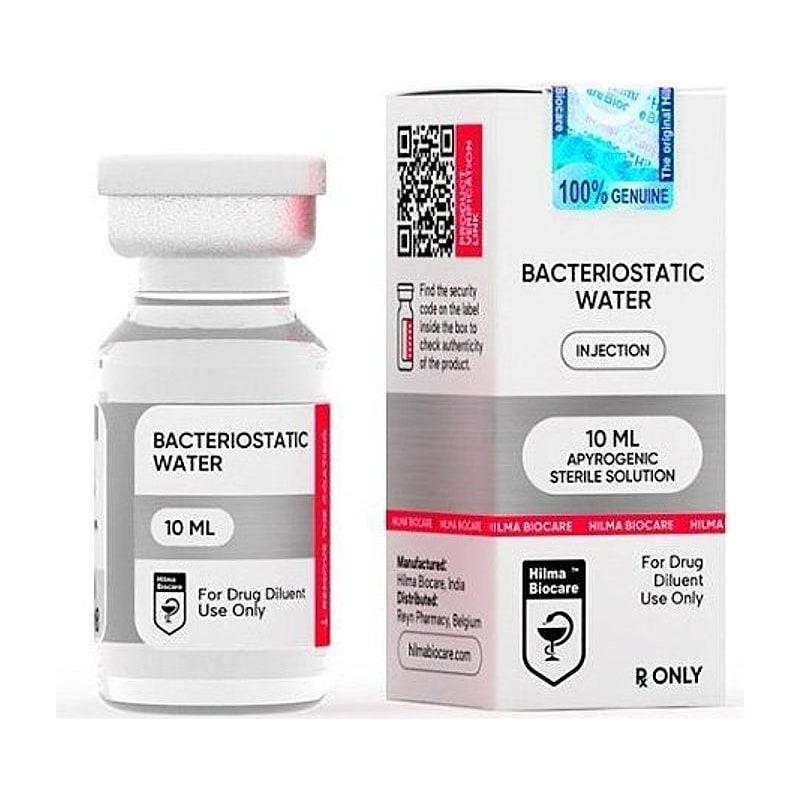
Bacteriostatic water (USP: Water for Injection with 0.9% benzyl alcohol) is the standard diluent for reconstituting lyophilized (freeze-dried) peptides in research settings. The 0.9% benzyl alcohol content inhibits bacterial growth without killing bacteria outright ("bacteriostatic" vs. "bactericidal") — allowing a reconstituted vial to be used multiple times over days or weeks while maintaining sterility. This multi-use capability is the core research advantage over plain sterile water for injection (SWFI), which lacks any antimicrobial preservative.
Composition and Regulatory Standard#
| Component | Concentration | Function |
|---|---|---|
| Water for Injection (WFI) | Balance | Solvent; meets USP/EP pyrogen-free standard |
| Benzyl alcohol | 0.9% (9 mg/mL) | Bacteriostatic preservative |
| pH | 5.0–7.0 (USP spec) | Maintained without additional buffers |
WFI standard: water used is highly purified, endotoxin-tested (LAL test), and sterile — not standard distilled water. This pyrogen-free quality is critical: endotoxins (LPS from gram-negative bacteria cell walls) can invalidate in vitro and in vivo research results.
Benzyl Alcohol: Antimicrobial Mechanism#
Benzyl alcohol (PhCH₂OH) inhibits bacteria via:
- Membrane disruption: benzyl alcohol integrates into bacterial lipid bilayer → increases membrane fluidity → disrupts proton gradient and ATP synthesis
- Metabolic inhibition: bacteriostatic concentrations disrupt key enzymatic processes without lysis (bacteriostatic, not bactericidal)
- Concentration-dependent: at 0.9%, growth inhibition but not cell death → bacteria remain but cannot proliferate
Why not higher BA concentration?
- Benzyl alcohol >1% → cytotoxic to mammalian cells
- 0.9% is the balance point: inhibits microbial growth without significant protein denaturation or cytotoxicity at volumes used in research
BAC Water vs. Sterile Water: When to Use Which#
| Parameter | BAC water (0.9% BA) | Sterile water for injection |
|---|---|---|
| Antimicrobial preservative | Yes (0.9% benzyl alcohol) | None |
| Multi-use vial | Yes (up to 28 days after first use) | Single-use only |
| Peptide compatibility | Most peptides | All peptides |
| pH | 5.0–7.0 | 5.0–7.0 |
| Use case | All research protocols | Immediately used preparations |
When sterile water is preferred:
- Peptides sensitive to benzyl alcohol (very rare; most research peptides are compatible)
- Single-use preparation where multi-dose stability is irrelevant
- Some cell culture applications where even 0.9% BA is cytotoxic at the final working concentration
Practical rule: For research peptides (BPC-157, TB-500, Ipamorelin, CJC-1295, PT-141, semaglutide, etc.) — use BAC water. Single-use SWFI only when BA compatibility has been specifically verified as problematic.
Reconstitution Protocol#
Standard reconstitution steps for lyophilized peptides:
- Allow refrigerated peptide vial and BAC water vial to equilibrate to room temperature (5–10 min)
- Wipe both vial tops with 70% isopropyl alcohol swab; allow to dry
- Draw desired volume of BAC water into a sterile syringe (e.g. insulin syringe or BD 1mL)
- Insert needle into peptide vial at an angle; inject BAC water slowly along the INSIDE WALL of the vial — do not jet directly onto the lyophilized cake
- Do NOT shake; gently swirl or roll the vial until the lyophilized powder dissolves completely (typically 30–60 seconds for most peptides)
- Allow 5 min rest if any cloudiness persists; do not use if cloudiness remains (indicates aggregation)
- Label vial with compound name, concentration, date of reconstitution
- Store reconstituted peptide at 2–8°C (refrigerator); use within 28 days (BAC water-reconstituted) or 24–48h (SWFI-reconstituted)
Concentration calculation:
- Example: 5 mg BPC-157 lyophilized powder + 2.5 mL BAC water = 5000 µg / 2500 µL = 2 µg/µL = 2 mg/mL
- For 100 µg dose: draw 50 µL (with an insulin syringe: 50 IU on a U100 syringe)
Storage After Reconstitution#
| Condition | Duration | Notes |
|---|---|---|
| 2–8°C (refrigerator) | 28 days (BAC water) | Keep away from light; do not freeze after reconstitution |
| Room temperature (~22°C) | 24–48h (BAC water) | For immediate use only; degrades faster |
| −20°C (freezer) | Not recommended (reconstituted) | Ice crystal formation → peptide denaturation/aggregation |
| Lyophilized (unreconstituted) | 2+ years | Store at 2–8°C away from moisture and light |
Research Use Only. JuicedPharma does not provide medical advice.
Published by JuicedPharma Research Team · September 2026 · Category: Research Protocols & Science