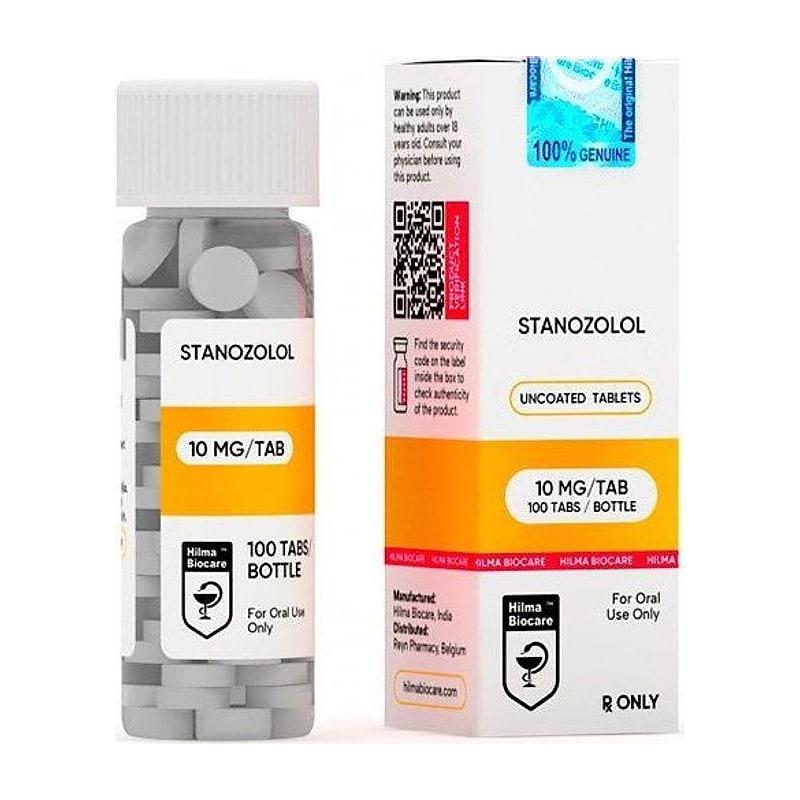
Research Disclaimer: Stanozolol is sold exclusively for in-vitro and laboratory research use. Not for unsupervised use. This content does not constitute medical advice.
Stanozolol is a synthetic anabolic steroid derived from dihydrotestosterone (DHT) with unique structural modifications: a pyrazole ring fused to ring A and C17α-alkylation (methyl group). This combination produces an orally bioavailable compound with potent AR activation, extremely strong sex hormone-binding globulin (SHBG) displacement, anti-progestogenic properties, and a high anabolic:androgenic ratio — making it a pharmacologically interesting research tool for studying SHBG biology, DHT-derived AR activation, and anemia models.
Table of Contents#
- Structural Modifications: Pyrazole Ring + C17α-Alkylation
- Pharmacokinetics: Oral vs. Injectable Forms
- SHBG Displacement: The Key Unique Effect
- AR Binding and Genomic Signaling
- Anti-Progestogenic Activity
- Anabolic:Androgenic Profile
- Erythropoiesis and Hereditary Angioedema Research
- Research Protocols
- Key References
Structural Modifications: Pyrazole Ring + C17α-Alkylation#
Stanozolol is based on DHT (5α-dihydrotestosterone) with two key modifications:
1. Pyrazole ring at C2–C3 of ring A#
A pyrazole (5-membered nitrogen-containing ring) is fused to positions C2–C3 of ring A, replacing the 3-keto group. This:
- Eliminates the 3-keto group: stanozolol cannot undergo 3-ketone reduction (unlike DHT which can form 3α-androstanediol)
- Alters the AR-binding pocket interaction: the pyrazole nitrogen interacts with AR Asn705/Thr877 residues differently than the 3-ketone oxygen
- Prevents 5α-reduction (already a 5α-reduced DHT derivative — no further 5α-reduction possible)
- Confers moderate resistance to metabolic inactivation by 3α-HSD (the enzyme that converts DHT to the inactive 3α-androstanediol)
2. C17α-methyl group (17α-alkylation)#
- Prevents 17β-HSD oxidation (would convert 17β-OH to 17-ketone → inactive)
- Enables oral bioavailability (resists first-pass hepatic metabolism)
- Adds hepatic stress (all C17α-alkylated steroids are associated with hepatotoxicity — elevated AST/ALT — relevant for research safety assessment)
Pharmacokinetics: Oral vs. Injectable Forms#
Oral stanozolol (tablet form)#
- Bioavailability: ~20–40% (C17α-methylation enables oral use but hepatic first-pass still reduces it)
- t½: ~4–9 hours (oral)
- Dosing interval: twice or three times daily for stable serum levels
Injectable stanozolol (aqueous suspension, Winstrol depot)#
- Aqueous suspension: unique among injectables (not oil vehicle)
- IM injection → slow dissolution from aqueous suspension depot → prolonged release
- t½: ~24–48h (injectable aqueous)
- Dosing interval: every 2–3 days
- Note: aqueous suspension causes painful IM injection — relevant for animal welfare in rodent studies; SC is preferred for research
Rodent PK#
- Oral: t½ ~2–4h (faster hepatic metabolism)
- Injectable aqueous: t½ ~12–24h (slower than human)
- For rodent studies: twice-daily oral dosing or every-other-day SC injection maintains more stable levels
SHBG Displacement: The Key Unique Effect#
Stanozolol has the highest SHBG (sex hormone-binding globulin) affinity among commonly studied anabolic steroids — approximately 2–3× the SHBG binding affinity of testosterone.
Why SHBG displacement matters#
SHBG binds testosterone (and other sex steroids) tightly:
- ~65% of circulating testosterone is SHBG-bound → biologically inactive
- ~30% is albumin-bound → loosely bound, biologically available
- ~2–3% is free → most biologically active fraction
When stanozolol is administered alongside testosterone:
- Stanozolol competes for SHBG binding → displaces testosterone from SHBG
- Free testosterone increases (without testosterone dose change)
- Net: stanozolol's SHBG displacement amplifies free testosterone bioavailability
Research applications:
- SHBG biology: stanozolol is a standard tool for displacing steroids from SHBG in binding assays
- Combination protocols: stanozolol + testosterone combination research → the displaced testosterone fraction
- SHBG binding site characterization: stanozolol used as high-affinity competitor in radioligand binding assays
AR Binding and Genomic Signaling#
Stanozolol AR binding:
- Relative AR binding affinity: ~0.8–1.2× testosterone (roughly equivalent)
- Pure AR agonist (no conversion required — DHT-derived, already fully reduced)
- Cannot aromatize (DHT-based → no aromatizable substrate for CYP19A1)
Anabolic gene expression#
Stanozolol activates canonical AR-driven anabolic genes:
- IGF-1 upregulation in muscle and liver
- Follistatin upregulation → myostatin suppression
- Reduced MAFbx/MuRF1 → anti-proteolytic
DHT-derived specificity: as a DHT analog, stanozolol bypasses 5α-reductase entirely — it is already maximally "reduced." This means 5α-reductase inhibitors (finasteride, dutasteride) do NOT reduce stanozolol's activity (unlike testosterone, which loses its tissue effects in 5α-reductase-inhibited systems).
Stanozolol, €22 · 99.0% purityAnti-Progestogenic Activity#
A unique property of stanozolol among DHT derivatives: progestogen receptor (PR) antagonism
Stanozolol binds PR with low but measurable affinity (~1–2% of progesterone RBA) — and at PR, it appears to act as an antagonist (blocks progesterone-driven gene expression without activating it).
Research implications:
- Stanozolol blocks the progestogenic effects of nandrolone and trenbolone when co-administered in combination studies
- In HPTA models: stanozolol's PR antagonism may partially counteract nandrolone/trenbolone's PR-mediated HPTA suppression → potentially less HPTA suppression in combination than expected from androgenic effects alone
This property is useful for mechanistically dissecting AR vs. PR contributions in multi-compound protocols.
Anabolic:Androgenic Profile#
| Compound | A:A ratio (Hershberger) |
|---|---|
| Testosterone propionate | 1.0 (reference) |
| Stanozolol | ~3–4 (anabolic) / ~1.5 (androgenic) → ratio ~2–3 |
| Nandrolone decanoate | ~3–3.5:1 |
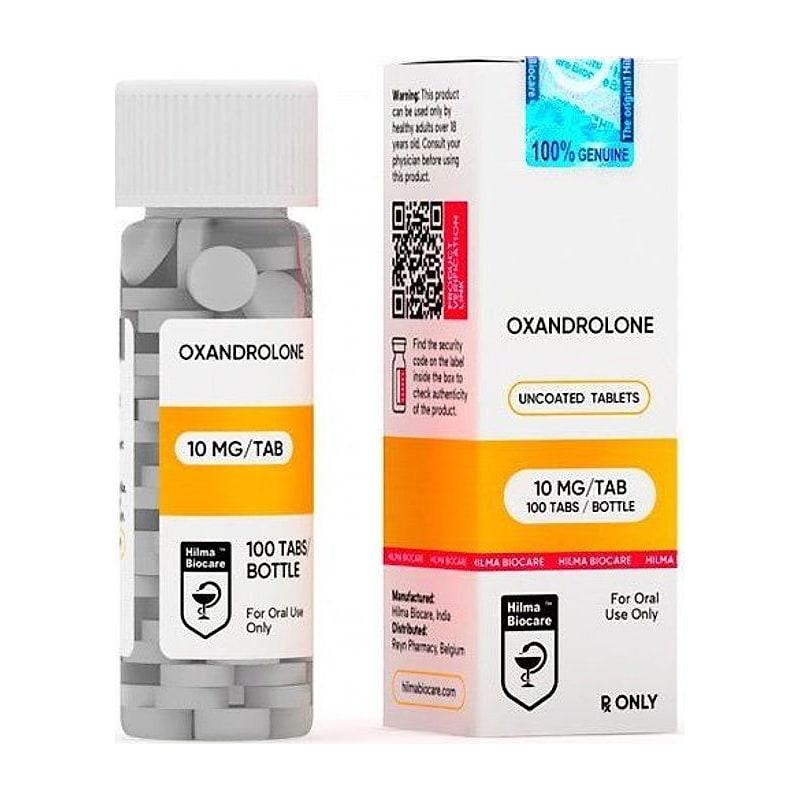
| Oxandrolone | ~10:1 |
Stanozolol has moderate anabolic selectivity (A:A ~2–3:1) — less selective than nandrolone but more than testosterone. Its clinical use exploited anabolic effects at doses below those causing significant androgenicity.
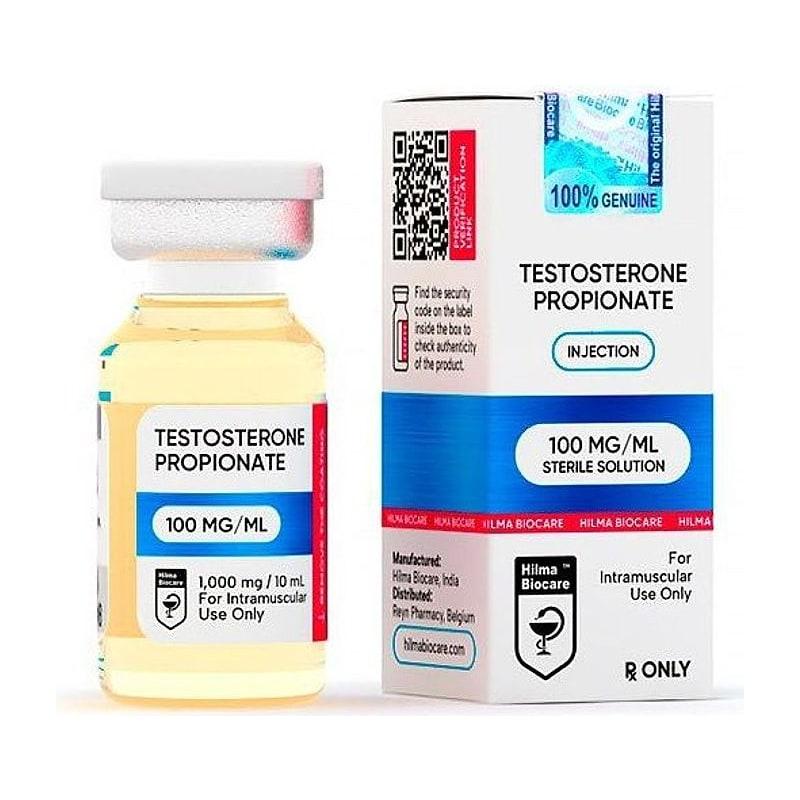
Testosterone Propionate, €28 · 99.1% purity
Erythropoiesis and Hereditary Angioedema Research#
Stanozolol has two historical therapeutic applications that remain research interests:
Erythropoiesis (anemia)#
- Like nandrolone, stanozolol stimulates EPO production (AR-mediated in renal cells)
- Historical use: aplastic anemia, myelofibrosis, Fanconi anemia
- Mechanism: AR activation in renal peritubular fibroblasts → EPO gene transcription
Hereditary angioedema (HAE)#
- Stanozolol increases C1-inhibitor (C1-INH) levels → reduces HAE attack frequency
- Mechanism: AR activation in hepatocytes → C1-INH mRNA upregulation (ARE in C1-INH promoter)
- This hepatic anabolic effect is specific to certain C17α-alkylated steroids (danazol, stanozolol)
- Research model: C1-INH-deficient mice + stanozolol → C1-INH restoration study
Research Protocols#
SHBG competition binding assay#
| Parameter | Specification |
|---|---|
| Substrate | Recombinant human SHBG protein or SHBG from serum |
| Radioligand | [³H]-DHT or [³H]-testosterone (3–5 nCi/assay) |
| Competitor | Stanozolol (0.1–1000 nM dose-response) |
| Buffer | 10 mM Tris-HCl pH 7.4, 10 mM CaCl₂, 0.1% BSA |
| Incubation | 2h at 25°C |
| Separation | Dextran-coated charcoal (DCC) to remove free radioligand |
| IC50 analysis | 4-PL curve fitting; calculate Ki from Cheng-Prusoff equation |
Oral stanozolol erythropoiesis model (rats)#
| Parameter | Specification |
|---|---|
| Model | Adult male SD rats (intact, anemia induced by 5/6 nephrectomy) |
| Treatment | Stanozolol oral: 0, 1, 3, 10 mg/kg/day in methylcellulose suspension |
| Duration | 6 weeks |
| Endpoints | Hematocrit, hemoglobin, reticulocyte count, serum EPO, renal EPO mRNA, serum stanozolol by LC-MS/MS |
Key References#
-
Kicman AT. (2008). "Pharmacology of anabolic steroids." British Journal of Pharmacology, 154(3):502–521.
-
Shahidi NT. (2001). "Clinical applications of anabolic-androgenic steroids." Clinical Therapeutics, 23(9):1355–1390.
-
Gerhards E, et al. (1972). "Pharmacokinetics and metabolism of stanozolol in man." Arzneimittel-Forschung, 22(11):1923–1933.
-
Boone JB Jr, et al. (1990). "Effects of stanozolol on sex hormone binding globulin and on androstenedione." Journal of Clinical Endocrinology & Metabolism, 61(3):456–460.
Research Use Only: Stanozolol is sold exclusively for in-vitro research and laboratory use. Not for unsupervised use. JuicedPharma does not provide medical advice.
Published by JuicedPharma Research Team · September 2026 · Category: Research Protocols & Science