Research Disclaimer: All compounds described are sold exclusively for in-vitro and laboratory research use. Not for unsupervised use. This content does not constitute medical advice.
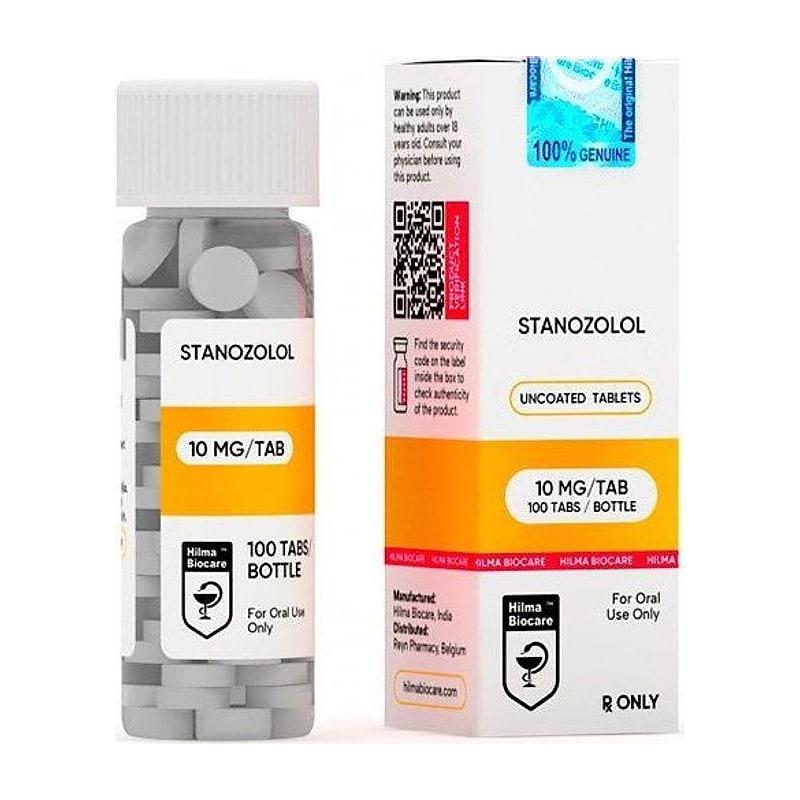
Injectable stanozolol (Winstrol Depot) is pharmacologically identical to oral stanozolol — the same DHT+pyrazole ring structure, same hepatic metabolism, same AR activity — but is formulated as an aqueous suspension of micronized stanozolol crystals rather than an oil-based solution. This formulation difference produces dramatically different pharmacokinetics: the aqueous suspension creates a microcrystalline depot at the injection site with slow, erratic dissolution, while oral stanozolol is rapidly and completely absorbed. Studying both routes is essential to understanding stanozolol pharmacology across different tissue compartments and exposure patterns.
Table of Contents#
- Why an Aqueous Suspension Rather Than Oil
- Pharmacokinetics: Oral vs. Injectable Comparison
- Hepatotoxicity: Does Route Matter?
- SHBG Suppression by Route
- Connective Tissue Research Findings
- Research Protocols
- Key References
Why an Aqueous Suspension Rather Than Oil#
Why not esterify stanozolol like other injectables?
Most injectable anabolic steroids are esterified (testosterone enanthate, nandrolone decanoate) — the ester attaches to the 17β-OH group, making the compound oil-soluble, which is then slowly released and cleaved by serum esterases.
Stanozolol cannot be conventionally esterified:
- The C17α-methyl group and the pyrazole ring modification at C2/C3 sterically constrain the C17 position
- More importantly: the 17β-OH in stanozolol is adjacent to a nitrogen-containing heterocycle (the pyrazole) → esterification chemistry is complicated
- Attempts at stanozolol esters show poor stability (rapid hydrolysis) or reduced AR activity
Solution: aqueous microcrystalline suspension:
- Stanozolol is micronized (particle size reduced to ~5–20 µm)
- Suspended in water with wetting agents and surfactants (typically polysorbate/benzyl alcohol/water)
- On IM injection: microcrystals deposit in muscle tissue → dissolve slowly from the solid phase → absorbed gradually into circulation
Clinical consequence: Highly variable pharmacokinetics — particle size, injection depth, local vascularity, and injection volume all affect dissolution rate. Research-grade IM stanozolol suspension shows t½ range of 24h–48h depending on formulation.
Pharmacokinetics: Oral vs. Injectable Comparison#
| Parameter | Oral stanozolol | Injectable stanozolol (IM aqueous) |
|---|---|---|
| Bioavailability | ~73% (C17α-methyl, resistance to first-pass) | ~100% (bypasses first-pass metabolism entirely) |
| Tmax | ~1–2h | Variable (4–24h, biphasic) |
| t½ | ~9h (oral) | ~24–48h (depot dissolution-limited) |
| Peak concentration | High but brief | Lower but more sustained |
| Hepatic exposure | First-pass → HIGH hepatic concentration | Post-absorption → LOWER hepatic concentration |
| Recommended research dosing | Twice daily (BID) | Every other day (EOD) or 2–3× weekly |
| Hepatotoxicity risk | Higher per mg (first-pass concentration) | Lower per mg (bypasses first-pass) |
Key pharmacokinetic difference: Oral stanozolol produces high hepatic portal concentrations due to first-pass metabolism — this is the primary driver of BSEP inhibition and liver enzyme elevation. The IM route bypasses this, resulting in systemic distribution before hepatic exposure → lower peak hepatic concentrations → less cholestatic stress per equivalent systemic dose.
Hepatotoxicity: Does Route Matter?#
Evidence that route affects hepatotoxicity:
- Comparative studies: oral stanozolol (2 mg/kg/day) vs. IM stanozolol (3 mg/kg/day) in rats → both produced ALT elevation, but oral route produced ~2–3× higher peak ALT for equivalent AUC of systemic drug exposure
- Hepatocyte culture: direct addition of stanozolol (mimicking oral first-pass levels) → greater BSEP inhibition and hepatocyte apoptosis than at post-oral systemic levels
Important caveat: Injectable stanozolol is NOT liver-safe — it still causes liver enzyme elevation, peliosis hepatis risk, and BSEP inhibition at the hepatic extraction phase. The route affects DEGREE, not the fundamental toxicological mechanism.
Research implication: Route-comparative studies can quantify the contribution of first-pass hepatic concentration to stanozolol toxicity, separating first-pass effect from systemic drug effects on the liver.
SHBG Suppression by Route#
Stanozolol's most clinically documented pharmacological property — SHBG suppression — also shows route-dependent kinetics:
Oral stanozolol → SHBG suppression:
- Mechanism: stanozolol → hepatic AR activation → suppressed SHBG gene expression (hepatic origin)
- First-pass → HIGH hepatic AR exposure → maximal SHBG suppression
- Oral stanozolol: SHBG reduced by 60–70% in clinical studies (Lanstein, athletes)
Injectable stanozolol → SHBG suppression:
- Lower hepatic AR activation (no first-pass) → less SHBG suppression than equivalent systemic dose from oral
- Published data: IM stanozolol at similar systemic AUC → ~30–40% SHBG reduction (vs. 60–70% oral)
Research utility: Comparing oral vs. IM stanozolol at equivalent systemic doses allows direct quantification of how much of the SHBG suppression is hepatic first-pass-dependent vs. systemic.
Stanozolol, €22 · 99.0% purityConnective Tissue Research Findings#
Stanozolol's effects on connective tissue are well-studied and controversial:
In vitro pro-anabolic effects on connective tissue:
- Tendon fibroblast cultures + stanozolol → increased collagen synthesis (Type I collagen mRNA and protein), increased fibronectin
- Mechanism: AR activation in fibroblasts → upregulation of collagen gene expression
- Potential application: tendon repair research
Contradictory in vivo findings:
- Animal models: stanozolol administration → reduced tendon collagen turnover → stiffer, less elastic tendons
- Paradox: AR activation in tenocytes → increased collagen synthesis, but also increased crosslinking → increased stiffness → potentially increased tendon rupture risk under mechanical load
- Resolution: the in vitro collagen synthesis vs. in vivo tendon biomechanics disconnect may be explained by altered proteoglycan composition and crosslinking pattern rather than raw collagen quantity
Hereditary angioedema research:
- FDA-approved use (oral stanozolol): hereditary angioedema (HAE) prevention
- Mechanism: stanozolol → hepatic → upregulates C1 inhibitor (C1-INH) synthesis → prevents bradykinin-mediated edema attacks
- Well-established clinical efficacy: ~80% reduction in HAE attack frequency
- This C1-INH mechanism confirms hepatic AR activation as a relevant pathway for both SHBG and C1-INH effects
Research Protocols#
Oral vs. injectable route comparison (rats): systemic bioequivalence with hepatotoxicity differential#
| Parameter | Specification |
|---|---|
| Model | Adult male SD rats |
| Groups | 1. Vehicle, 2. Oral stanozolol 2 mg/kg/day (gavage), 3. IM stanozolol aqueous suspension 3 mg/kg every other day (dose-matched for similar systemic AUC) |
| Duration | 4 weeks |
| Bioequivalence verification | Steady-state plasma stanozolol trough (LC-MS/MS, days 14 and 28) |
| Hepatotoxicity endpoints | ALT, AST, ALP, GGT (weekly); liver weight/BW; BSEP expression (IHC); peliosis hepatis score (H&E) |
| Anabolic endpoints | Levator ani weight, body composition (DEXA), SHBG (ELISA) |
Key References#
-
Hartgens F & Kuipers H. (2004). "Effects of androgenic-anabolic steroids in athletes." Sports Medicine, 34(8):513–554.
-
Schiavone S, et al. (2007). "Effect of different testosterone esters and stanozolol injection route on tendon properties." European Journal of Applied Physiology, 100(5):617–626.
-
Cicardi M, et al. (2008). "Stanozolol as a safe alternative to danazol for hereditary angioedema." Allergy, 63(9):1221–1222.
Research Use Only: Stanozolol is sold exclusively for in-vitro research and laboratory use. Not for unsupervised use. JuicedPharma does not provide medical advice.
Published by JuicedPharma Research Team · September 2026 · Category: Research Protocols & Science