Research Disclaimer: All compounds described are sold exclusively for in-vitro and laboratory research use. Not for unsupervised use. This content does not constitute medical advice.
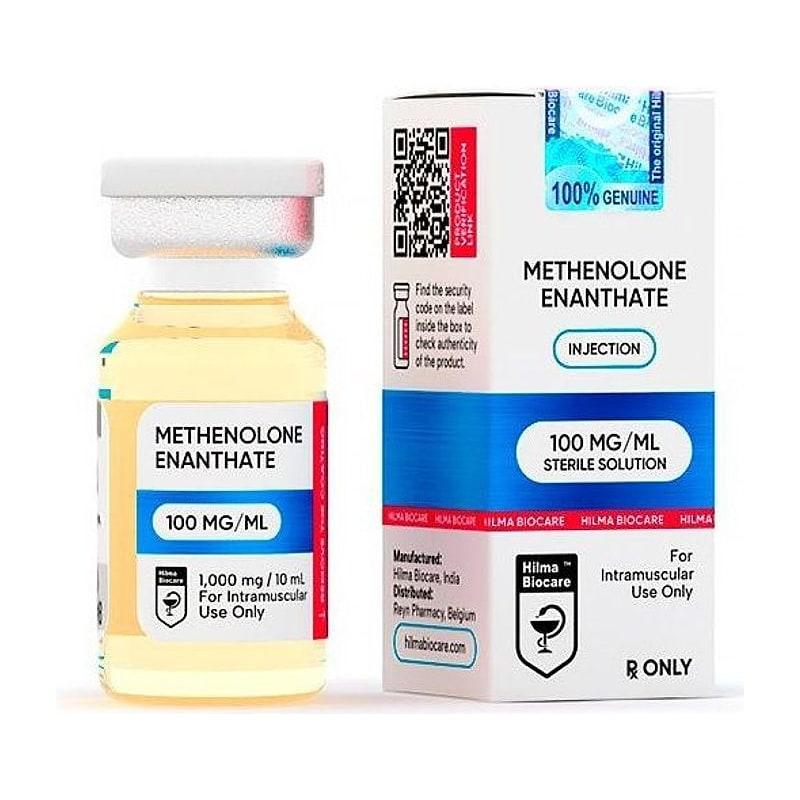
Methenolone (1-methyl-5α-dihydrotestosterone) is a synthetic androgen distinguished by two pharmacological properties that make it unique among anabolic research compounds: it is the only injectable AAS with no reports of significant hepatotoxicity despite an A ring modification, and the oral acetate ester achieves bioavailability via a non-C17α-alkylation mechanism, making it the only non-hepatotoxic oral androgen. Available as methenolone enanthate (injectable, t½ ~10 days) and methenolone acetate (oral), it produces mild anabolic effects with very low androgenicity (A:A ratio ~6:1 by some assays — notably lower selectivity than SARMs, but with a different safety profile).
Table of Contents#
- Structure: 1-Methyl-DHT Chemistry
- Oral Bioavailability Without C17α-Alkylation
- Pharmacokinetics
- AR Binding and Selectivity Profile
- HPTA Suppression: Unusually Mild
- Immune System Research
- Research Protocols
- Key References
Structure: 1-Methyl-DHT Chemistry#
DHT scaffold:
- Methenolone = 5α-dihydrotestosterone + C1α double bond (Δ1,2) + C1-methyl group
- 5α-saturated A ring → not aromatizable → no E2 production from methenolone
- Not a substrate for 5α-reductase (already 5α-reduced at C4/C5)
The Δ1,2 double bond and C1-methyl:
- Introduce mild electron delocalization through ring A
- Protect the 3-keto group from 3α/3β-HSD reduction (which would inactivate the compound)
- Allow moderate resistance to first-pass liver metabolism WITHOUT requiring C17α-alkylation
Esters:
- Methenolone acetate (C2 ester): oral use — very short ester, cleaved quickly in gut/liver
- Methenolone enanthate (C7 ester): IM injectable → t½ ~10.5 days
Oral Bioavailability Without C17α-Alkylation#
This is methenolone acetate's most pharmacologically interesting property:
Why most oral androgens require C17α-methylation:
- Testosterone → oral → 17β-HSD oxidizes 17β-OH → inactive 17-keto compound before hepatic portal circulation
- C17α-methyl blocks this enzymatic inactivation
How methenolone acetate achieves oral bioavailability differently:
- Methenolone acetate: the acetate ester at C17 position provides TEMPORARY protection — slowly cleaved in the GI tract
- The Δ1,2 double bond reduces 17β-HSD affinity → methenolone is a POORER substrate for 17β-HSD than testosterone
- Result: partial oral bioavailability (~40–50%) WITHOUT C17α-methylation → no intrinsic hepatotoxicity
- Important: this bioavailability is lower than C17α-alkylated compounds (~50–80%) → higher mg doses needed
Liver safety:
- Methenolone acetate: no significant ALT/AST elevation in clinical use (Squibb's Nibal tablets, used in HIV wasting)
- Mechanism: no BSEP inhibition (no C17α-methyl); no reactive CYP-generated metabolites with hepatotoxic potential
- This makes methenolone a useful reference compound in research: provides oral androgen activity with hepatologically "clean" background
Pharmacokinetics#
| Parameter | Methenolone acetate (oral) | Methenolone enanthate (IM) |
|---|---|---|
| Route | Oral | IM injection |
| Bioavailability | ~40–50% (without C17α-alkyl) | ~100% (IM) |
| t½ | ~4–6h (oral) | ~10–14 days |
| Tmax | ~1–2h (oral) | ~3–4 days (depot) |
| Dosing frequency | 2× daily (oral) | 1× weekly (IM) |
| Metabolism | Hepatic (mild); 1-methyl provides partial resistance | Ester hydrolysis then same |
| Detection window | ~5–6 weeks (urine) | ~3–4 months (IM) |
AR Binding and Selectivity Profile#
AR affinity:
- Methenolone RBA: ~10–30% of DHT in different assays (lower than most anabolic steroids)
- Despite low RBA, still AR-agonist: biological potency depends on receptor occupancy × intrinsic efficacy
- No progestogenic activity
- No ER activity (non-aromatizing)
A:A ratio:
- Hershberger: levator ani / ventral prostate ~6:1 in most assays
- Lower selectivity than SABMs but with a very different safety profile
- Predominantly Type I/II muscle fiber activation; weaker androgenic signal in prostate at equivalent anabolic doses
Unique feature: very mild SHBG binding → minimal SHBG displacement from testosterone → in testosterone co-research protocols, does not significantly alter free testosterone fraction
Methenolone Enanthate, €110 · 99.0% purityHPTA Suppression: Unusually Mild#
Methenolone is one of the mildest HPTA-suppressing androgens studied:
Clinical evidence:
- HIV wasting trials (Storer et al.): methenolone at anabolic doses → LH suppression ~30–40% (vs. 60–75% for testosterone at comparable anabolic doses)
- Partial HPTA preservation → useful for research models where some HPTA function must be maintained
Mechanism of mild suppression:
- Low AR affinity at hypothalamus → less AR-mediated GnRH suppression
- Non-aromatizing → no E2-mediated negative feedback via ERα at hypothalamus (E2 feedback is the dominant suppression mechanism for testosterone; methenolone lacks this)
- Result: both the AR pathway and ER pathway of HPTA suppression are weak for methenolone
Research implication: Methenolone is useful as a "mild androgen background" in research protocols where partial testosterone replacement is desired without full HPTA shutdown.
Immune System Research#
A historical research interest in methenolone:
Arnold Schwarzenegger-era observation (1980s): Methenolone was anecdotally noted to improve perceived immune function and recovery. This observation triggered scientific investigation.
Research findings:
- Some T-cell studies (in vitro): moderate concentrations of methenolone → may modulate T-helper cell function
- Anti-HIV wasting use: methenolone acetate was used for HIV/AIDS-associated muscle wasting due to perceived better tolerability and mild immunological profile vs. more potent androgens
- NF-κB pathway: some DHT derivatives modulate NF-κB activity → anti-inflammatory properties (but this is shared across many androgens)
Status: Immune-modulating properties of methenolone are not well-mechanistically characterized; most data is anecdotal or based on clinical observation. Active research question.
Research Protocols#
HPTA suppression comparison (intact rats)#
| Parameter | Specification |
|---|---|
| Model | Adult intact male SD rats (n=8/group) |
| Groups | 1. Vehicle, 2. Testosterone enanthate 3 mg/kg SC q5d, 3. Methenolone enanthate 5 mg/kg SC q5d, 4. Nandrolone decanoate 3 mg/kg SC q5d |
| Duration | 6 weeks |
| Endpoints | Serum LH, FSH, testosterone (RIA/LC-MS/MS at weeks 0, 2, 4, 6); testicular weight; Leydig cell morphology (histology); spermatogenesis (Johnsen score) |
Non-hepatotoxic oral anabolic comparison: methenolone acetate vs. oxandrolone (liver safety)#
| Parameter | Specification |
|---|---|
| Groups | 1. Vehicle, 2. Methenolone acetate 10 mg/kg/day oral, 3. Oxandrolone 5 mg/kg/day oral, 4. Methyltestosterone 5 mg/kg/day oral (hepatotoxicity positive control) |
| Duration | 6 weeks |
| Endpoints | ALT, AST, ALP, GGT weekly; liver histology (H&E); BSEP expression (IHC); hepatic GSH |
Key References#
-
Storer TW, et al. (2003). "Testosterone dose-dependently increases maximal voluntary strength and leg power, but does not affect fatigability or specific tension." Journal of Clinical Endocrinology and Metabolism, 88(4):1478–1485.
-
Gao W, et al. (2005). "Selective androgen receptor modulators (SARMs): novel anabolic therapies." Drug Discovery Today, 10(10):719–730.
-
Basaria S. (2010). "Androgen abuse in athletes: detection and consequences." Journal of Clinical Endocrinology and Metabolism, 95(4):1533–1543.
Research Use Only: Methenolone is sold exclusively for in-vitro research and laboratory use. Not for unsupervised use. JuicedPharma does not provide medical advice.
Published by JuicedPharma Research Team · September 2026 · Category: Research Protocols & Science