Research Disclaimer: All compounds described are sold exclusively for in-vitro and laboratory research use. Not for unsupervised use. This content does not constitute medical advice.
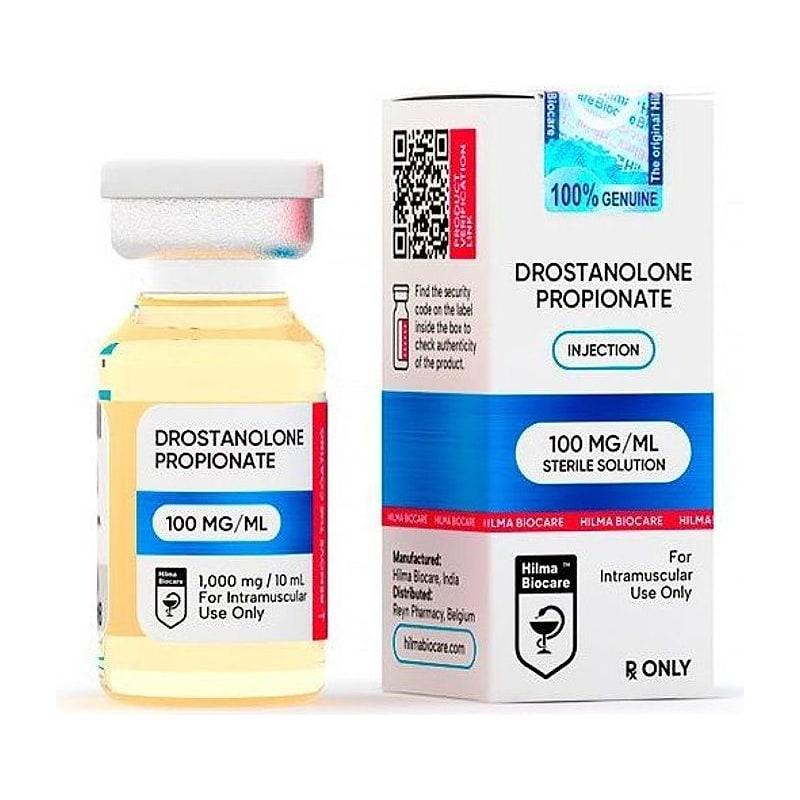
Drostanolone (2α-methyl-dihydrotestosterone; brand name Masteron) is a synthetic androgen derived from 5α-dihydrotestosterone (DHT) with a 2α-methyl modification. Available as drostanolone propionate (t½ ~2.5 days) and drostanolone enanthate (t½ ~7–10 days), drostanolone has unique research properties: it is non-aromatizing, moderately anabolic (A:A ratio ~60:1), and possesses anti-estrogenic activity via partial estrogen receptor (ER) antagonism and possible aromatase competition. Originally developed for the treatment of inoperable breast cancer, it remains a pharmacologically interesting research compound for androgen-estrogen interaction studies.
Table of Contents#
- Structure: 2α-Methyl-DHT Chemistry
- Pharmacokinetics: Propionate vs. Enanthate
- Anti-Estrogenic Properties
- AR Binding and Anabolic Activity
- Historical Clinical Use: Breast Cancer
- Body Composition Research Profile
- Research Protocols
- Key References
Structure: 2α-Methyl-DHT Chemistry#
DHT scaffold:
- Drostanolone is built on the 5α-dihydrotestosterone (DHT) scaffold: A ring fully saturated (no Δ4-3-ketone), 17β-OH
- 5α-reduced: not a substrate for 5α-reductase (already reduced) → no further DHT conversion
- Not a substrate for aromatase (no Δ4-3-ketone in ring A required for aromatase substrate recognition)
2α-Methyl modification:
- Methyl group at C2α position → blocks 3α/3β-HSD reduction of the 3-keto group → prevents inactivation
- Also contributes steric bulk near the A ring → increases resistance to metabolic inactivation
- Result: longer tissue half-life than DHT itself (which is rapidly inactivated to 3α-androstanediol by 3α-HSD)
Esters:
- Drostanolone propionate: 3-carbon ester → very fast ester hydrolysis → short t½ ~2.5 days
- Drostanolone enanthate: 7-carbon ester → t½ ~7–10 days
Pharmacokinetics: Propionate vs. Enanthate#
| Parameter | Drostanolone propionate | Drostanolone enanthate |
|---|---|---|
| Ester carbons | 3 (propionate) | 7 (enanthate) |
| t½ after IM | ~2–2.5 days | ~7–10 days |
| Cmax timing | ~24h | ~48–72h |
| Injection frequency | Every other day (EOD) | 1–2× per week |
| Available formulations | 100 mg/mL in oil | 200 mg/mL in oil |
| Protein binding | High (SHBG-independent, unlike testosterone) | Same |
SHBG note: DHT derivatives bind SHBG with high affinity, but once drostanolone occupies SHBG, it reduces the SHBG available to bind testosterone → increases free testosterone fraction. This SHBG displacement is part of its research interest in testosterone-amplification models.
Anti-Estrogenic Properties#
Drostanolone's anti-estrogenic activity is well-documented:
Mechanisms:
- Partial ER antagonism: Drostanolone and its metabolites bind estrogen receptors (ERα/β) with partial antagonist activity in some tissues → competes with E2 for ER binding → reduces E2 transcriptional activity
- Aromatase competition (substrate-level): Drostanolone may competitively inhibit aromatase substrate binding → reduces E2 production from testosterone → anti-estrogenic effect at source
- SHBG displacement → reduces E2: By occupying SHBG, drostanolone may displace E2 from SHBG → increased free E2 clearance (this mechanism is debated in literature)
Historical evidence:
- Drostanolone was used as a palliative treatment for inoperable ER-positive breast cancer in premenopausal women — its anti-estrogenic effect was the rationale
- Clinical response rates: ~30–40% (partial responses) in ER+ breast cancer before tamoxifen era
- Mechanistically replaced by tamoxifen (more potent ER antagonist) and aromatase inhibitors
Research application: Drostanolone remains useful for studying androgen-estrogen crosstalk, especially in models where testosterone + aromatase is the E2 source and a non-AI anti-estrogenic agent is desired.
AR Binding and Anabolic Activity#
AR affinity:
- Drostanolone relative binding affinity: ~40–60% of DHT (which is ~300% of testosterone)
- Still significantly higher than testosterone (~100% reference)
- No progestogenic activity (unlike nandrolone); anti-progestogenic in some models
A:A ratio (Hershberger assay):
- Levator ani / ventral prostate: ~60:1 relative to testosterone
- Highly androgenic in androgenic tissues (prostate stimulation is a concern at high doses)
- Anabolic activity in levator ani at lower relative doses than androgenic effects
SHBG binding:
- Drostanolone has moderately high SHBG affinity (~30% of DHT)
- Occupies SHBG → reduces SHBG available → increases free testosterone/free DHT
Historical Clinical Use: Breast Cancer#
Timeline:
- 1950s–1970s: Drostanolone used as palliative therapy for metastatic breast cancer
- Rationale: ER+ breast cancer → anti-estrogenic androgens may inhibit tumor growth
- Dose studied: 100 mg IM 3× weekly (propionate); high androgen dose was needed for tumor control
- Response rate: ~30–40% partial responses; complete responses rare
- Side effects limiting clinical use: virilization in female patients at doses needed for efficacy
- Replaced by tamoxifen (1977 FDA approval) → more effective, better tolerated, oral
Lessons for research:
- The breast cancer indication confirms drostanolone's ER antagonist activity in vivo
- High androgenic burden at therapeutic anti-estrogenic doses limits the clinical utility
- For research: lower doses can be used to study partial ER antagonism without full virilization
Body Composition Research Profile#
Comparative A:A profile:
- Anabolic potency: approximately 3× testosterone per mg (based on LBM effects in animal models)
- Fat-free mass increase in castrated rat: similar to stanozolol at equivalent doses
- No water retention (non-aromatizing → no E2-driven fluid retention)
- No progestogen-mediated effects → no progesterone-receptor water retention
Muscle fiber research:
- DHT derivatives predominantly affect Type II fast-twitch fibers (high AR density)
- Drostanolone: cross-sectional area increase in Type II fibers > Type I in animal models
- Consistent with DHT's role in explosive/strength-type muscle development
Research Protocols#
Body composition study: drostanolone propionate vs. stanozolol (castrated rats)#
| Parameter | Specification |
|---|---|
| Model | Adult castrated male SD rats |
| Groups | 1. Vehicle, 2. Drostanolone propionate 3 mg/kg/day SC, 3. Stanozolol 3 mg/kg/day SC, 4. Testosterone propionate 3 mg/kg/day SC (reference) |
| Duration | 28 days |
| Endpoints | Body composition (DEXA), levator ani and ventral prostate weights (A:A), serum E2/testosterone (LC-MS/MS), AR expression in muscle/prostate (IHC), SHBG levels |
ER antagonism assay: drostanolone vs. tamoxifen in MCF-7 cells#
| Parameter | Specification |
|---|---|
| Cell model | MCF-7 (ER+ breast cancer cells) |
| Assay | E2-stimulated proliferation (0.1 nM E2 × 96h); competitor dose-response (drostanolone 10 nM–10 µM; tamoxifen 1 nM–10 µM; 4-OHT positive control) |
| Endpoints | Cell proliferation (MTT/BrdU), ERE-luciferase reporter activity |
Key References#
-
Lippman ME, et al. (1976). "Androgen and glucocorticoid receptors in human breast cancer." Cancer Research, 36(12):4610–4618.
-
Gao W, et al. (2005). "Androgen receptor (AR) coregulators: a diversity of functions converging on and regulating the AR transcriptional complex." Endocrine Reviews, 26(3):290–322.
-
Saartok T, et al. (1984). "Relative binding affinity of anabolic-androgenic steroids: comparison of the binding to the androgen receptors in skeletal muscle and in prostate." Endocrinology, 114(6):2100–2106.
Research Use Only: Drostanolone is sold exclusively for in-vitro research and laboratory use. Not for unsupervised use. JuicedPharma does not provide medical advice.
Published by JuicedPharma Research Team · September 2026 · Category: Research Protocols & Science