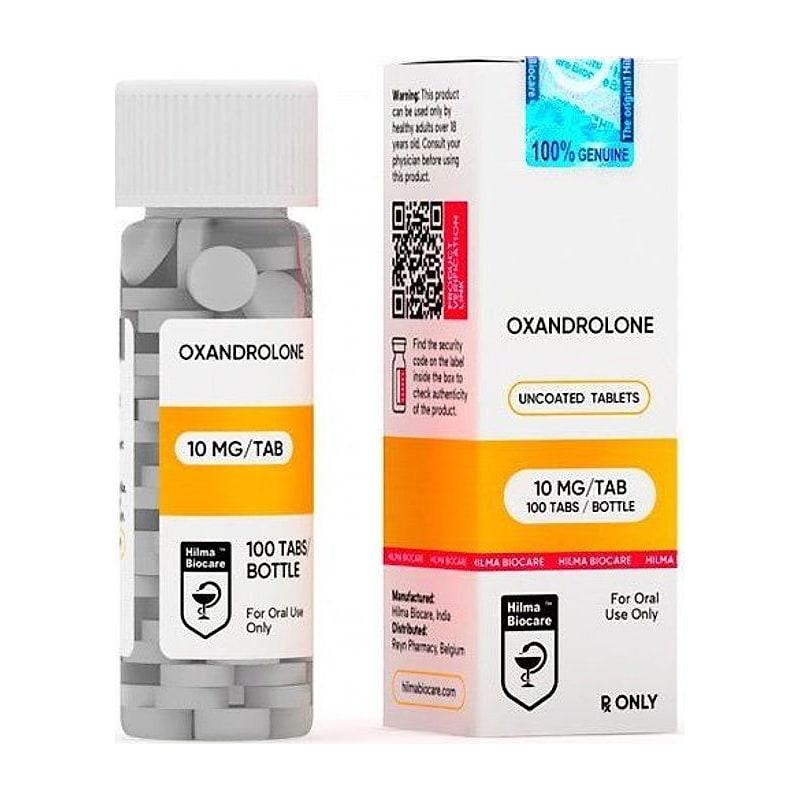
Research Disclaimer: Oxandrolone is sold exclusively for in-vitro and laboratory research use. Not for unsupervised use. This content does not constitute medical advice.
Oxandrolone (trade name: Anavar, developed by Searle Laboratories in 1964) is a C17α-methylated DHT derivative with an oxygen substituted at C2 of ring A (the "2-oxa" modification). This structural change produces one of the most anabolically selective oral steroids ever developed, with an anabolic:androgenic ratio of approximately 10:1 and an extensive clinical research record spanning burn recovery, pediatric growth disorders, HIV/AIDS wasting, and COPD muscle preservation.
Table of Contents#
- 2-Oxa Modification: The Key Structural Feature
- Pharmacokinetics: Oral Bioavailability
- Anabolic:Androgenic Ratio: Why ~10:1?
- Mechanism of Extreme Anabolic Selectivity
- Clinical Research History: Burns, Wasting, Pediatrics
- Metabolic Effects: Lipids, Glucose, Insulin Sensitivity
- HPTA Suppression Profile
- Research Protocols
- Key References
2-Oxa Modification: The Key Structural Feature#
Oxandrolone structure: 17α-methyl-2-oxa-5α-androstane-3-one-17β-ol
- Based on DHT (5α-reduced) → no 5α-reduction needed → direct AR agonist
- 2-oxa modification: oxygen atom replaces C2 in ring A (a heteroatom substitution)
- C17α-methyl: enables oral bioavailability (resists 17β-HSD metabolism)
Effects of the 2-oxa ring:
- Cannot be aromatized (DHT-based → aromatase doesn't work)
- Ring A geometry is altered by the C2 oxygen → affects how ring A interacts with the AR ligand-binding pocket and with 3α-HSD (the enzyme that inactivates DHT via reduction to 3α-androstanediol)
- Relative resistance to 3α-HSD → less conversion to inactive 3α-metabolite → longer effective t½ at the tissue level
- The oxygen at C2 may alter electrostatic interactions with certain AR amino acid residues → influences coactivator recruitment
Pharmacokinetics: Oral Bioavailability#
| Parameter | Value |
|---|---|
| Oral bioavailability | ~97% (exceptionally high for an oral steroid — C17α-methylation very effective) |
| t½ (human, oral) | ~9–13 hours |
| Dosing interval | Twice daily (maintains stable plasma levels) |
| Protein binding | ~94–97% (albumin and SHBG) |
| Metabolism | Hepatic: CYP3A4, 3α-HSD (but relatively resistant vs. DHT) |
| Excretion | Urine: 28% unchanged; balance as metabolites |
| Detection window (doping) | ~14–21 days urine (glucuronide conjugate) |
In rodents#
- Oral t½ ~3–6h (faster metabolism)
- Twice or three times daily dosing
- Alternatively: gavage dosing in methylcellulose suspension
Anabolic:Androgenic Ratio: Why ~10:1?#
Oxandrolone's Hershberger assay A:A ratio is approximately 10:1 (levator ani:ventral prostate), compared to testosterone propionate = 1.0:1.0.
This means:
- At a dose that produces a given levator ani weight (anabolic response), oxandrolone causes much less ventral prostate growth than testosterone at the same anabolic dose
Comparison:
| Compound | A:A ratio |
|---|---|
| Testosterone propionate | 1.0 |
| Nandrolone decanoate | ~3.0–3.5 |
| Stanozolol | ~2–3 |
| Boldenone | ~1.5–2.0 |
| Oxandrolone | ~10–13 |
| DHT | ~0.1–0.2 (highly androgenic) |
Oxandrolone's ~10:1 ratio is the highest among the major anabolic steroids with substantial published evidence — making it the most "anabolically selective" steroidal androgen in common research use.
Mechanism of Extreme Anabolic Selectivity#
How does the 2-oxa ring modification achieve 10× selectivity?
Hypothesis 1: 3α-HSD resistance in androgenic tissues In androgenic tissues (prostate, skin), DHT is inactivated by 3α-HSD → 3α-androstanediol. If oxandrolone is more resistant to 3α-HSD than DHT (due to the C2 oxygen steric effect), less inactivation occurs — but this would predict HIGHER androgenicity, not lower. So this mechanism alone doesn't explain it.
Hypothesis 2: Tissue-specific coactivator expression The 2-oxa ring changes the AR conformation subtly, which alters which coactivators are recruited:
- Muscle cells express SRC-3/AIB1 prominently → effectively recruits these coactivators for strong ARE-driven anabolic gene expression
- Prostate cells express SRC-1 prominently → less efficiently recruits with the 2-oxa-modified AR conformation
- Net: more efficient anabolic transcription in muscle vs. androgenic transcription in prostate
Hypothesis 3: Differential AR expression levels Levator ani has very high AR expression → any AR agonist can saturate AR and produce maximal response. Ventral prostate also has high AR, but the 2-oxa geometry may make oxandrolone require more receptor occupancy for equivalent transcriptional output → apparent selectivity at the tissue scale.
Most current consensus: a combination of hypothesis 2 (coactivator interaction specificity) and intrinsic compound stability differences is most consistent with the data. The exact mechanism remains incompletely characterized.
Oxandrolone, €54 · 99.3% purityClinical Research History: Burns, Wasting, Pediatrics#
Oxandrolone has the most extensive clinical research record of any anabolic steroid:
Burn recovery#
- Major burns cause profound muscle wasting (catabolic response)
- Oxandrolone 0.1 mg/kg twice daily (pediatric) or 20 mg/day (adult) → improved lean body mass, reduced time to wound healing, decreased hospital stay
- Mechanism: AR-driven muscle protein synthesis + reduced cortisol-driven catabolism (no direct GR antagonism, but anti-catabolic via mTOR/Akt pathway)
- Published RCTs from Galveston Shriners Hospital (Herndon DS group): pediatric burn patients, outcomes improved with oxandrolone treatment lasting months post-injury
HIV/AIDS wasting syndrome#
- HIV-associated weight loss (wasting): AR agonism → muscle preservation
- Oxandrolone 20 mg/day in HIV+ men → significant lean mass gain, improved functional status
- FDA-approved indication: weight gain after weight loss from surgery, infection, trauma, failure to gain
Pediatric short stature#
- Turner syndrome, constitutional growth delay: oxandrolone (very low doses, 0.05 mg/kg/day) promotes linear growth
- Mechanism: IGF-1 stimulation via AR in liver and growth plate chondrocytes
- Critical concern: bone age advancement — oxandrolone at higher doses advances bone age faster than linear height → net negative growth in excess
COPD and sarcopenia models#
- Oxandrolone in COPD: preserves muscle mass during pulmonary rehabilitation
- Sarcopenia in elderly males: modest anabolic effect on lean mass with minimal androgenic side effects (relevant given prostate risk in older males)
Stanozolol, €22 · 99.0% purity
Metabolic Effects: Lipids, Glucose, Insulin Sensitivity#
Lipid effects#
All C17α-alkylated oral anabolic steroids have adverse lipid effects compared to injectable androgens:
- Oral anabolics → hepatic first-pass → direct hepatic AR activation → reduced hepatic HDL-ApoA1 production → decreased HDL cholesterol (HDL-C)
- Oxandrolone: HDL-C decreases ~50–70% from baseline at therapeutic doses (20 mg/day for 12 weeks)
- LDL-C: modest increase (less than HDL-C decrease)
This is a significant concern for long-term therapeutic use and a research endpoint in cardiac risk studies.
Insulin sensitivity#
Unlike some androgens (which can worsen insulin resistance at high doses), oxandrolone at therapeutic doses has been associated with improved or neutral insulin sensitivity:
- Burn patients: oxandrolone → improved insulin sensitivity in the context of post-burn hyperglycemia
- HIV wasting: neutral or positive insulin sensitivity effects
- Mechanism: muscle mass gain → more insulin-sensitive glucose disposal capacity
HPTA Suppression Profile#
At standard therapeutic doses (20 mg/day in humans):
- LH and FSH: moderate suppression (~50–70%)
- Does not achieve complete gonadotropin suppression like injectable androgens at anabolic doses
- HPTA recovery after cessation: relatively fast (oral, short t½, limited suppression depth)
In rodents at equivalent anabolic doses:
- LH/FSH: moderate suppression
- Testicular weight: slight decrease but not severe
- Complete recovery within 4–6 weeks post-cessation
Research Protocols#
Wasting disease model (surgical catabolic stress, rats)#
| Parameter | Specification |
|---|---|
| Model | Adult male SD rats, laparotomy + bowel manipulation (surgical catabolic stress model) |
| Treatment | Oxandrolone: 0, 0.5, 2, 10 mg/kg/day oral (gavage) in methylcellulose |
| Duration | 28 days |
| Endpoints | Body weight, muscle mass (quadriceps, gastrocnemius), serum albumin, serum IGF-1, nitrogen balance (metabolic cages), plasma amino acids (HPLC) |
Pediatric burn model (rodent scald)#
| Parameter | Specification |
|---|---|
| Model | Juvenile (4-week-old) Sprague-Dawley rats, 40% TBSA scald burn under anesthesia |
| Treatment | Oxandrolone 0.1 mg/kg twice daily SC vs. vehicle |
| Duration | 30 days |
| Endpoints | Lean body mass (DEXA), burn wound healing (wound area planimetry), serum IGF-1, cortisol (stress response), muscle fiber cross-sectional area (histology) |
Key References#
-
Herndon DN, et al. (2009). "Reversal of catabolism by beta-blockade after severe burns." New England Journal of Medicine, 345(17):1223–1229.
-
Fox M, et al. (1962). "The clinical use of oxandrolone in growth disorders." Journal of Pediatrics, 61:867–876.
-
Kicman AT. (2008). "Pharmacology of anabolic steroids." British Journal of Pharmacology, 154(3):502–521.
-
Orr R & Singh MF. (2004). "The anabolic androgenic steroid oxandrolone in the treatment of wasting and catabolic disorders: review of efficacy and safety." Drugs, 64(7):725–750.
Research Use Only: Oxandrolone is sold exclusively for in-vitro research and laboratory use. Not for unsupervised use. JuicedPharma does not provide medical advice.
Published by JuicedPharma Research Team · September 2026 · Category: Research Protocols & Science