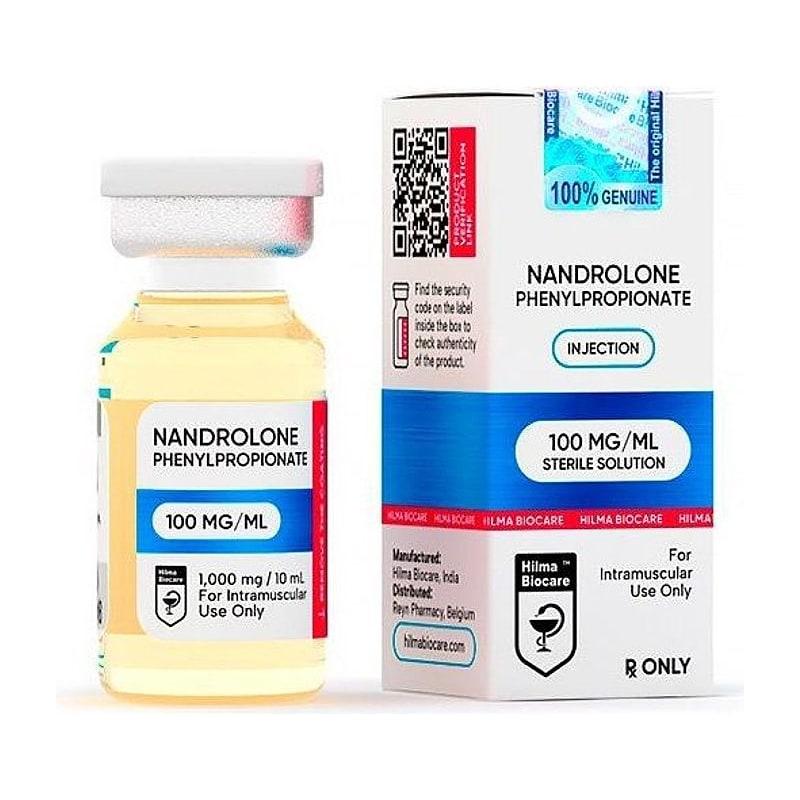
Research Disclaimer: Nandrolone phenylpropionate is sold exclusively for in-vitro and laboratory research use. Not for unsupervised use. This content does not constitute medical advice.
Nandrolone phenylpropionate (NPP) is the short-acting ester form of nandrolone, with an effective half-life of approximately 5–7 days after IM injection — compared to nandrolone decanoate's 12–15 day half-life. While pharmacologically identical to nandrolone decanoate at the receptor level (both deliver nandrolone as the active compound), NPP's faster pharmacokinetics make it preferable for research protocols requiring dose adjustment, shorter study durations, or faster washout.
Table of Contents#
- Phenylpropionate Ester: Structure and Properties
- Pharmacokinetics: NPP vs. ND
- Research Advantages of NPP's Shorter t½
- When to Use NPP vs. Nandrolone Decanoate
- Rodent Research Protocols with NPP
- Storage and Formulation
- Key References
Phenylpropionate Ester: Structure and Properties#
The phenylpropionate ester:
- 3-carbon propionate chain attached to a phenyl ring
- Effective carbon chain: ~5 equivalent carbons (phenyl ring adds lipophilicity similar to 2–3 additional carbons)
- More lipophilic than plain propionate (3C), less than enanthate (7C)
- Result: intermediate t½ between propionate (~1–3 days) and enanthate (~4.5 days)
For nandrolone: phenylpropionate ester yields:
- t½ ~5–7 days (human)
- t½ ~2–3 days (rat — higher metabolic rate)
Compare to decanoate (10C):
- t½ ~12–15 days (human)
- t½ ~5–7 days (rat)
Pharmacokinetics: NPP vs. ND#
After 100 mg IM injection (human)#
| Parameter | NPP | Nandrolone Decanoate |
|---|---|---|
| Tmax | ~1–3 days | ~3–7 days |
| Cmax | ~500–800 ng/dL (nandrolone) | ~400–700 ng/dL |
| t½ | ~5–7 days | ~12–15 days |
| Duration of detectable nandrolone | ~2–3 weeks | ~5–6 weeks |
| Dosing interval (clinical) | Every 5–7 days | Every 2–4 weeks |
PK implications:
- NPP reaches Cmax faster → quicker onset of anabolic response
- NPP clears faster → can detect dose-response effects within a shorter study window
- ND provides more stable nandrolone levels during longer dosing intervals (less peak-trough fluctuation per injection)
In rodents#
| Parameter | NPP (rat) | ND (rat) |
|---|---|---|
| t½ | ~2–3 days | ~5–7 days |
| Dosing interval for stable exposure | Every 2–3 days | Every 5–7 days |
Research Advantages of NPP's Shorter t½#
1. Faster dose-response studies#
With NPP dosed every 5–7 days (humans) or every 2–3 days (rodents):
- Steady-state reached in ~3–4 doses (vs. ~5–6 doses for ND)
- Dose adjustments take effect faster
- More feasible for 4-week rodent studies (NPP reaches steady-state by week 2; ND may still be accumulating at week 2)
2. Cleaner washout#
After last NPP injection:
- Nandrolone levels return to baseline in ~3 weeks (human)
- Rodents: ~1 week
After last ND injection:
- Nandrolone remains detectable for 6+ weeks (human)
- WADA doping control: nandrolone metabolites detectable up to 18 months after ND cessation
For research requiring post-treatment recovery studies: NPP allows cleaner separation of treatment and recovery phases.
3. Short-duration protocols#
For 2–4 week rodent studies: NPP is better suited (appropriate t½ for the study duration; ND would still be accumulating when the protocol ends).
For 8–12 week protocols or longer: ND is more practical (less frequent injections → less handling stress).
When to Use NPP vs. Nandrolone Decanoate#
| Research need | NPP | Nandrolone Decanoate |
|---|---|---|
| Precise dose titration | ✓ (fast response to dose change) | × (slow response) |
| Rapid washout required | ✓ | × |
| <4 week protocol | ✓ | × (not at steady-state) |
| 8–16 week chronic protocol | × (frequent injections) | ✓ |
| Minimizing injection frequency | × (more frequent) | ✓ |
| Human PK replication | ✓ (weekly injections) | ✓ (q2–4 week injections) |
| Anti-doping research (detection window) | × (shorter window) | ✓ (longer window to study metabolites) |
Rodent Research Protocols with NPP#
Short-term dose-response study (4 weeks)#
| Parameter | Specification |
|---|---|
| Model | Adult castrated male SD rats |
| NPP doses | 0, 2, 5, 15 mg/kg SC |
| Vehicle | Sesame oil 0.2 mL |
| Injection frequency | Every 3 days (maintains quasi-steady-state in rats) |
| Duration | 4 weeks |
| PK sampling | Blood at 24h after final injection (trough equivalent) |
| Tissue harvest | Day 29 |
| Endpoints | Levator ani, ventral prostate, seminal vesicles, serum nandrolone (LC-MS/MS), LH, FSH |
Washout comparison: NPP vs. ND#
| Parameter | Specification |
|---|---|
| Model | Adult intact male SD rats |
| Treatment phase | NPP 10 mg/kg SC q3d OR ND 10 mg/kg SC q7d for 6 weeks |
| Washout phase | 0, 1, 2, 4, 6, 8 weeks post-cessation |
| Endpoints | Serum nandrolone (LC-MS/MS), LH, FSH recovery, testicular weight recovery, sperm count recovery |
Testosterone Propionate, €28 · 99.1% purity
Storage and Formulation#
Vehicle: NPP is typically formulated in sesame oil or MCT oil at 50–100 mg/mL.
- Solubility: NPP is less soluble than ND in oil due to the phenyl ring structure — maximum approximately 100 mg/mL in sesame oil without crystallization
- For concentrations above 75 mg/mL: add benzyl benzoate (10–15%) to improve solubility
Stability:
- Sealed amber vial at room temperature: 18–24 months
- Refrigerated: 36+ months
Note: phenylpropionate ester hydrolysis releases 3-phenylpropionic acid (hydrocinnamic acid) — a benign metabolite. No special handling required beyond standard research-grade compound protocols.
Key References#
-
Kicman AT. (2008). "Pharmacology of anabolic steroids." British Journal of Pharmacology, 154(3):502–521.
-
WADA. (2024). "Prohibited List International Standard." World Anti-Doping Agency (for nandrolone detection windows).
-
Morgentaler A, et al. (2011). "Testosterone therapy and prostate cancer." Asian Journal of Andrology, 13(6):841–843.
-
Hershberger LG, et al. (1953). "Myotrophic activity of 19-nortestosterone." Proceedings of the Society for Experimental Biology and Medicine, 83(1):175–180.
Research Use Only: NPP is sold exclusively for in-vitro research and laboratory use. Not for unsupervised use. JuicedPharma does not provide medical advice.
Published by JuicedPharma Research Team · September 2026 · Category: Research Protocols & Science