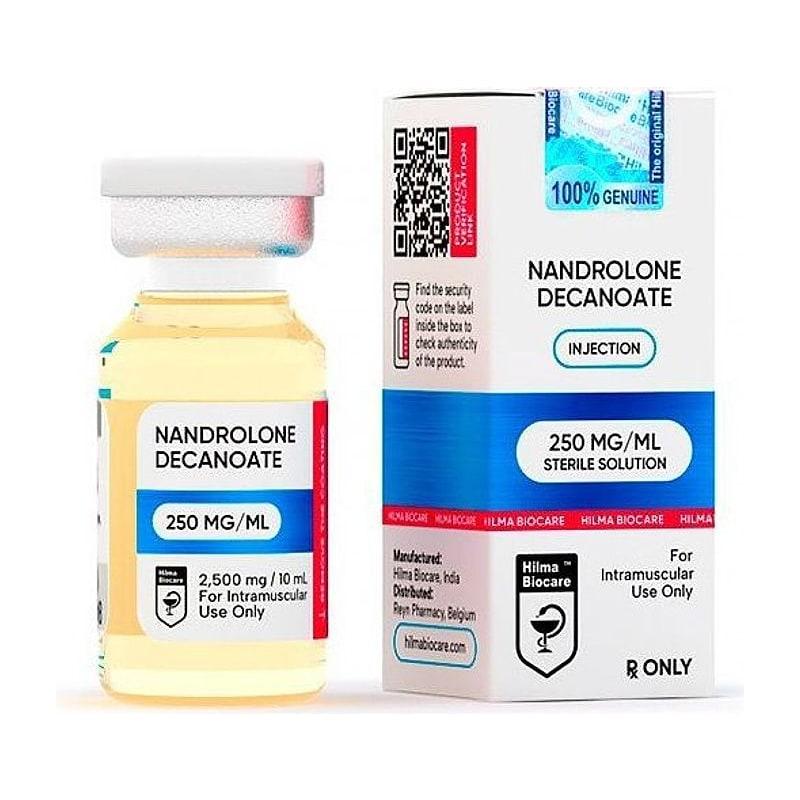
Research Disclaimer: Nandrolone decanoate is sold exclusively for in-vitro and laboratory research use. Not for unsupervised use. This content does not constitute medical advice.
Nandrolone decanoate (ND) — marketed historically as Deca-Durabolin — is a 19-nor (19-nortestosterone) derivative belonging to the class of anabolic-androgenic steroids with a distinctly high anabolic-to-androgenic ratio compared to testosterone. The removal of the C19 methyl group from the testosterone backbone fundamentally alters its metabolism in androgen-sensitive tissues, making it a valuable tool for dissecting tissue-selective androgen actions and investigating collagen synthesis, bone density, and anemia.
Table of Contents#
- 19-Nor Structure: The C19 Methyl Deletion
- 5α-Reduction to DHN: Why Nandrolone is Less Androgenic
- Pharmacokinetics: Decanoate Ester
- Anabolic Mechanisms
- Progestogenic Activity
- Collagen and Connective Tissue Research
- Erythropoiesis and Anemia Research
- HPTA Suppression Profile
- Research Protocols
- Key References
19-Nor Structure: The C19 Methyl Deletion#
Nandrolone is 19-nortestosterone: testosterone with the C19 angular methyl group (at the junction of rings A and B) deleted.
This single structural change has profound metabolic consequences:
| Feature | Testosterone | Nandrolone |
|---|---|---|
| C19 methyl group | Present | Absent |
| 5α-reduction product | DHT (potent androgen) | DHN (weak androgen) |
| AR affinity (relative) | 1.0 | ~0.6–1.0 |
| Androgenic potency in vivo | High (DHT amplified in tissues) | Low (DHN = weak) |
| Aromatization to estrogen | Yes → estradiol | Yes (minor) → estrone |
| Progestogen receptor binding | Low | High (~20% of progesterone) |
Anabolic:androgenic ratio (Hershberger assay, normalized to testosterone):
- Testosterone: ~1.0:1.0 (by definition)
- Nandrolone: ~3–4:1 (3–4× more anabolic per unit of androgenic effect)
5α-Reduction to DHN: Why Nandrolone is Less Androgenic#
The key to nandrolone's tissue selectivity:
In androgen-sensitive tissues (prostate, skin, hair follicles, scalp):
- 5α-reductase is highly expressed
- For testosterone: 5α-reduction → DHT, which has 3–5× higher AR affinity → amplified androgenic signal
- For nandrolone: 5α-reduction → dihydronandrolone (DHN), which has lower AR affinity than nandrolone itself (~0.1–0.3× relative to testosterone)
Result: in tissues rich in 5α-reductase, nandrolone's androgenic action is reduced rather than amplified. This is the opposite of testosterone.
In tissues low in 5α-reductase (skeletal muscle, bone):
- Nandrolone acts directly at AR without requiring conversion
- AR affinity is similar to testosterone (0.6–1.0× by assay)
- Full anabolic transcriptional response
This tissue-selective androgenic profile is what makes nandrolone a useful model compound for studying tissue-selective anabolic activity separate from androgenic effects.
Pharmacokinetics: Decanoate Ester#
Decanoate ester: 10-carbon chain (same as testosterone decanoate in Sustanon 250)
| Parameter | Value |
|---|---|
| Ester chain | 10 carbons (decanoate) |
| t½ (human, IM) | ~12–15 days |
| Tmax (200 mg IM) | ~3–7 days |
| Dosing interval (clinical research) | Every 2–4 weeks |
| Oil vehicle | Sesame oil or arachis oil |
| Serum detection window | ~18 months (WADA anti-doping) |
Rodent pharmacokinetics:
- Shorter t½ than humans (higher metabolic rate)
- Approximate t½ in rats: ~5–7 days
- Research dosing: 5–15 mg/kg SC or IM weekly in rats
Free nandrolone equivalent: 200 mg nandrolone decanoate = ~148 mg nandrolone (decanoate ester MW = 135 Da; nandrolone MW = 274 Da; ~73.8% free nandrolone by mass)
Anabolic Mechanisms#
1. AR-mediated protein synthesis in skeletal muscle#
Nandrolone → binds AR in skeletal muscle (low 5α-reductase in muscle → acts as parent compound) → ARE-driven gene expression:
- Increased IGF-1 mRNA expression
- Increased follistatin → reduced myostatin signaling
- Reduced MAFbx and MuRF1 (ubiquitin ligases for muscle atrophy)
- Net: increased net protein balance, fiber hypertrophy
2. Satellite cell activation#
Similar to testosterone, nandrolone promotes satellite cell proliferation and fusion:
- AR-positive satellite cells respond to nandrolone
- Increased myonuclear addition over time
- The reduced androgenic burden (less DHN) means satellite cell activation proceeds without proportional androgenic side effects
3. Bone anabolic effects#
Nandrolone has pronounced bone anabolic effects:
- Stimulates osteoblast differentiation (AR-dependent)
- Reduces osteoclast activity
- Increases bone mineral density in orchiectomized rodents
- Historically used for osteoporosis treatment (before bisphosphonates)
Progestogenic Activity#
A unique feature of 19-nor steroids: progestogen receptor (PR) binding
Nandrolone binds the progesterone receptor with ~20% of the affinity of progesterone (some assays report up to 30%):
- Progestogenic activity at PR can enhance progesterone-sensitive endpoints
- In the context of estrogen co-exposure: progestogen activity at mammary tissue may be relevant for female research models
- Progestogenic effects on HPTA: nandrolone's PR agonism contributes to LH/FSH suppression (progesterone feedback at hypothalamus and pituitary)
- For male research models: progestogenic suppression amplifies the LH/FSH suppression beyond pure AR-mediated feedback
Research implication: when comparing nandrolone vs. testosterone for HPTA suppression studies, nandrolone produces greater gonadotropin suppression per unit serum level due to combined AR + PR feedback.
Collagen and Connective Tissue Research#
Nandrolone's most distinct non-muscle anabolic effect: collagen synthesis stimulation
Mechanism#
- Nandrolone → AR activation in fibroblasts and tenocytes → upregulation of procollagen type I (COL1A1, COL1A2) and procollagen type III (COL3A1) mRNA
- Increased collagen synthesis → improved connective tissue tensile strength
- Joint-specific: synovial fibroblasts respond to nandrolone with increased hyaluronic acid and proteoglycan synthesis (articular cartilage protection)
Evidence#
- Castrated rat studies: ND increases tendon collagen content and cross-sectional area vs. vehicle control
- Serum PINP (N-terminal propeptide of procollagen type I) rises with ND treatment — validated non-invasive marker for collagen synthesis
- Articular cartilage histology shows maintained proteoglycan content vs. orchiectomy vehicle controls
Erythropoiesis and Anemia Research#
Nandrolone was historically used for anemia treatment (aplastic anemia, renal anemia, HIV-related wasting):
Mechanism#
- Androgen receptor activation in renal peritubular fibroblasts → increased EPO (erythropoietin) gene expression
- EPO → bone marrow erythroid progenitors → increased RBC production, increased hemoglobin, increased hematocrit
- Nandrolone also has direct effect on erythroid progenitor cells (BFU-E, CFU-E) — AR-dependent proliferation enhancement
Research applications#
- Anemia model: rodent partial nephrectomy (CKD anemia model) + nandrolone → EPO and erythropoiesis endpoints
- Compare EPO increase: nandrolone vs. testosterone vs. recombinant EPO
- Hematocrit, reticulocyte count, bone marrow CFU-E as endpoints
HPTA Suppression Profile#
Nandrolone (ND) at equivalent serum levels suppresses HPTA more potently than testosterone:
- AR feedback: similar to testosterone
- PR feedback (progestogenic): additional gonadotropin suppression via hypothalamic PR
- Net: complete LH/FSH suppression at lower doses than testosterone
Research protocol for HPTA comparison: Compare ND vs. TE on LH/FSH suppression as a function of serum hormone level (not dose) — demonstrates the additional progestogenic contribution.
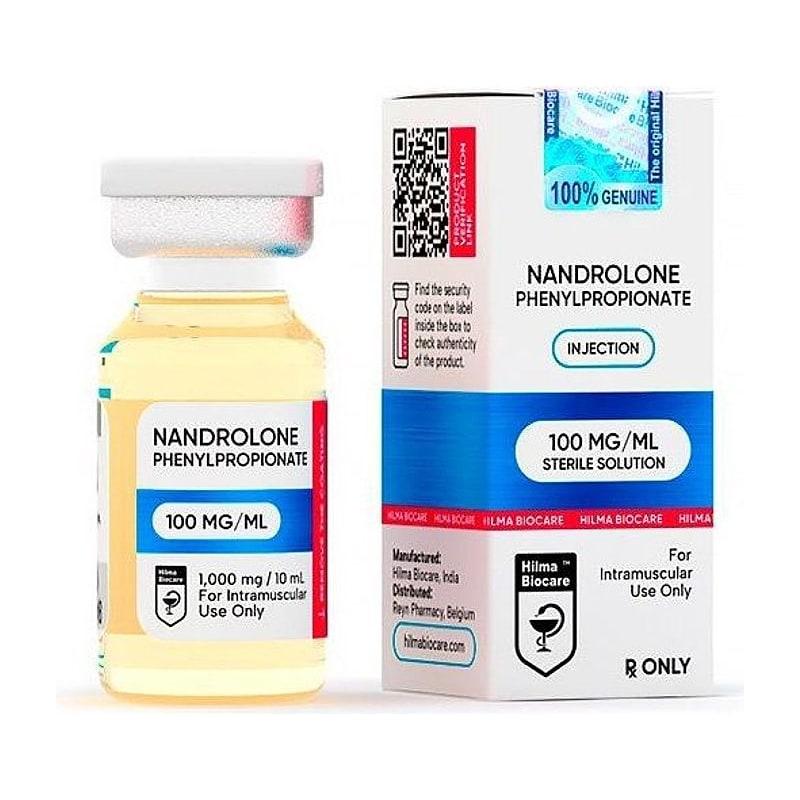
Nandrolone Phenylpropionate, €30 · 99.0% purity
Research Protocols#
Castrated rat — anabolic/collagen study#
| Parameter | Specification |
|---|---|
| Model | Adult male SD rats, bilateral orchiectomy |
| Treatment | ND 3 mg/kg SC weekly (low), 10 mg/kg (high) vs. TE 3 mg/kg control |
| Duration | 8 weeks |
| Endpoints | Levator ani weight, ventral prostate, quadriceps mass, DEXA (BMD, lean mass), serum PINP, tendon collagen content (hydroxyproline assay), serum LH, FSH, nandrolone |
In vitro collagen synthesis assay#
| Parameter | Specification |
|---|---|
| Cell model | Primary dermal fibroblasts or tenocytes (human or rat) |
| Treatment | Nandrolone 1–100 nM in serum-free DMEM |
| Duration | 24–72h |
| Endpoints | Procollagen type I and III mRNA (RT-qPCR), secreted PICP and PIIINP (ELISA from conditioned medium), hydroxyproline content |
Key References#
-
Storer TW, et al. (2003). "Testosterone dose-dependently increases maximal voluntary strength and leg power, but does not affect fatigability or specific tension." Journal of Clinical Endocrinology & Metabolism, 88(4):1478–1485.
-
Maravelias C, et al. (2005). "Adverse effects of anabolic steroids in athletes: A constant threat." Toxicology Letters, 158(3):167–175.
-
Evans NA. (2004). "Current concepts in anabolic-androgenic steroids." American Journal of Sports Medicine, 32(2):534–542.
-
Kicman AT. (2008). "Pharmacology of anabolic steroids." British Journal of Pharmacology, 154(3):502–521.
Research Use Only: Nandrolone decanoate is sold exclusively for in-vitro research and laboratory use. Not for unsupervised use. JuicedPharma does not provide medical advice.
Published by JuicedPharma Research Team · September 2026 · Category: Research Protocols & Science