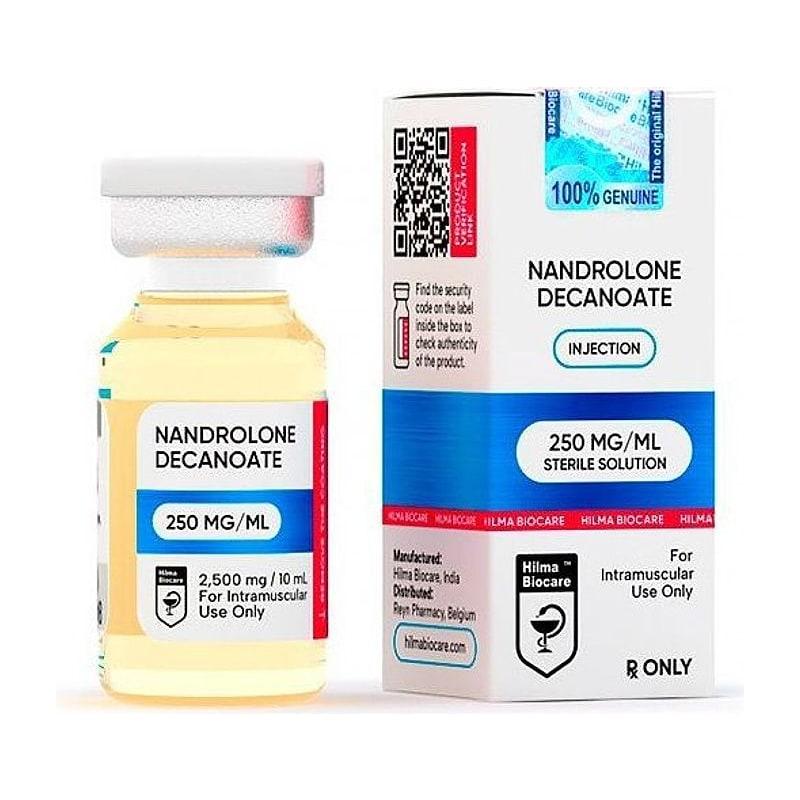
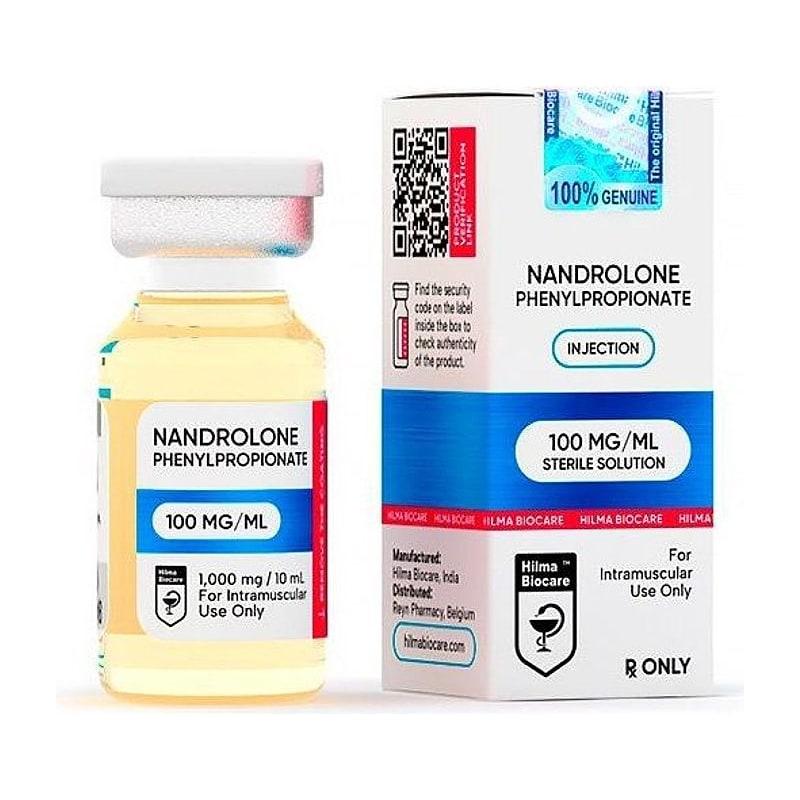
Research Disclaimer: Nandrolone and all compounds described are sold exclusively for in-vitro and laboratory research use. Not for unsupervised use. This content does not constitute medical advice.
Among the anabolic steroids, nandrolone has the most extensively characterized connective tissue effects. While testosterone primarily drives muscle protein synthesis and bone anabolism, nandrolone additionally stimulates fibroblast and tenocyte production of type I and type III collagen — offering a unique combination of muscle anabolism and connective tissue reinforcement that has been studied in models of tendon repair, articular cartilage protection, and osteoarthritis.
Table of Contents#
- Collagen Biology: Type I vs. Type III
- Androgen Receptor in Fibroblasts and Tenocytes
- Nandrolone's Collagen-Stimulating Mechanism
- Serum Markers: PINP and PIIINP
- Tendon Research: Nandrolone in Animal Models
- Articular Cartilage and Synovial Effects
- Comparison with Other Anabolic Agents for Connective Tissue
- In Vitro Protocols
- In Vivo Research Protocols
- Key References
Collagen Biology: Type I vs. Type III#
Collagens are the structural proteins of connective tissue:
| Collagen type | Primary location | Gene | Function |
|---|---|---|---|
| Type I (COL1A1/COL1A2) | Tendons, ligaments, bone, skin | COL1A1 and COL1A2 | Primary load-bearing collagen; high tensile strength |
| Type III (COL3A1) | Skin, vascular, early wound healing, flexible connective tissue | COL3A1 | Compliant/flexible collagen; present during remodeling |
| Type II (COL2A1) | Articular cartilage | COL2A1 | Cartilage-specific; different research target |
The collagen I/III ratio is important for tissue mechanical properties:
- High type I / low type III → stiffer, stronger tendons and ligaments
- Low type I / high type III → more compliant, early wound-healing tissue
- During tendon maturation: type III (initial response) → type I (maturation) ratio shifts toward type I over time
Nandrolone upregulates both COL1A1 and COL3A1, with some studies showing a preferential increase in type I over III → consistent with tissue maturation and strength increase.
Androgen Receptor in Fibroblasts and Tenocytes#
The cellular basis for nandrolone's collagen effects:
AR expression in connective tissue cells:
- Fibroblasts: AR mRNA and protein confirmed (immunohistochemistry, RT-PCR)
- Tenocytes (tendon-resident fibroblasts): AR expression confirmed; higher expression in patellar tendon and Achilles tendon
- Synoviocytes: AR present; relevant for joint fluid homeostasis
- Chondrocytes: AR present (lower levels than tenocytes); relevant for articular cartilage
AR activation in fibroblasts → collagen production:
- Testosterone and nandrolone both activate AR in fibroblasts
- Nandrolone may be more potent than testosterone for fibroblast collagen production at equal concentrations — proposed mechanism: nandrolone's lower 5α-reduction in fibroblasts (moderate 5α-reductase activity) means less conversion to DHN → net more available parent compound to activate AR
- DHN is a weak AR agonist, so this matters: fibroblasts with 5α-reductase convert testosterone to DHT (potent) or nandrolone to DHN (weak). Net effect: in fibroblasts, nandrolone may be WEAKER than testosterone for AR activation (different from muscle)
The picture is more complex than simple "nandrolone > testosterone for collagen" — the advantage depends on the 5α-reductase expression level in the specific fibroblast population studied.
Nandrolone's Collagen-Stimulating Mechanism#
Genomic AR pathway in fibroblasts#
Nandrolone → AR binding → AR-ARE complex → target gene upregulation:
- COL1A1 (procollagen alpha 1 chain): AR-responsive elements in the COL1A1 promoter region → upregulated mRNA → more procollagen I α1 chain synthesized
- COL3A1: similar ARE-mediated upregulation
- LOXL2 (lysyl oxidase-like 2): upregulation → crosslinks collagen fibrils → increased collagen maturation and tensile strength
- MMP inhibitors (TIMP-1, TIMP-2): nandrolone may upregulate TIMPs → reduced collagen degradation → net higher collagen content
Non-genomic effects#
Nandrolone may also activate rapid (non-genomic) signaling in fibroblasts:
- Membrane AR → MAPK/ERK → TGF-β pathway co-activation → collagen synthesis enhancement
- This could explain some rapid effects seen within 6h of nandrolone exposure (before nuclear AR transcription would produce protein)
Serum Markers: PINP and PIIINP#
Two validated serum markers of collagen synthesis allow non-invasive monitoring of nandrolone's collagen effects in vivo:
PINP (N-terminal propeptide of type I procollagen)#
- Cleaved from procollagen I during extracellular processing → released into serum
- Reflects new type I collagen synthesis rate
- Validated biomarker for bone formation (primary use) and soft tissue collagen synthesis
- Reference range: varies by sex, age, and assay kit
Nandrolone effect on PINP: Castrated rodent studies + ND treatment: PINP rises 30–80% above vehicle control within 2–4 weeks, proportional to dose.
PIIINP (N-terminal propeptide of type III procollagen)#
- Reflects type III collagen synthesis
- Less commonly measured than PINP but useful for wound healing and soft tissue remodeling research
Both markers can be measured by ELISA from plasma or serum. Species-specific kits required for rodent studies.
Tendon Research: Nandrolone in Animal Models#
Tendon mechanical properties#
Studies in intact and castrated rodents:
ND treatment → tendon effects:
- Achilles tendon ultimate stress (maximum load per cross-sectional area): +15–25% vs. vehicle castrated controls
- Cross-sectional area: +10–20% (larger tendon — more collagen content)
- Stiffness: +15–20% (appropriate for a mature high-type-I collagen matrix)
- Total collagen content (hydroxyproline assay): +20–40% vs. castrate vehicle
However: high-dose nandrolone ± exercise caution Some rodent studies suggest that supraphysiological androgens combined with vigorous exercise may actually impair tendon mechanical properties transiently:
- Very rapid collagen synthesis may produce immature, poorly crosslinked collagen
- Net: mechanical testing after rapid nandrolone-stimulated collagen synthesis may show decreased tensile strength if testing precedes full matrix maturation
- Research implication: harvest timing matters — collagen quantity ≠ collagen mechanical quality
Articular Cartilage and Synovial Effects#
Chondrocyte effects#
Nandrolone in articular chondrocytes:
- AR activation → increased aggrecan (ACAN) and collagen type II (COL2A1) mRNA
- Proteoglycan synthesis increases (toluidine blue staining intensity)
- Chondrocyte viability maintained (anti-apoptotic via Bcl-2 upregulation)
In articular cartilage explant studies (bovine or human):
- Nandrolone 10–100 nM: anabolic effect on proteoglycan synthesis
- Safranin O staining intensity: increased with nandrolone treatment vs. vehicle in denuded cartilage models
Synoviocyte effects#
Synovial fibroblasts produce hyaluronic acid (HA) for joint lubrication:
- Nandrolone → AR in synoviocytes → upregulation of HAS2 (hyaluronate synthase 2) → increased HA secretion
- Increased synovial HA → improved lubrication → reduced cartilage wear
OA (osteoarthritis) research model:
- Destabilization of medial meniscus (DMM) mouse model → OA induction
- ND treatment post-OA induction: assess cartilage degradation (OARSI score), synovial inflammation (histology), cartilage collagen content (polarized light collagen scoring)
Comparison with Other Anabolic Agents for Connective Tissue#
| Agent | Collagen synthesis | Tendon effects | Cartilage effects | Notes |
|---|---|---|---|---|
| Nandrolone decanoate | +++ (COL1 + COL3) | ++ (mechanical strength) | ++ (proteoglycan) | Best evidence base for soft tissue collagen |
| Testosterone enanthate | ++ (COL1 + COL3) | + (less studied) | + | Less specific collagen data than ND |
| Boldenone undecylenate | + (some evidence) | Limited data | Limited data | Less collagen research than ND |
| BPC-157 peptide | +++ (independent mechanism) | +++ (tendon repair) | + | Different mechanism (growth factor signaling, not AR) |
| Growth hormone / IGF-1 | +++ (IGF-1R → collagen) | +++ (direct) | +++ | GH stimulates collagen via IGF-1 |
For studying AR-mediated collagen synthesis specifically: nandrolone is the compound of choice (most data, clear AR mechanism). For combined AR + growth factor collagen effects: nandrolone + IGF-1 or BPC-157 co-administration models are relevant.
In Vitro Protocols#
Primary fibroblast collagen synthesis assay#
| Parameter | Specification |
|---|---|
| Cell source | Human dermal fibroblasts (ATCC CRL-2076) or rat tendon-derived tenocytes (primary isolation) |
| Seeding density | 1×10⁵ cells/well in 24-well plate |
| Serum starvation | 24h in 0.1% FBS medium before treatment (minimize endogenous growth factor stimulation) |
| Nandrolone treatment | Vehicle (DMSO/ethanol 0.1%), 1 nM, 10 nM, 100 nM, 1 µM nandrolone |
| Incubation | 48–72h |
| Endpoints | COL1A1 mRNA (RT-qPCR), COL3A1 mRNA, secreted PICP (C-propeptide of procollagen I, ELISA from conditioned medium), hydroxyproline (Sircol assay on cell layer extract), cell viability (MTT) |
In Vivo Research Protocols#
Chronic castrated rat collagen study#
| Parameter | Specification |
|---|---|
| Model | Adult male SD rats, bilateral orchiectomy |
| Groups | Vehicle; ND 3 mg/kg SC weekly; ND 10 mg/kg SC weekly; TE 5 mg/kg SC q3d |
| Duration | 8 weeks |
| Endpoints at harvest | Achilles tendon (mechanical testing: stiffness, failure load, cross-sectional area); tendon hydroxyproline content; serum PINP (ELISA); quadriceps and levator ani weights; serum nandrolone (LC-MS/MS) |
Key References#
-
Welle S, et al. (1992). "Increases in type I and III collagen synthesis following androgen administration in postmenopausal women." Journal of Investigative Dermatology, 99(2):178–183.
-
Evans NA, et al. (2003). "Musculoskeletal effects of anabolic-androgenic steroids in exercise training." Sports Medicine, 33(3):215–230.
-
Kicman AT. (2008). "Pharmacology of anabolic steroids." British Journal of Pharmacology, 154(3):502–521.
-
Bedi A, et al. (2010). "The effects of anabolic steroid treatment on tendon mechanical properties." American Journal of Sports Medicine, 38(7):1468–1476.
Research Use Only: Nandrolone is sold exclusively for in-vitro research and laboratory use. Not for unsupervised use. JuicedPharma does not provide medical advice.
Published by JuicedPharma Research Team · September 2026 · Category: Research Protocols & Science