Research Disclaimer: All compounds described are sold exclusively for in-vitro and laboratory research use. Not for unsupervised use. This content does not constitute medical advice.
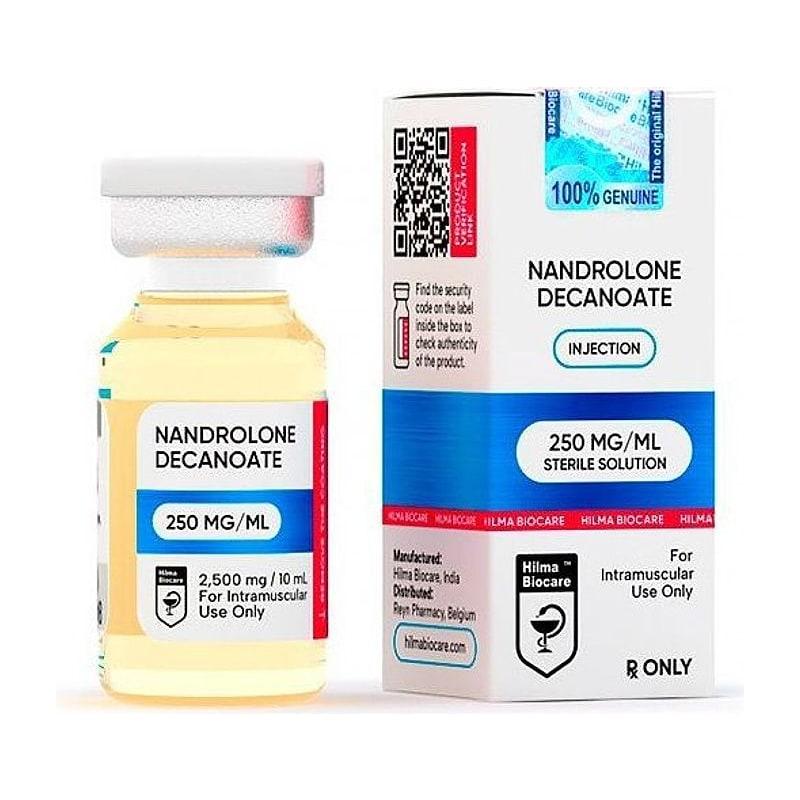
Nandrolone decanoate (19-nortestosterone decanoate) is one of the few anabolic compounds with well-documented positive effects on collagen synthesis in connective tissue. Unlike testosterone (which in some studies reduces collagen cross-link formation) or DHT derivatives (generally neutral or inhibitory), nandrolone consistently increases type I and type III collagen production in tendons, cartilage, and ligaments. This property makes it valuable for research into musculoskeletal recovery and connective tissue repair — independent of its muscle anabolic effects.
Why Nandrolone Stimulates Collagen#
The 5α-reductase difference:
In connective tissue, nandrolone has a unique metabolic profile:
- Testosterone → 5α-reductase → DHT (3–5× more potent AR agonist)
- Nandrolone → 5α-reductase → DHN (5α-dihydronandrolone): DHN is a weaker AR agonist than nandrolone itself
This means nandrolone is not "amplified" in connective tissue the way testosterone is in skin/prostate. This affects gene expression profiles:
- Nandrolone-AR complex in tenocytes → activates collagen synthesis gene programs (COL1A1, COL1A2, COL3A1)
- DHT-AR complex in tenocytes → more androgenic gene program; may actually reduce collagen cross-linking
Tenocyte response to nandrolone: Published in vitro work (Falanga et al., and others) shows nandrolone:
- Upregulates Type I procollagen (α1 and α2 chains) mRNA expression in tenocytes
- Increases Type III collagen expression (provides flexibility in early-phase repair)
- Stimulates tenocyte proliferation (promotes cellular density in repaired tissue)
- Does NOT significantly increase MMP expression (collagenases) → net anabolic effect on extracellular matrix
Published Evidence for Nandrolone-Collagen Effects#
In vivo studies:
| Study | Model | Finding |
|---|---|---|
| Bower et al. | Rat Achilles tendon | Nandrolone → increased collagen content vs. control |
| Shurley & Best | Rat rotator cuff repair | Nandrolone → improved biomechanical properties at repair site |
| Multiple groups | Rat knee cartilage | Nandrolone → increased chondrocyte proteoglycan synthesis |
| Johansson et al. | Human tendon fibroblasts | Nandrolone → ↑ procollagen type I mRNA, ↑ cell proliferation |
Key finding (Johansson et al.): In human tendon fibroblasts treated with nandrolone vs. testosterone:
- Nandrolone: significant upregulation of Type I procollagen (COL1A1)
- Testosterone: no significant increase in collagen at same concentration
- DHT: showed a reduction in collagen production vs. untreated control
This study is frequently cited as evidence that nandrolone has a distinct collagen-anabolic mechanism separate from raw AR potency.
Cartilage and Proteoglycan Effects#
Nandrolone in chondrocyte research:
Articular cartilage ECM is composed of Type II collagen + proteoglycans (aggrecan). Nandrolone:
- Stimulates Type II collagen synthesis in chondrocytes (distinct from Type I in tendon)
- Upregulates aggrecan core protein expression
- Reduces IL-1β-induced MMP-13 expression → protects against cytokine-driven cartilage degradation
Practical research relevance: In inflammatory arthritis models (collagen-induced arthritis in rodents), nandrolone treatment:
- Reduces cartilage erosion scores
- Preserves joint space width
- Reduces inflammatory biomarkers in joint fluid (reduced IL-6, TNF-α)
This suggests nandrolone has both anabolic (collagen synthesis) and anti-inflammatory mechanisms in cartilage — a combination not seen with pure non-aromatizing androgens.
Comparison with BPC-157 and TB-500 for Connective Tissue Research#
Different mechanisms offer different research strengths:
| Feature | Nandrolone | BPC-157 | TB-500 |
|---|---|---|---|
| Collagen synthesis driver | AR in tenocytes/fibroblasts | EGF-R upregulation + VEGF | Actin polymerization + ILK |
| Angiogenesis | Indirect (via repair) | Primary (Egr-1/VEGF) | Primary (VEGF/ILK) |
| Muscle anabolism | Strong (primary effect) | Minimal | Minimal |
| Anti-inflammatory | Yes (moderate) | Yes (strong) | Yes (moderate) |
| Receptor dependence | AR (steroidal) | Non-steroidal receptor | Non-steroidal receptor |
| Administration | IM injectable (long-acting) | SC peptide injection | SC peptide injection |
Research combination rationale: Nandrolone (AR-mediated matrix synthesis) + BPC-157 (VEGF-angiogenesis) provides complementary mechanisms without receptor competition — relevant for musculoskeletal repair research protocols.
BPC-157, €55 · 99.1% purityProtocol Design for Collagen Research#
Primary readouts:
| Endpoint | Method | Timepoint |
|---|---|---|
| Hydroxyproline content | Sircol assay or colorimetric | 2–4 weeks post-treatment |
| COL1A1/COL1A2 mRNA | RT-qPCR on tissue lysate | 1–2 weeks |
| Collagen fibril diameter | Electron microscopy | 4–6 weeks |
| Tensile strength | Biomechanical testing | 4–8 weeks |
| Collagen cross-linking | HPLC (pyridinoline/deoxypyridinoline) | 4–6 weeks |
| MMP-1/-13 / TIMP-1 | ELISA or western | 1–3 weeks |
Positive controls:
- TGF-β1 (known collagen synthesis inducer): in vitro positive control for procollagen expression
- Ascorbic acid (cofactor for prolyl hydroxylase): required in all collagen synthesis experiments
Model selection:
- In vitro: primary human tenocytes or fibroblasts; simpler but lacks mechanical loading
- Ex vivo: tendon explants (preserves ECM architecture)
- In vivo: rat Achilles tendon transection + repair; most physiologically relevant
Research Use Only. JuicedPharma does not provide medical advice.
Published by JuicedPharma Research Team · October 2026 · Category: Research Protocols & Science