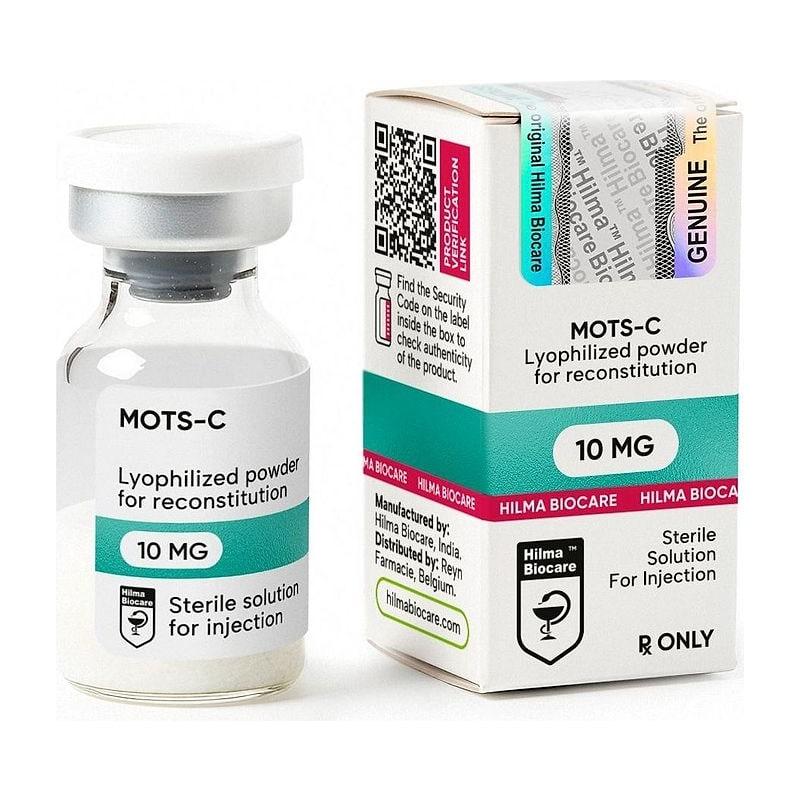
Research Disclaimer: MOTS-c is sold exclusively for in-vitro and laboratory research use. Not approved for human therapeutic use. This content does not constitute medical advice.
MOTS-c (Mitochondrial Open reading frame of the twelve S rRNA type-c) is a 16-amino-acid peptide encoded within the mitochondrial genome — not the nuclear genome — making it the first mitochondrial-encoded peptide hormone discovered. MOTS-c acts as a "mitokine" (mitochondria-derived signaling molecule) that travels from mitochondria to the nucleus and to peripheral tissues, where it regulates insulin sensitivity, glucose metabolism, and cellular stress responses.
The discovery that mitochondria produce their own hormonal signals that regulate whole-body metabolism challenges the traditional view of mitochondria as passive energy factories and positions MOTS-c as a key link between mitochondrial function and systemic metabolic health.
Table of Contents#
- Discovery and Origin of MOTS-c
- MOTS-c Structure and Sequence
- From Mitochondria to Nucleus: The Retrograde Signaling Pathway
- AMPK Activation and Insulin Sensitivity
- MOTS-c in Metabolic Syndrome and Obesity Research
- Exercise-Induced MOTS-c: The Exercise Mimetic Connection
- Aging and MOTS-c Decline
- MOTS-c and Longevity: Human Genetic Data
- Research Protocols
- Key References
Discovery and Origin of MOTS-c#
MOTS-c was discovered by Pinchas Cohen's group (University of Southern California) in 2015. The discovery was made by:
- Recognizing that the 12S rRNA gene in the mitochondrial genome contained small open reading frames (sORFs) — short sequences that could potentially encode peptides
- Identifying the MOTS-c sORF (encoding a 16-amino-acid peptide)
- Verifying that the peptide was actually produced in human cells and secreted
- Demonstrating biological activity in metabolic regulation
This was a paradigm shift: mitochondrial DNA (mtDNA) was long thought to encode only 13 proteins (all components of the ETC/ATP synthase), 22 tRNAs, and 2 rRNAs. MOTS-c demonstrated that small regulatory peptides can also be encoded in the mitochondrial genome.
The mitokine concept#
MOTS-c belongs to a growing class of mitokines — peptides and other signals produced by mitochondria that travel to other cellular compartments or to other cells/tissues to regulate metabolism and stress responses. Other mitokines include HUMANIN (another mtDNA-encoded peptide, neuroprotective) and SHLP peptides.
MOTS-c Structure and Sequence#
Human MOTS-c sequence: MRWQEMGYIFYPRKLR
Length: 16 amino acids
Molecular weight: ~2174 Da
The peptide is:
- Encoded by the mitochondrial genome (12S rRNA gene, within the small ribosomal subunit gene)
- Translated within mitochondria (using the mitochondrial genetic code)
- Secreted into the cytoplasm and ultimately into blood and other tissues
Mouse MOTS-c has the same sequence (100% conserved between human and mouse mtDNA), suggesting strong evolutionary pressure to maintain this sequence — consistent with an important biological function.
From Mitochondria to Nucleus: The Retrograde Signaling Pathway#
One of the most remarkable features of MOTS-c is its ability to translocate from mitochondria to the nucleus in response to stress:
Nuclear MOTS-c#
In conditions of cellular stress (glucose restriction, oxidative stress, heat shock):
- MOTS-c is produced in mitochondria and released to the cytoplasm
- MOTS-c enters the nucleus (mechanism not fully characterized — may be via importin complex)
- Nuclear MOTS-c interacts with ARE (antioxidant response element) binding proteins
- MOTS-c modulates the Nrf2-dependent antioxidant gene expression program
This mitochondria-to-nucleus communication represents a new form of retrograde signaling: mitochondrial stress → produce MOTS-c → nuclear gene expression changes → adapted metabolic and antioxidant response.
Cytoplasmic MOTS-c#
In the cytoplasm, MOTS-c:
- Activates AMPK (see below)
- Modulates glucose and lipid metabolism
- Has been detected in blood → acts as a circulating hormone (endocrine function)
AMPK Activation and Insulin Sensitivity#
MOTS-c → AMPK#
The primary metabolic mechanism of MOTS-c:
- MOTS-c inhibits the folate cycle (the methionine cycle) → reduces SAM (S-adenosylmethionine) → increases AMP
- Increased AMP/ADP ratio → AMPK activation (the energy stress sensor)
- AMPK → GLUT4 translocation to the plasma membrane → glucose uptake in muscle
- AMPK → fatty acid oxidation (via ACC phosphorylation → reduced malonyl-CoA → CPT1 activation → β-oxidation)
- AMPK → mTORC1 inhibition → autophagic flux
- AMPK → PGC-1α activation → mitochondrial biogenesis
Insulin sensitization#
In mouse studies (Lee et al. 2015):
- MOTS-c IP injection in insulin-resistant (high-fat diet) mice
- Reversed insulin resistance (glucose tolerance test normalized toward lean controls)
- Mechanism: AMPK-dependent GLUT4 upregulation and fatty acid oxidation
- The insulin sensitization occurred without weight loss in acute studies → direct metabolic effect, not secondary to adiposity changes
Comparison to metformin#
MOTS-c and metformin share a mechanism component:
- Both activate AMPK (metformin via Complex I inhibition → AMP elevation; MOTS-c via folate cycle → AMP elevation)
- Both improve insulin sensitivity in T2D/obesity models
- MOTS-c is more targeted (mitochondria-originated, physiological signal) vs. metformin (pharmacological complex I inhibitor)
This mechanistic overlap makes MOTS-c a potential "physiological metformin" — mimicking the beneficial metabolic effects of the caloric restriction/exercise-induced AMPK activation without pharmacological complex I inhibition.
MOTS-c in Metabolic Syndrome and Obesity Research#
High-fat diet obese mouse models#
Lee et al. (2015) and subsequent work:
- MOTS-c IP or SC in HFD-obese mice
- Insulin resistance: significantly improved glucose tolerance test performance (lower AUC glucose after glucose load)
- Body weight: modest reduction (less prominent than GLP-1 analogs but present)
- Adiposity: reduced fat mass, particularly visceral fat (consistent with AMPK-driven fat oxidation)
- Lipid profiles: reduced plasma triglycerides, improved HDL/LDL ratio
Type 2 diabetes models#
In db/db mice (genetic obesity, T2D model):
- MOTS-c treatment improved fasting glucose and insulin levels
- Preserved pancreatic beta cell function (reduced glucolipotoxicity to beta cells)
Mechanism of fat reduction#
AMPK → inhibition of ACC (acetyl-CoA carboxylase) → reduced malonyl-CoA → CPT1 derepressed → enhanced mitochondrial fatty acid import → β-oxidation → fat mobilization. This is the same mechanism by which exercise reduces visceral fat via AMPK activation in skeletal muscle.
Exercise-Induced MOTS-c: The Exercise Mimetic Connection#
MOTS-c rises with exercise#
In humans:
- Vigorous exercise (cycling at 70% VO₂max for 30 minutes) → plasma MOTS-c increases ~2–3× above baseline within 1 hour
- Returns to baseline within 24 hours
- Effect is reproducible and training-dependent (more trained individuals have higher basal MOTS-c and greater exercise-induced release)
This makes MOTS-c a myokine/mitokine that is acutely elevated by exercise — part of the beneficial metabolic signals generated by muscle contractions.
MOTS-c as an exercise mimetic#
The metabolic effects of exogenous MOTS-c administration (AMPK activation, insulin sensitization, fat oxidation) partially recapitulate the metabolic benefits of exercise. MOTS-c has been proposed as an "exercise mimetic" — a compound that can produce some of exercise's metabolic benefits in sedentary or frail models.
For aging research: the exercise-mimetic property is particularly relevant because:
- Aged animals and humans show blunted exercise-induced MOTS-c release
- Restoring MOTS-c levels via exogenous administration may partially compensate for the reduced exercise response of aging
Aging and MOTS-c Decline#
Age-related MOTS-c changes in humans#
A key observation from the Cohen group and others:
- Circulating MOTS-c declines with age: plasma MOTS-c levels in elderly subjects are significantly lower than young adults
- Decline is more pronounced in metabolically unhealthy aging (obesity, T2D)
- Sex difference: males show steeper age-related decline than females (estrogen may partially maintain mitochondrial MOTS-c production)
Consequences of MOTS-c decline in aging#
- Reduced AMPK activation → metabolic inflexibility
- Reduced mitochondrial biogenesis stimulation
- Reduced nuclear Nrf2-ARE antioxidant response
- Contributes to the insulin resistance characteristic of aging (sarcopenic obesity)
MOTS-c supplementation in aging models#
In aged mice (20–24 months):
- MOTS-c SC daily × 8–12 weeks
- Improved insulin sensitivity and glucose tolerance (similar to young adult levels)
- Reduced adiposity
- Improved physical function (treadmill performance, endurance)
- Activated AMPK in muscle and liver
- Partial restoration of mitochondrial biogenesis markers (PGC-1α, TFAM)
MOTS-c and Longevity: Human Genetic Data#
The Cohen group performed a genetic association study analyzing mtDNA variants in:
- Centenarian cohorts (100+ years old)
- General population controls
A variant in the MOTS-c coding region (m.1382A>C, producing a K14Q amino acid change) was significantly enriched in Japanese centenarians vs. controls, suggesting that certain MOTS-c variants may confer longevity advantages.
This human genetic evidence adds to the mechanistic data suggesting MOTS-c is a genuine aging regulator in humans, not just in rodent models.
Research Protocols#
Insulin sensitivity protocol (obesity model)#
| Parameter | Specification |
|---|---|
| Model | High-fat diet (60% kcal fat) mice × 8–12 weeks |
| MOTS-c dose | 0.5–1 mg/kg SC or IP |
| Frequency | Once daily |
| Duration | 4–6 weeks |
| Endpoints | Glucose tolerance test (GTT), insulin tolerance test (ITT), fasting insulin, HOMA-IR; body composition (DXA); AMPK phosphorylation in muscle biopsy |
Exercise mimetic protocol#
| Parameter | Specification |
|---|---|
| Model | Sedentary aged mice (20+ months) or HFD-obese |
| MOTS-c dose | 1 mg/kg SC |
| Frequency | Once daily |
| Duration | 8 weeks |
| Compare to | Exercise-trained control group (treadmill 30 min/day) |
| Endpoints | VO₂max by metabolic cart, grip strength, GLUT4 in muscle, PGC-1α expression |
In vitro AMPK assay#
| Parameter | Specification |
|---|---|
| Cells | C2C12 myotubes or primary myocytes |
| MOTS-c dose | 1–10 µg/mL in culture medium |
| Duration | 1–6 hours |
| Endpoints | AMPK phosphorylation (pT172-AMPKα), ACC phosphorylation (pS79), GLUT4 surface expression, glucose uptake (2-DG assay) |
Key References#
-
Lee C, et al. (2015). "The mitochondrial-derived peptide MOTS-c promotes metabolic homeostasis and reduces obesity and insulin resistance." Cell Metabolism, 21(3):443–454.
-
Kim KH, et al. (2018). "Mitochondria-derived peptide MOTS-c: a novel therapeutic candidate for obesity, diabetes, and mitochondrial dysfunction." Mitochondrion, 38:5–11.
-
Lu H, et al. (2019). "Exercise upregulates MOTS-c plasma concentrations and improves insulin sensitivity." Journal of Physiology and Biochemistry, 75(4):649–660.
-
Zarse K, Ristow M. (2015). "A mitochondrially encoded peptide ameliorates obesity-associated insulin resistance." Cell Metabolism, 21(3):355–356.
-
Cobb LJ, et al. (2016). "Naturally occurring mitochondrial-derived peptides are age-dependent regulators of apoptosis, insulin sensitivity, and inflammatory markers." Aging (Albany NY), 8(4):796–809.
Research Use Only: MOTS-c and all referenced compounds are sold exclusively for in-vitro research and laboratory use. Not for human consumption. JuicedPharma does not provide medical advice.
Published by JuicedPharma Research Team · September 2026 · Category: Research Protocols & Science