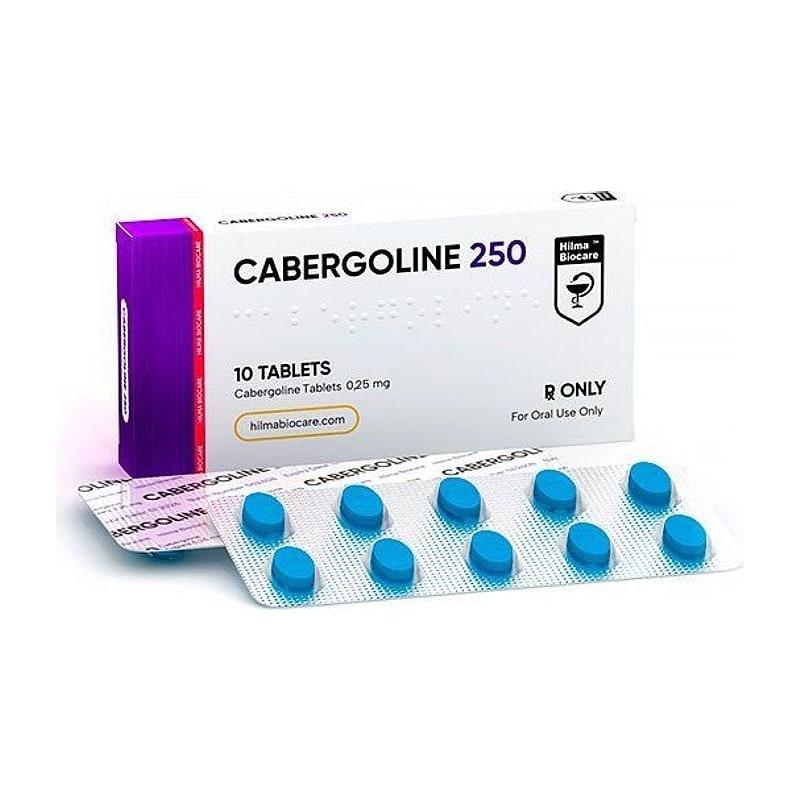
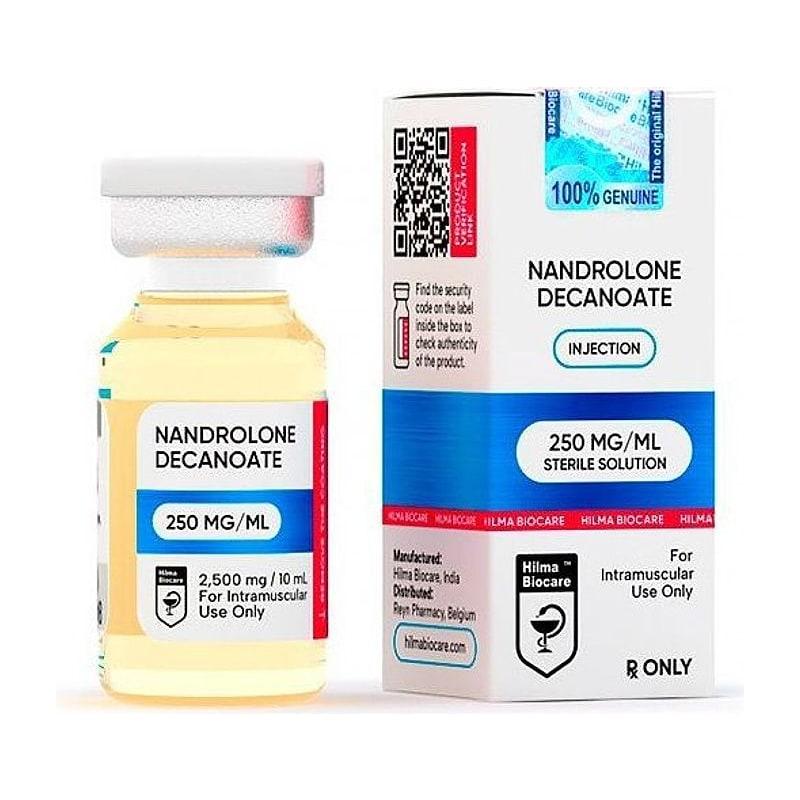
Research Disclaimer: Cabergoline is sold exclusively for in-vitro and laboratory research use. Not for unsupervised use. This content does not constitute medical advice.
Cabergoline (trade name: Dostinex; Pfizer) is an ergot-derived D2 dopamine receptor agonist with high selectivity and long duration of action. Clinically approved for hyperprolactinemia and Parkinson's disease, cabergoline is used in androgen research primarily when 19-nor steroids (nandrolone, trenbolone) are part of the protocol — both produce prolactin elevation via their progestogenic (PR agonist) activity, which can suppress dopamine tone at the tuberoinfundibular dopaminergic (TIDA) pathway that normally inhibits prolactin secretion.
Table of Contents#
- Prolactin Regulation: The Dopamine Connection
- 19-Nor Steroids and Prolactin Elevation
- Cabergoline Mechanism: D2 Agonism at Lactotrophs
- Pharmacokinetics: Long t½
- Research Applications
- Protocols
- Key References
Prolactin Regulation: The Dopamine Connection#
Prolactin (PRL) is secreted from anterior pituitary lactotroph cells:
- Primary regulatory mechanism: tonic dopaminergic inhibition
- Tuberoinfundibular dopaminergic (TIDA) neurons in the hypothalamus → dopamine → portal blood → pituitary lactotroph D2 receptors → inhibits prolactin synthesis and secretion
- Dopamine is the dominant prolactin-inhibiting factor (PIF)
Normal prolactin levels (rat, serum):
- Male: ~5–15 ng/mL
- Female: ~15–30 ng/mL (higher, cycling)
- Post-suckling: pulse to 200+ ng/mL
Prolactin regulation beyond dopamine:
- TRH (thyrotropin-releasing hormone): prolactin stimulator
- VIP (vasoactive intestinal peptide): minor stimulator
- Estrogen: increases pituitary lactotroph sensitivity to TRH → elevated E2 → higher baseline prolactin → relevant in high-dose testosterone protocols where aromatization is high
19-Nor Steroids and Prolactin Elevation#
19-Nor anabolic steroids — nandrolone, trenbolone — are potent PR agonists (progesterone receptor):
- Nandrolone PR RBA: ~20% progesterone
- Trenbolone PR RBA: ~80–100% progesterone
The PR agonism pathway to prolactin:
- PR activation in the hypothalamus → reduces dopamine synthesis/release from TIDA neurons
- Less dopamine reaches lactotroph D2 receptors → dopaminergic inhibition of prolactin decreases
- Lactotrophs release more prolactin
- Result: hyperprolactinemia at high doses of 19-nor compounds
Prolactin elevation is dose-dependent:
- Moderate 19-nor doses → modest prolactin rise (~20–50% above baseline)
- High-dose trenbolone: prolactin can reach 2–5× baseline
- Combined 19-nor compounds (trenbolone + nandrolone): additive PR → additive prolactin elevation
Cabergoline Mechanism: D2 Agonism at Lactotrophs#
Cabergoline acts directly on pituitary lactotroph D2 receptors (bypassing the TIDA pathway):
- D2 receptor agonism → Gi protein → decreases cAMP → decreased prolactin synthesis and secretion
- Also acts on hypothalamic TIDA pathway D2 autoreceptors: increases dopaminergic tone
- Net: potent, sustained prolactin suppression
Selectivity:
- Cabergoline has highest affinity for D2 > D3 > D4 > D1
- Very low affinity for 5-HT receptors at research doses
- Limited cardiac valvulopathy risk compared to older ergot agonists (pergolide) — the cardiac concern is with very high Parkinson's doses; at standard prolactin-suppression doses, cabergoline is well-tolerated
Pharmacokinetics: Long t½#
| Parameter | Value |
|---|---|
| Oral bioavailability | ~65% |
| t½ | ~63–69 hours (one of the longest among dopamine agonists) |
| Protein binding | ~40% |
| Metabolism | Hepatic (CYP enzymes): multiple metabolites |
| Dosing interval | 2× per week (clinical standard) |
| Onset of prolactin suppression | 3 hours (single dose); maximal at ~48h |
Rat PK:
- t½ shorter: ~10–15h
- Dosing: 2–3× per week adequate for sustained prolactin suppression
Research Applications#
1. Prolactin measurement as 19-nor proxy#
In multi-compound protocols involving nandrolone or trenbolone:
- Baseline + weekly serum prolactin → tracks 19-nor PR agonism indirectly
- Cabergoline group: co-administer 0.025–0.1 mg/kg twice weekly → confirms that elevated prolactin is dopamine-suppressible → pharmacologically attributable to 19-nor PR agonism (not other pathways)
2. Isolating prolactin contributions to HPTA#
Prolactin at high levels suppresses GnRH:
- Hyperprolactinemia → directly suppresses GnRH pulse frequency
- In 19-nor research: HPTA suppression has 3 components: AR, PR, and prolactin-mediated
- Cabergoline suppresses only the prolactin component → allows attribution analysis
3. Sexual function research#
High prolactin → suppresses libido and sexual behavior in animal models:
- Cabergoline rescues prolactin-induced sexual dysfunction → used to study prolactin's role in post-ejaculatory refractory period and dopamine-prolactin axis in sexual motivation
Protocols#
Prolactin suppression in nandrolone-treated rats#
| Parameter | Specification |
|---|---|
| Model | Adult male intact SD rats |
| Groups | 1. Vehicle, 2. Nandrolone decanoate 10 mg/kg SC weekly, 3. ND + Cabergoline 0.1 mg/kg SC twice weekly |
| Duration | 8 weeks |
| Endpoints | Serum prolactin (ELISA, species-specific), serum LH/FSH, testosterone, HPTA assessment (testicular weight, Leydig cell morphology) |
| Key question | Does cabergoline-mediated prolactin suppression partially rescue HPTA suppression from nandrolone? |
Receptor binding assay (D2 vs. D1 selectivity)#
| Parameter | Specification |
|---|---|
| Receptor | Recombinant D2 (long isoform, rat or human) |
| Radioligand | [³H]-spiperone |
| Competitor | Cabergoline dose-response, vs. bromocriptine (reference) |
| Analysis | Ki values for D2 and D1, selectivity ratio |
Key References#
-
Biller BMK, et al. (1996). "Once weekly cabergoline versus twice weekly bromocriptine in hyperprolactinemia." Journal of Clinical Endocrinology and Metabolism, 81(7):2338–2343.
-
Verhelst J, et al. (1999). "Cabergoline in the treatment of hyperprolactinemia: a study in 455 patients." Journal of Clinical Endocrinology and Metabolism, 84(7):2518–2522.
-
Bhasin S & Buckwalter JG. (2001). "Testosterone supplementation in older men." Journal of Andrology, 22(5):718–731.
Research Use Only: Cabergoline is sold exclusively for in-vitro research and laboratory use. Not for unsupervised use. JuicedPharma does not provide medical advice.
Published by JuicedPharma Research Team · September 2026 · Category: Research Protocols & Science