Research Disclaimer: All compounds described are sold exclusively for in-vitro and laboratory research use. Not for unsupervised use. This content does not constitute medical advice.
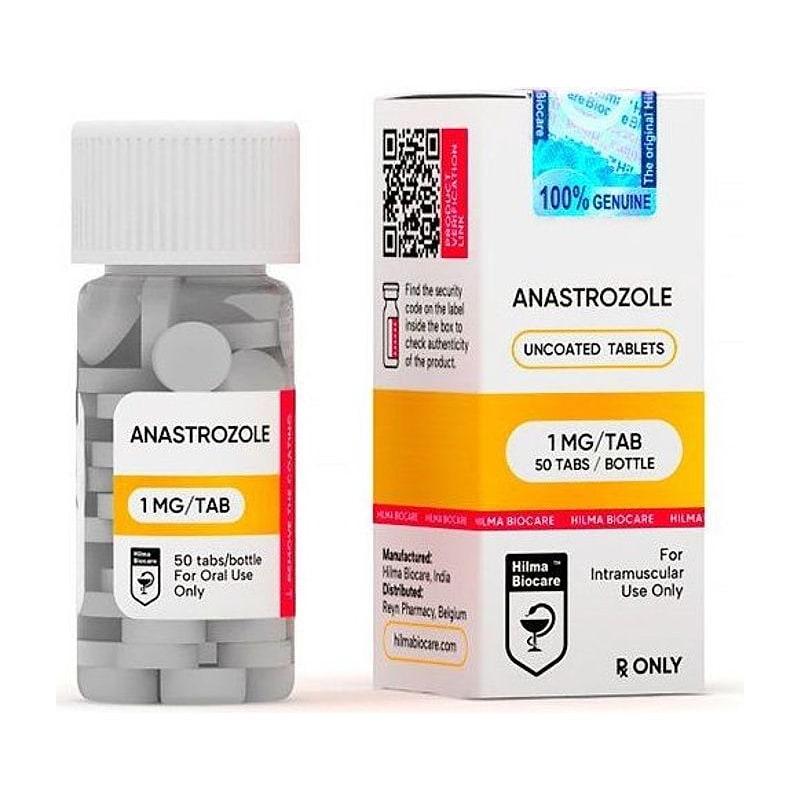
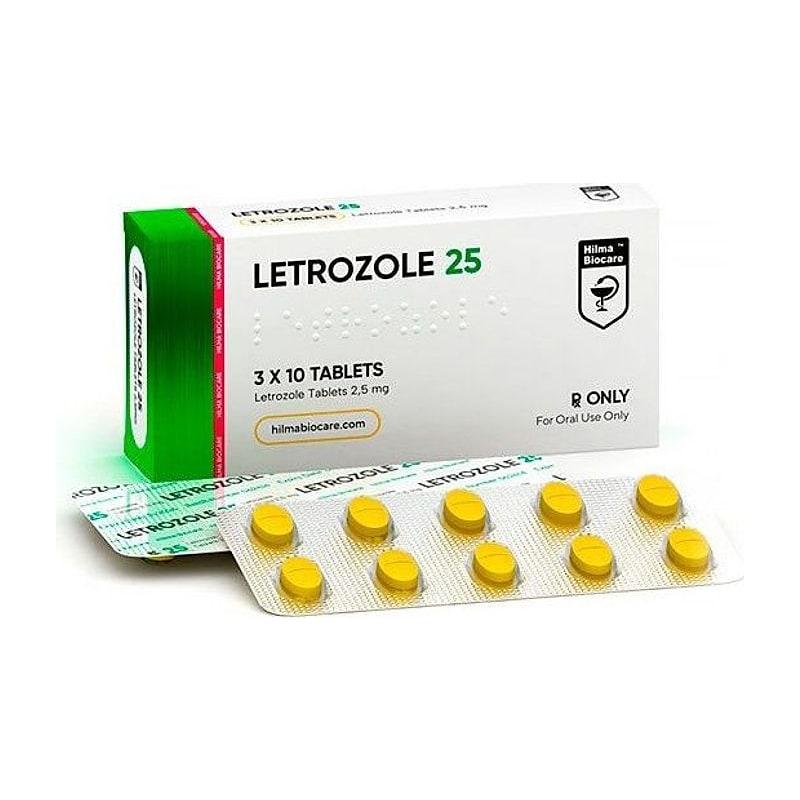
Anastrozole and letrozole are the two dominant third-generation non-steroidal aromatase inhibitors used in androgen research. Both are triazole compounds that competitively inhibit CYP19A1 by coordinating to the enzyme's heme iron, but they differ in molecular structure, enzyme binding affinity (~10–100× difference), pharmacokinetics, and thus their optimal research applications. This guide covers a direct comparison to help researchers select the appropriate compound.
Table of Contents#
- Structural Comparison
- Enzyme Pharmacology: CYP19A1 Inhibition
- In Vivo E2 Suppression Comparison
- Pharmacokinetics Head-to-Head
- Effects on the HPTA and Gonadotropins
- Adverse Effects Comparison
- Protocol Selection Guide
- Key References
Structural Comparison#
Both are triazole-based non-steroidal AIs:
| Feature | Anastrozole | Letrozole |
|---|---|---|
| Scaffold | Mono-triazole (one triazole ring) | Bis-triazole (two triazole rings) |
| Molecular formula | C₁₇H₁₉N₅ | C₁₇H₁₁N₅ |
| MW | 293.4 Da | 285.3 Da |
| Mechanism class | Competitive, reversible | Competitive, reversible |
| Steroidal? | No | No |
| Irreversible? | No | No |
The bis-triazole advantage: letrozole's two triazole rings can form bidentate coordination with the CYP19A1 heme iron — both nitrogen atoms bind simultaneously. This dual coordination dramatically increases binding affinity (Ki ~0.2–2 nM) vs. anastrozole's mono-coordination (Ki ~15 nM).
Why reversibility matters: both anastrozole and letrozole are reversible inhibitors. After discontinuation, CYP19A1 activity recovers within days–weeks (compare to exemestane, a steroidal irreversible inhibitor — enzyme activity remains suppressed until new CYP19A1 protein is synthesized).
Enzyme Pharmacology: CYP19A1 Inhibition#
| Metric | Anastrozole | Letrozole |
|---|---|---|
| Ki for CYP19A1 | ~15 nM | ~0.2–2 nM |
| IC50 (CYP19A1 microsomal assay) | ~15–100 nM | ~0.1–10 nM |
| Selectivity vs. CYP3A4 | ~10,000:1 | ~10,000:1 |
| Selectivity vs. CYP1A2 | High | High |
| Practical potency ratio | Anastrozole ≈ 1× | Letrozole ≈ 10–100× |
In vitro vs. in vivo: despite the large in vitro potency difference, both compounds achieve ~97–99% E2 suppression in postmenopausal women at their respective therapeutic doses (anastrozole 1 mg/day; letrozole 2.5 mg/day). This convergence occurs because both doses exceed the enzyme inhibition threshold many-fold — the extra potency of letrozole translates to "more complete" suppression only at the margin (98–99% vs. 97%).
In Vivo E2 Suppression Comparison#
| Model | Anastrozole result | Letrozole result |
|---|---|---|
| Postmenopausal women (BC treatment) | ~97% E2 suppression | ~98–99% E2 suppression |
| Men + exogenous testosterone | ~50–80% E2 suppression (dose-dependent) | ~60–85% E2 suppression |
| Intact premenopausal females | Incomplete (pituitary compensation) | Incomplete (similar mechanism) |
| Castrated female rats + testosterone | Complete suppression achievable | Complete suppression achievable |
Practical difference: in most androgen research models, anastrozole and letrozole achieve equivalent E2 suppression if dosed appropriately. The in vitro Ki difference rarely translates to clinical or research endpoint differences in well-designed protocols.
Where letrozole has an edge:
- Ultra-low E2 targets (e.g., studying effects of near-complete E2 ablation on bone)
- When maximum reliability of E2 suppression is essential (large in vivo studies where dosing variability cannot be tolerated)
- Ovulation induction (letrozole has FDA approval; anastrozole does not)
Pharmacokinetics Head-to-Head#
| Parameter | Anastrozole | Letrozole |
|---|---|---|
| Oral bioavailability | ~83% | ~100% |
| t½ (human) | ~40–50h | ~48h |
| t½ (rat) | ~10–15h | ~6–12h |
| Protein binding | ~40% | ~60% |
| Steady-state | ~7 days | ~2–6 weeks |
| Metabolism | N-dealkylation, hydroxylation | CYP3A4/2A6 → carbinol |
| Primary elimination | Urine + bile | Urine (90%) |
Key PK difference: anastrozole reaches steady-state in 7 days; letrozole may take weeks to reach true steady-state (longer accumulation phase). For short-term rodent studies, anastrozole is more predictable. For long-term studies where consistent suppression is prioritized, either is acceptable.
Effects on the HPTA and Gonadotropins#
Both AIs remove the E2 component of negative HPTA feedback:
- E2 at hypothalamus → normally slows GnRH pulse frequency
- E2 at pituitary → suppresses LH/FSH synthesis
- AI → removes E2 → LH and FSH rise → endogenous testosterone increases (in intact males)
Testosterone elevation in intact males with AI:
- Anastrozole 1 mg/day in eugonadal men: serum testosterone +30–50%
- Letrozole 2.5 mg/day in eugonadal men: serum testosterone +40–60% (slightly higher, consistent with greater E2 suppression)
Bone effect of chronic AI use: Both AIs → bone density loss over time if used chronically in males (E2 required for osteoclast suppression). This is relevant for long-term androgen research studies where musculoskeletal endpoints are measured — AIs should be flagged as potential bone density confounds in chronic protocols.
Adverse Effects Comparison#
| Effect | Anastrozole | Letrozole |
|---|---|---|
| Hot flashes (clinical) | Common in postmenopausal women | Common (similar) |
| Bone density loss | Yes (chronic use) | Yes (similar) |
| Lipid effects | Modest adverse (<10% changes) | Modest adverse |
| Mood/cognitive effects | Rare | Rare |
| Hepatotoxicity | Rare | Rare |
| CYP3A4 drug interactions | Minimal | Potential (CYP3A4 substrate) |
Both compounds have favorable safety profiles at research-relevant doses. Neither significantly inhibits other CYP enzymes at concentrations required for aromatase suppression.
Protocol Selection Guide#
| Research Situation | Recommended AI |
|---|---|
| Standard E2 control in testosterone studies | Anastrozole (well-studied, easier dose titration) |
| Maximum E2 ablation (pure AR effect studies) | Letrozole |
| Ovulation induction research | Letrozole (FDA-approved indication) |
| Short-term rodent studies (<4 weeks) | Anastrozole (faster steady-state) |
| Long-term chronic studies (>8 weeks) | Either; letrozole more reliable E2 suppression |
| HPTA recovery (PCT) — AI phase | Anastrozole (lower potency; can titrate without over-suppression) |
| Bone density focus (E2 ablation endpoint) | Letrozole |
| Breast cancer model | Either (both extensively validated) |
Key References#
-
Geisler J, et al. (1998). "Letrozole suppresses plasma estradiol and estrone sulphate more completely than anastrozole." Cancer Research, 58(20):4507–4510.
-
Santen RJ, et al. (2009). "History of aromatase: saga of an important biological mediator and therapeutic target." Endocrine Reviews, 30(4):343–375.
-
Taxel P, et al. (2001). "The effect of aromatase inhibition on sex steroids, gonadotropins, and markers of bone turnover in older men." Journal of Clinical Endocrinology and Metabolism, 86(6):2869–2874.
Research Use Only: All compounds described are sold exclusively for in-vitro research and laboratory use. Not for unsupervised use. JuicedPharma does not provide medical advice.
Published by JuicedPharma Research Team · September 2026 · Category: Research Protocols & Science