Research Disclaimer: All compounds described are sold exclusively for in-vitro and laboratory research use. Not for unsupervised use. This content does not constitute medical advice.
During caloric restriction, the body activates parallel catabolic pathways affecting both adipose tissue and muscle. While adipose lipolysis is the intended target of an energy deficit, skeletal muscle proteolysis is an unavoidable concurrent process — driven by elevated cortisol, reduced insulin signaling, and decreased IGF-1. Research protocols investigating lean mass preservation during energy deficit require compounds with distinct mechanisms: anti-glucocorticoid activity, lipolytic enhancement, and protection of anabolic signaling.
Catabolic Mechanisms During Energy Deficit#
Cortisol-mediated muscle catabolism:
- Elevated cortisol (hypothalamic-pituitary-adrenal axis upregulation during energy deficit)
- GR-cortisol complex → muscle FOXO transcription factors → atrogenes (MuRF1, atrogin-1)
- Ubiquitin-proteasome system degradation of myofibrillar proteins (actin, myosin)
Reduced insulin/IGF-1 signaling:
- Caloric restriction → reduced insulin → reduced PI3K/Akt activity
- Decreased Akt → reduced mTORC1 → reduced protein synthesis
- Increased AMPK (energy-sensing kinase activated by low ATP) → inhibits mTORC1 → further reduces synthesis
Adipose lipolysis (intended response):
- HSL (hormone-sensitive lipase) + ATGL → triglyceride hydrolysis → FFA + glycerol release
- Epinephrine, GH → activate HSL via PKA; insulin suppresses HSL
- Free fatty acids as energy substrate; glycerol for gluconeogenesis
Compound Selection for Cutting Research#
Anti-catabolic, Lean-Mass Preserving Compounds#
| Compound | Key mechanism | GR antagonism | SHBG effect | Water retention |
|---|---|---|---|---|
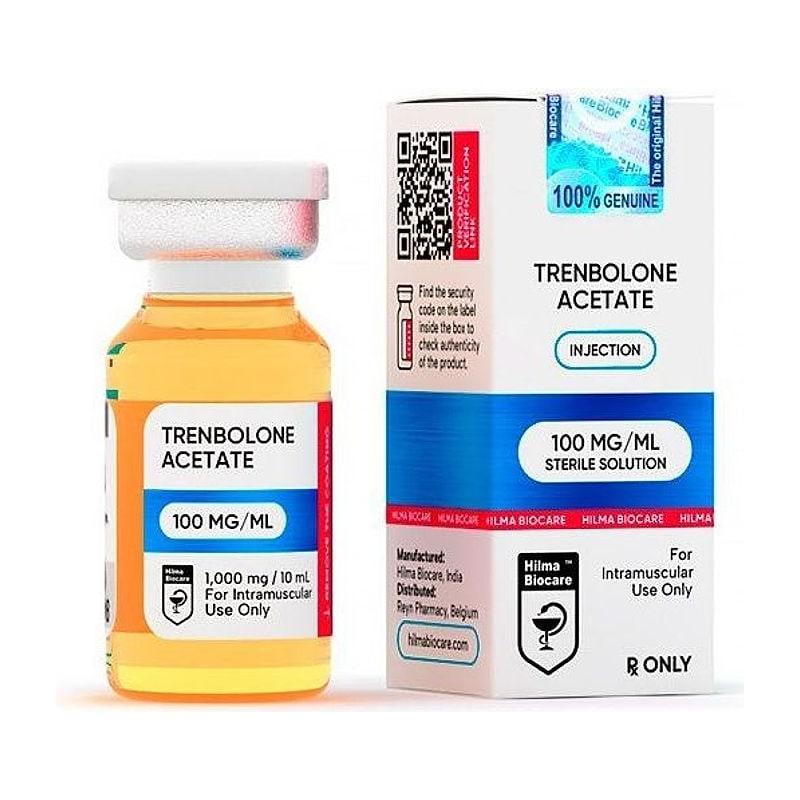
| Trenbolone Acetate | AR high-affinity + GR antagonist | Yes (significant) | Low | None |
| Stanozolol | AR agonism + SHBG displacement | Mild | Strongest (SHBG-displacing) | None |
| Testosterone Propionate | AR + SHBG competition; fast ester | Minimal | Moderate | Some |
| Oxandrolone | AR moderate; very low androgenicity | Minimal | Mild | None |
| Masteron (Drostanolone) | AR + anti-E2; SHBG competition | Minimal | Strong | None |
Trenbolone's GR antagonism: Trenbolone binds GR with ~34% relative binding affinity (vs. dexamethasone = 100%). This partially blocks cortisol's catabolic signaling in muscle during the energy deficit, directly addressing the primary muscle-wasting mechanism.
Lipolytic Enhancement Compounds#
| Compound | Mechanism | Primary target |
|---|---|---|
| HGH Fragment 176-191 | Truncated GH C-terminal; binds β3-AR in adipose | HSL activation in fat tissue |
| Clenbuterol | β2-adrenergic agonist | HSL + thermogenesis (mitochondrial uncoupling) |
| T3 (Liothyronine) | Thyroid hormone → BMR increase | Overall metabolic rate; mitochondrial biogenesis |
| GLP-1 agonists (semaglutide) | GLP-1R → satiety + adipose fatty acid oxidation | Central appetite; adipocyte metabolism |
Mechanistic Rationale for Compound Combinations#
Testosterone + Trenbolone (research model):
- Testosterone: baseline AR agonism; estrogen management (AI needed)
- Trenbolone: potent anti-GR + AR; nitrogen-sparing; no aromatization
- Combined: strong AR occupancy + cortisol antagonism → near-complete protection against muscle catabolism during energy deficit
Stanozolol + Masteron (SHBG-displacement stack):
- Both have high SHBG affinity → displace testosterone from SHBG → increase free testosterone fraction
- Combined: amplifies androgen activity without increasing total testosterone dose
- Stanozolol also inhibits progesterone receptor — useful in protocols with progestogenic compounds (nandrolone, trenbolone)
GH fragment + Clenbuterol:
- Both lipolytic but different mechanisms
- Fragment: adipose-specific GH-like effect via β3-AR pathway (tissue selective)
- Clenbuterol: systemic β2-AR agonism → fat + muscle thermogenesis + anti-catabolic (β2-AR in muscle → mTOR)
- Combined: additive lipolysis with distinct tissue targets
Endpoint Design for Cutting Research#
Body composition:
- DEXA scanning (gold standard) at baseline, 4 weeks, 8 weeks
- Fat mass change vs. lean mass change as primary outcome
- Visceral vs. subcutaneous fat distinction (CT scan or MRI if available)
Molecular endpoints:
- Serum cortisol (morning, standardized time)
- Free fatty acids and glycerol (lipolysis markers)
- IGFBP-3 and free IGF-1 (anabolic signaling)
- MuRF1 and atrogin-1 mRNA in muscle biopsy (atrophy gene expression)
- Adipose HSL phosphorylation (activation state)
Research Note: Caloric Restriction Model Design#
Animal model considerations:
- 20–30% caloric restriction from ad libitum feeding is the standard moderate-deficit research model
- More severe restriction (>40%) activates survival mechanisms that confound pharmacological intervention
- Duration: minimum 4 weeks for observable body composition changes with DEXA
- Controls: ad libitum + vehicle; restricted + vehicle; restricted + compound(s)
Hormonal context: Energy restriction independently reduces testosterone, LH, and IGF-1 in rodent models. Baseline measurements and vehicle-restricted control arms are essential for interpreting intervention effect sizes.
Research Use Only. JuicedPharma does not provide medical advice.
Published by JuicedPharma Research Team · September 2026 · Category: Research Protocols & Science