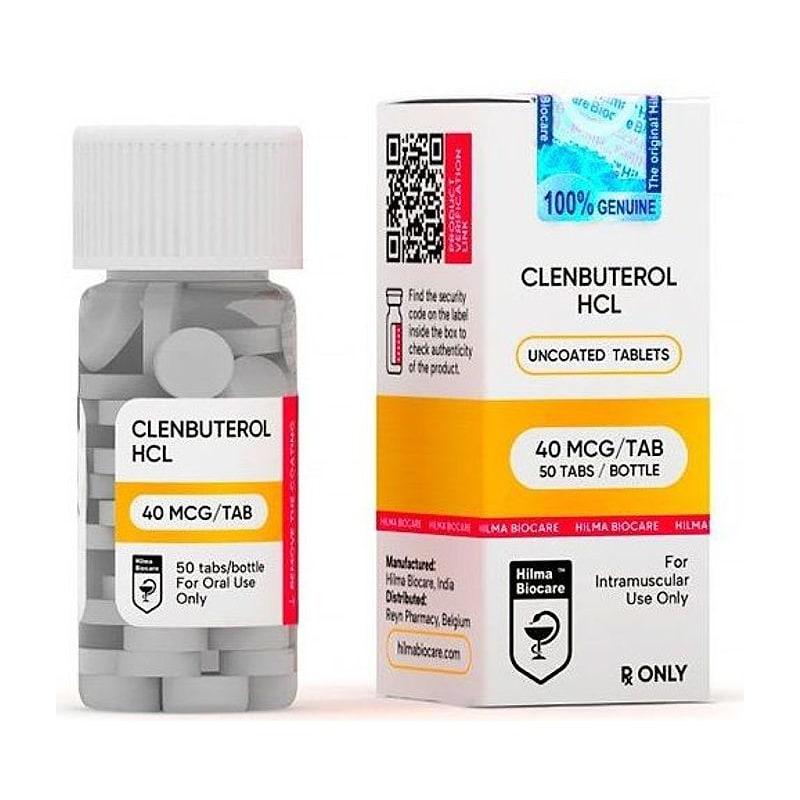
Research Disclaimer: Clenbuterol is sold exclusively for in-vitro and laboratory research use. Not approved for human obesity or bodybuilding use. This content does not constitute medical advice.
Clenbuterol is a selective beta-2 adrenergic receptor (β2-AR) agonist developed originally as a bronchodilator for asthma (approved veterinary use; some human approvals in select countries). Its thermogenic and anti-catabolic properties have made it a widely studied compound in preclinical research on adipose tissue metabolism, skeletal muscle hypertrophy, and cardiac remodeling. This research overview covers the pharmacology, mechanisms, and established preclinical data.
Table of Contents#
- Beta-2 Adrenergic Receptor Pharmacology
- Thermogenic Mechanism: BAT and WAT
- Fat Loss in Preclinical Models
- Skeletal Muscle Effects: Anti-Catabolic and Anabolic
- Cardiac Effects: Research Cautions
- Tachyphylaxis: Beta Receptor Downregulation
- Comparison to Other Thermogenics
- Research Protocols
- Key References
Beta-2 Adrenergic Receptor Pharmacology#
Adrenergic receptor subtypes#
The adrenergic receptor family has three main classes:
- α-adrenergic receptors (α1, α2): primarily vasoconstrictive; α2 autoreceptors inhibit NE release
- β1-adrenergic receptors (β1-AR): primarily cardiac (heart rate, contractility)
- β2-adrenergic receptors (β2-AR): airway smooth muscle (bronchodilation), skeletal muscle, adipose, liver
- β3-adrenergic receptors (β3-AR): primarily in adipose (thermogenesis, lipolysis)
Clenbuterol selectivity#
Clenbuterol is a selective β2-AR agonist:
- β2-AR Ki: ~0.1–0.3 nM
- β1-AR Ki: ~10–30 nM (30–100× less potent at β1)
- β3-AR: minimal direct activity
This β2 selectivity is pharmacologically important: at research doses, clenbuterol's primary direct effects are via β2-AR. Some thermogenic effects in adipose may be mediated through indirect β3-AR activation (via sympathetic nervous system upregulation) rather than direct β3-AR binding.
Signal transduction#
β2-AR → Gs protein → adenylyl cyclase → ↑cAMP → PKA activation:
- In airway smooth muscle: PKA → MLCK inhibition → smooth muscle relaxation → bronchodilation
- In adipose: PKA → HSL phosphorylation → lipolysis
- In skeletal muscle: PKA → mTOR activation (anabolic pathway); PKA → MAFbx/atrogin suppression (anti-catabolic)
Thermogenic Mechanism: BAT and WAT#
Brown adipose tissue (BAT)#
While β3-AR is the primary receptor for BAT thermogenesis, β2-AR is also expressed in BAT and contributes to thermogenic regulation:
- Clenbuterol → β2-AR in BAT → cAMP → PKA → UCP-1 upregulation
- UCP-1 (uncoupling protein 1) uncouples electron transport from ATP synthesis → energy dissipated as heat
- Activated BAT can increase resting metabolic rate significantly in small rodents (15–25% increase in VO₂ in some studies)
The thermogenic effect of clenbuterol is proportionally more important in rodents than humans because rodents have much larger BAT deposits relative to body mass.
White adipose tissue (WAT) lipolysis#
In WAT:
- Clenbuterol → β2-AR → cAMP → PKA → HSL + perilipin phosphorylation → triglyceride hydrolysis → FFA + glycerol release
- FFA released to circulation → taken up by muscle and liver → β-oxidation (if energy demand is present)
- β2-AR is less potent than β3-AR for WAT lipolysis, but at clenbuterol doses used in research, the cAMP signal is sufficient for measurable lipolysis
Fat Loss in Preclinical Models#
Rodent fat loss data#
Multiple rodent studies (Klein et al., Ricquier et al., Arch et al.):
- Clenbuterol SC or oral in HFD-obese or genetically obese rodents × 2–4 weeks
- Body fat reduction: 15–25% from baseline fat mass in responsive models
- Body weight reduction: variable (depends on lean mass preservation vs. fat loss balance)
- Important: fat loss is not purely due to caloric restriction — food intake may actually increase (β2-AR activation in hypothalamus can be orexigenic), yet fat mass decreases, confirming direct lipolytic/thermogenic mechanism
Lean mass preservation#
A key property of clenbuterol in preclinical models: fat loss is accompanied by lean mass preservation or increase (unlike caloric restriction which causes lean + fat loss):
- Skeletal muscle clenbuterol → β2-AR → mTOR → protein synthesis
- Skeletal muscle clenbuterol → β2-AR → reduces MAFbx/MuRF1 (muscle atrophy ubiquitin ligases) → anti-catabolic
This property makes clenbuterol useful as a lean mass preservation agent in cancer cachexia models, burn injury models, and disuse atrophy models.
Skeletal Muscle Effects: Anti-Catabolic and Anabolic#
Muscle hypertrophy (rodents)#
Emery et al. (1984) and Ryall et al.:
- Clenbuterol IP/SC in young rats → 10–20% increase in gastrocnemius and soleus mass within 2 weeks
- Mechanism: β2-AR → Gs → cAMP → PKA → mTOR pathway (independent of IGF-1)
- Also: some reports of clenbuterol-induced PI3K/Akt activation in muscle (may be indirect via sympathetic regulation of IGF-1 secretion)
Fiber type shift#
Chronic clenbuterol → shift from slow (type I) to fast (type II) muscle fibers:
- Increased myosin heavy chain IId/x expression
- Reduced type I slow MHC
- This fiber type shift may affect muscle endurance (fast fibers fatigue more easily) — important for functional endpoints in research
Cancer cachexia and disuse atrophy models#
Clenbuterol is among the most studied anti-cachexia agents in preclinical models:
- Tumor-bearing rodents: clenbuterol → preserved muscle mass despite tumor-induced catabolic state
- Hindlimb suspension (disuse atrophy): clenbuterol → reduces atrophy by ~40–60% vs. vehicle
- Mechanism: β2-AR → reduced proteolysis (MAFbx/MuRF1 suppression) + maintained protein synthesis (mTOR)
Cardiac Effects: Research Cautions#
The β2-AR cardiac concern:
Despite clenbuterol's relative β2 selectivity, cardiac effects are a significant research concern:
- The heart expresses both β1-AR and β2-AR (~80:20 ratio of β1:β2)
- Clenbuterol at research doses → β2-AR in heart → positive chronotropy (increased HR) and inotropy (increased contractility)
- Chronic clenbuterol → cardiac hypertrophy (increased heart weight, cardiomyocyte hypertrophy)
- The cardiac hypertrophy from chronic β2-AR agonism is physiological hypertrophy (concentric, increased contractile protein) — different from the pathological hypertrophy from pressure overload
For research protocol design:
- Cardiac histology (heart weight/body weight ratio) should always be a safety endpoint in clenbuterol studies
- Echocardiography (rodent) can assess LV mass, wall thickness, and systolic/diastolic function
- At high doses or long durations, cardiac enlargement may confound interpretation of metabolic endpoints
Tachyphylaxis: Beta Receptor Downregulation#
A critical limitation of clenbuterol research (and all β-AR agonists):
Beta receptor downregulation with chronic agonist exposure:
- Prolonged β2-AR agonism → receptor phosphorylation by GRK2/3 (GPCR kinases) → β-arrestin binding → internalization
- Continuous high-dose clenbuterol → 50–80% reduction in β2-AR surface expression within 48–72 hours
- Downregulated receptor → reduced thermogenic and lipolytic response (tachyphylaxis)
Consequence for research:
- The thermogenic effect of clenbuterol diminishes significantly after 2–4 weeks of continuous use in rodents
- This is a real pharmacological phenomenon — weight loss plateaus or stops even with continued dosing
- Research protocols should account for this with either intermittent dosing (2 weeks on, 2 weeks off) or dose escalation (limited by cardiac effects)
β2-AR upregulation with antagonists: The downregulation is reversible. Washout of clenbuterol → β2-AR re-expression within 7–14 days.
Comparison to Other Thermogenics#
| Compound | Primary target | Thermogenic mechanism | Anabolic? | Cardiac risk | Tachyphylaxis |
|---|---|---|---|---|---|
| Clenbuterol | β2-AR | BAT UCP-1, HSL, mTOR | Yes (lean mass) | Moderate (β2 cardiac) | High (3–4 weeks) |
| T3 (liothyronine) | Thyroid receptors | Universal metabolism increase | No (catabolic) | High (arrhythmia, atrophy) | Low |
| Ephedrine/MA | α1+β-AR, NE release | Mixed adrenergic | Minimal | Moderate | Moderate |
| Fragment 176-191 | β3-AR | HSL activation | No | Low | Low |
| Semaglutide | GLP-1R | CNS appetite suppression (indirect fat loss) | No | Mild HR increase | Moderate (gastric) |
Clenbuterol is unique for its combination of lipolysis + lean mass preservation, but the cardiac effects and rapid tachyphylaxis are significant limitations for chronic research protocols.
Research Protocols#
Thermogenesis and fat loss protocol#
| Parameter | Specification |
|---|---|
| Model | HFD-obese mice (C57BL/6J) |
| Dose | 0.1–1 mg/kg IP |
| Frequency | Once daily × 2 weeks (then 2-week washout if continuing) |
| Endpoints | Body weight, food intake (monitor for orexigenic effect), DXA body composition, plasma FFA, rectal temperature (thermogenic response), VO₂/VCO₂ (metabolic cage), cardiac weight |
Anti-catabolic / disuse atrophy protocol#
| Parameter | Specification |
|---|---|
| Model | Hindlimb suspension (7–14 days) |
| Dose | 0.3–1 mg/kg SC or IP |
| Timing | Begin at same time as suspension |
| Endpoints | Soleus and gastrocnemius wet weight, fiber CSA (histology), MHC type distribution, MAFbx/MuRF1 mRNA (RT-PCR), pAkt, pmTOR (western blot) |
Key References#
-
Ryall JG, et al. (2008). "Cellular and molecular mechanisms underlying age-related skeletal muscle wasting and weakness." Biogerontology, 9(4):213–228.
-
Arch JR. (2002). "Beta(3)-Adrenoceptor agonists: potential, pitfalls and progress." European Journal of Pharmacology, 440(2–3):99–107.
-
Emery PW, et al. (1984). "Chronic effects of beta 2-adrenergic agonists on body composition and protein synthesis in the rat." Bioscience Reports, 4(1):83–91.
-
Martineau L, et al. (1992). "Effect of a beta-2-agonist on the performance and metabolism of obese Zucker rats." Journal of Applied Physiology, 73(1):178–185.
Research Use Only: Clenbuterol is sold exclusively for in-vitro research and laboratory use. Not for human consumption. JuicedPharma does not provide medical advice.
Published by JuicedPharma Research Team · September 2026 · Category: Research Protocols & Science