Research Disclaimer: All compounds described are sold exclusively for in-vitro and laboratory research use. Not for unsupervised use. This content does not constitute medical advice.
The BPC-157 + TB-500 recovery stack is the most well-established peptide combination in research protocols targeting musculoskeletal repair, tissue healing, and systemic recovery. Both compounds have extensive published literature independently — and their mechanisms are sufficiently distinct that combination provides broader pathway coverage than either alone. This guide covers the scientific rationale, what research the combination has been used in, and how to structure a valid recovery research protocol.
Why This Combination Makes Scientific Sense#
Complementary mechanisms with no overlap:
| Feature | BPC-157 | TB-500 |
|---|---|---|
| Primary mechanism | Egr-1 → VEGF → angiogenesis | G-actin sequestration → cell migration |
| Secondary mechanism | eNOS → NO → vasodilation | ILK → VEGF (separate from BPC-157 pathway) |
| Anti-inflammatory | NFκB modulation (indirect) | NFκB inhibition (direct) |
| Receptor type | Uncharacterized surface receptor | Actin-binding protein; integrin interaction |
| Collagen effect | Direct procollagen upregulation | Scaffold via actin network organization |
| Tissue targets | Tendon, gut, bone, nerve, muscle | Cardiac, skin, cornea, muscle, tendon |
Two independent VEGF pathways: Both compounds upregulate VEGF through different routes — BPC-157 via Egr-1 transcription factor, TB-500 via ILK (Integrin-Linked Kinase). When both are present simultaneously, two separate upstream signals both drive VEGF production → greater angiogenic stimulus than either alone. These pathways do not share rate-limiting intermediates, so they are genuinely additive.
No pharmacokinetic interaction: BPC-157 and TB-500 are structurally unrelated peptides with different sizes, sequences, and receptor targets. There is no known competition for plasma binding proteins, metabolizing enzymes, or receptors between them.
Research Protocol Structure#
Standard recovery research protocol:
| Parameter | BPC-157 | TB-500 |
|---|---|---|
| Typical rodent dose | 10 μg/kg SC | 150–500 μg/kg SC |
| Frequency | Once daily | Once daily to twice weekly |
| Duration | 2–8 weeks depending on model | 2–8 weeks |
| Reconstitution | BAC water | BAC water |
| Can mix in same syringe | Yes | Yes (separate reconstitution; mix before injection) |
Reconstitution guide:
- BPC-157 5mg + 2 mL BAC water = 2.5 mg/mL stock
- TB-500 5mg + 2 mL BAC water = 2.5 mg/mL stock
- For rodent injection: calculate volume based on dose and animal weight
- 10 μg/kg BPC-157 for 250g rat = 2.5 μg → 1 μL of 2.5 mg/mL stock
Research Models Where the Stack Has Been Applied#
Tendon repair models: Both BPC-157 and TB-500 have individually shown benefit in rat Achilles tendon models. The combination approach is used in research where both VEGF pathway coverage (BPC-157/Egr-1 + TB-500/ILK) and cellular migration (TB-500/actin) are wanted simultaneously.
Muscle injury models:
- BPC-157: reduces inflammatory markers at muscle injury site; promotes satellite cell recruitment
- TB-500: actin polymerization support for regenerating myofibers; promotes migration of muscle progenitor cells
- Stack rationale: combining vascular (BPC-157) and cellular (TB-500) support
Gut and systemic recovery: BPC-157 has uniquely strong evidence for gastrointestinal recovery (IBD, fistula, anastomosis models). TB-500 adds systemic anti-inflammatory coverage that may benefit multi-organ recovery models.
What You Need for the Recovery Stack#
Full stack components:
- BPC-157 — available in 5mg or 10mg lyophilized vials
- TB-500 — available in 5mg or 10mg lyophilized vials
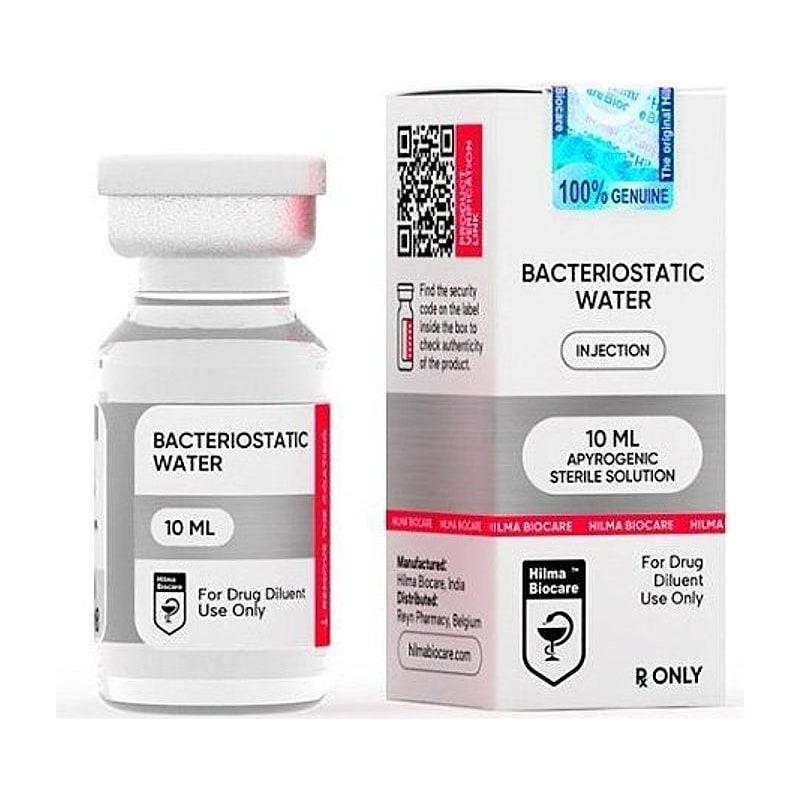
- Bacteriostatic Water (BAC water) — for reconstitution of both peptides
- Insulin syringes (29–31g, 1/2 inch) — for SC administration in rodent studies
- Alcohol swabs — for vial top sterilization
Research Endpoints for the Recovery Stack#
Typical endpoints in a recovery stack protocol:
- Histology: Masson's trichrome (collagen density and organization); H&E (cellularity, inflammation)
- Immunohistochemistry: CD31 (vascular endothelial marker — quantifies new blood vessel formation); α-SMA (myofibroblast differentiation)
- Biomechanical testing: Tensile strength testing of repaired tendon/ligament
- Inflammatory markers: IL-6, TNF-α in tissue homogenate (ELISA)
- VEGF quantification: ELISA on tissue lysate; compare BPC-157 alone vs. TB-500 alone vs. combination
Research Use Only. JuicedPharma does not provide medical advice.
Published by JuicedPharma Research Team · October 2026 · Category: Peptides & Recovery