Research Disclaimer: BPC-157 is sold exclusively for in-vitro and laboratory research use. It is not approved for human therapeutic or veterinary use in any EU jurisdiction. This article is intended as a guide for qualified researchers evaluating supplier quality — not as guidance for personal use.
Sourcing research peptides in Europe presents challenges that US-based researchers do not face. Import from non-EU warehouses means customs exposure, inconsistent cold-chain handling, and variable transit times. Domestic EU sourcing eliminates most of these variables — but not all EU suppliers are equivalent in quality, testing practices, or reliability.
This article outlines what matters when evaluating a BPC-157 supplier for European research, and what the minimum standards for research-grade material should be.
Table of Contents#
- Why EU Sourcing Matters for Research Consistency
- The Five Quality Standards That Matter
- Understanding Third-Party Testing
- Cold Chain and Storage During Transit
- Formulation: Lyophilized vs Pre-Mixed
- Minimum Order Quantities and Batch Consistency
- Red Flags in Supplier Practices
- Questions to Ask Before Ordering
- Frequently Asked Questions
Why EU Sourcing Matters for Research Consistency#
Customs and import uncertainty#
Peptide research compounds imported from China or the US into the EU face customs inspection, potential seizure, and unpredictable transit times. For ongoing research protocols — particularly multi-week animal studies requiring daily dosing — an interrupted supply is a protocol failure. A single seized or delayed shipment can invalidate a study that took weeks to initiate.
EU-warehoused stock ships within the EU customs zone, avoiding these disruptions. Delivery timelines are predictable (typically 2–5 business days), tracking is reliable, and there are no customs duties on intra-EU trade.
Cold-chain integrity#
BPC-157 is a lyophilized peptide with known temperature sensitivity. Reconstituted material degrades rapidly at room temperature; even lyophilized material should be refrigerated for long-term stability. Shipping from outside the EU means the compound may spend 7–21 days in transit, potentially including periods at ambient temperature.
EU suppliers can ship with cold packs or refrigerated courier services within a 2–5 day window — a fundamentally different stability exposure than intercontinental air freight.
Regulatory clarity#
The legal status of BPC-157 as a research compound varies by jurisdiction. Within the EU, research peptides occupy a distinct regulatory space from medicinal products — they can be sold for in-vitro research without being licensed as medicines. This is a stable, understood framework. Import from outside the EU can complicate this status and create regulatory ambiguity.
The Five Quality Standards That Matter#
When evaluating a BPC-157 supplier, assess these five criteria:
1. Independent third-party HPLC purity testing#
The purity result should come from a laboratory with no commercial relationship to the supplier. The lab should use reverse-phase HPLC as the primary method, and the purity should be ≥99% by area for research-grade material.
Minimum acceptable: HPLC purity ≥99%, independent lab
2. Identity confirmation by mass spectrometry#
HPLC confirms purity percentage but not molecular identity. A mass spectrum confirming the molecular weight of BPC-157 (1419.55 Da, theoretical average) proves the compound synthesized is the correct sequence — not a truncated fragment with similar HPLC retention time.
Minimum acceptable: ESI-MS or MALDI-MS with measured MW within ±1 Da of theoretical
3. Batch-specific COAs#
A COA document tied to the specific lot number of the product you receive. A generic COA not tied to a batch is not evidence — it is marketing material.
Minimum acceptable: COA with lot number matching the product label
4. Verifiable testing#
Independent verification that the COA is authentic. Janoshik provides public report numbers that can be searched on their website. Any equivalent system — where you can confirm the test result exists in the lab's own records — achieves the same purpose.
Minimum acceptable: COA verifiable through an external, public system
5. Lyophilized formulation#
BPC-157 should be sold as lyophilized powder, not pre-dissolved solution. A pre-dissolved product has a significantly shorter stability window and introduces questions about the diluent used, the concentration, and whether the stability window has already been partially consumed at time of receipt.
Minimum acceptable: Lyophilized (freeze-dried) powder, sealed vial
Understanding Third-Party Testing#
The phrase "third-party tested" appears in marketing copy from many peptide suppliers. It is worth understanding what this phrase can and cannot mean.
What makes testing genuinely independent?#
- The laboratory has no ownership, financial, or contractual relationship with the supplier beyond the testing engagement
- The laboratory does not modify or selectively report results (it reports what it finds)
- The laboratory issues its own numbered report that can be cross-referenced independently
What "in-house testing" actually means#
Some suppliers test their own products without disclosing the lab. In-house testing — where the same organization synthesizes and tests the compound — has an obvious potential for selective reporting. It is not independent, regardless of the equipment used.
Janoshik as a verification anchor#
Janoshik (janoshik.com) has become a de-facto reference point in the European research peptide community specifically because they publish reports publicly. A Janoshik report number on a COA can be searched at janoshik.com to confirm the result is genuine. This traceability is the quality differentiator between a verifiable COA and an unverifiable document.
Cold Chain and Storage During Transit#
BPC-157 in lyophilized form is relatively stable at ambient temperature over short periods — properly freeze-dried material survives 24–48 hour transit without meaningful degradation. However, for research where dose accuracy matters, cold-chain shipping is a professional standard.
What to expect from a quality EU supplier#
- Shipment in insulated packaging with a cold pack for orders that include temperature-sensitive material
- Shipping options that minimize transit time (2–3 day domestic vs. 7+ day international)
- Clear labeling of the optimal storage temperature on the vial and outer packaging
- Dispatch from temperature-controlled storage (not a room-temperature warehouse)
What to do upon receipt#
- Refrigerate (2–8°C) immediately upon receipt
- Do not freeze lyophilized material unless it will be stored longer than 18 months (freezing and thawing the sealed vial multiple times can introduce moisture issues with the rubber stopper)
- Inspect the vial before opening: the powder should be white/off-white, uniformly distributed in the vial, and the septum intact with no signs of prior puncture
Formulation: Lyophilized vs Pre-Mixed#
Why lyophilized is always preferable for research#
| Parameter | Lyophilized Powder | Pre-Mixed Solution |
|---|---|---|
| Stability | 24 months at -20°C | 4-6 weeks at 2-8°C |
| Concentration control | Researcher-controlled | Fixed by supplier |
| Sterility | Sealed, hermetic | Multi-use vial risk |
| Shipping | Stable at ambient | Requires cold chain |
| Dose accuracy | Reconstitute to target concentration | Dependent on stated concentration accuracy |
A pre-mixed solution's stated concentration depends on the accuracy of the supplier's filling process. If the supplier states "500 µg/ml" but filled at 450 µg/ml, every dose is systematically underdosed with no way to know without independent testing. With lyophilized powder and a COA confirming purity, the researcher controls the concentration by the volume of diluent used.
Bacteriostatic water as the reconstitution standard#
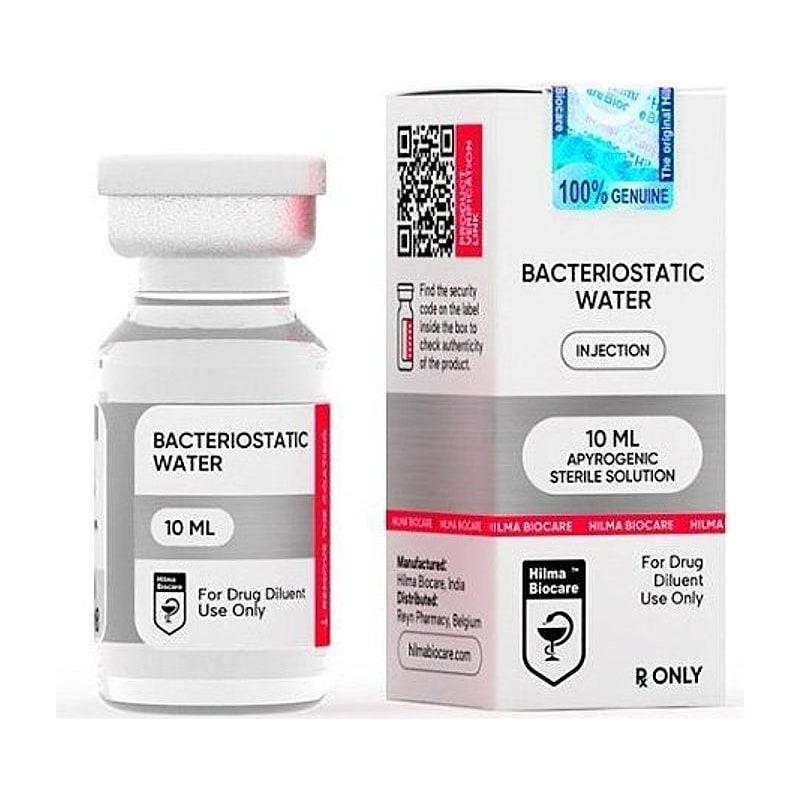
Lyophilized BPC-157 requires bacteriostatic water (BAC water, 0.9% benzyl alcohol) for multi-use vial reconstitution. A supplier that includes or recommends sterile water for reconstitution is either uninformed about peptide stability or optimizing for cost. BAC water is the research standard for all multi-use peptide vials.
Minimum Order Quantities and Batch Consistency#
Single-vial vs multi-vial availability#
For initial protocol development, researchers typically purchase 1–3 vials to establish reconstitution, dose range, and assay response. A supplier that enforces high minimum order quantities forces researchers to over-commit before validating the material in their specific protocol.
Reliable suppliers offer single-vial purchasing without price penalties per unit that make small orders impractical.
Batch consistency#
For ongoing studies, receiving the same batch number across multiple orders is preferable — it eliminates inter-batch purity variance as a variable. Ask whether the supplier can reserve material from a specific batch for the duration of a study.
Red Flags in Supplier Practices#
Watch for these indicators of low-quality or unreliable supply:
No COA available, or COA not batch-specific — equivalent to no testing claim. There is no scientific basis for trusting purity without documentation.
Only "lab" listed as tester without naming the lab — "we test in our lab" is not independent testing.
No Janoshik or equivalent verifiable COA — in 2025/2026, a supplier of European research peptides who cannot provide a Janoshik-verifiable COA is operating below the community standard.
Pre-dissolved products shipped without cold chain — reconstituted BPC-157 that has spent days in ambient-temperature transit may have degraded by 10–30% before you receive it.
Purity claims above 99.9% without HPLC data — while achievable in pharmaceutical synthesis, claims of 99.9%+ that cannot be substantiated with a chromatogram are likely marketing inflation.
Website prices far below market — BPC-157 solid-phase synthesis with HPLC purification and third-party testing has real material costs. Prices substantially below the market range typically reflect lower purity, shorter synthesis cycles, or no genuine third-party testing.
Questions to Ask Before Ordering#
When evaluating a new BPC-157 supplier, get answers to:
-
What is the purity of the current batch, and is there a COA? Request the specific COA document, not a generic one.
-
Who performed the testing, and can I verify the report? Ask for the Janoshik report number or equivalent.
-
Is the product lyophilized or pre-dissolved? Lyophilized is the correct answer.
-
Where does the product ship from? EU warehouse is preferable; non-EU means customs exposure.
-
What cold-chain measures are taken during shipping? Cold pack for express shipping is a basic standard.
-
What is the lot number, and is this the same batch as the COA? The lot number on the vial should match the lot number on the COA.
-
What is the storage recommendation? The supplier should know to say: refrigerate at 2–8°C, avoid light, do not store reconstituted solutions above 8°C.
Frequently Asked Questions#
Is BPC-157 legal to purchase in the EU for research? BPC-157 is not a controlled substance in EU member states and is not on any EU-wide banned list. It occupies the category of a research chemical — it can be sold for in-vitro research use but not as a medicinal product for human or veterinary use. The applicable regulatory framework varies slightly by country; verify the specific rules in your jurisdiction before purchasing.
Why should I choose a EU-based supplier over a US or Chinese supplier? EU sourcing eliminates customs risk, reduces shipping time and cold-chain exposure, and avoids regulatory uncertainty about importation. For ongoing research protocols, supply reliability is a material consideration.
Does price indicate quality? Not reliably upward, but it can indicate problems downward. Synthesis, HPLC purification, and third-party testing have fixed costs. Prices significantly below the established market range often reflect corners cut somewhere in that process. Prices above market do not guarantee quality — only documented testing does.
What is the shelf life of BPC-157 I receive? A freshly shipped batch of lyophilized BPC-157 stored at 2–8°C should be stable for 12–18 months from the date of manufacture. Ask for the manufacture date as well as the COA date. A COA dated close to the manufacture date with a remaining shelf life of 6 months is a different product than one with 18 months remaining.
Can I verify the Janoshik COA myself? Yes. Go to janoshik.com, search by the report number on your COA, and confirm the result matches the document. This takes 2 minutes and is definitive.
Research Use Only: BPC-157 and all products referenced are sold exclusively for in-vitro research and laboratory use. Not for human consumption. JuicedPharma does not provide medical advice or guidance on human use.
Published by JuicedPharma Research Team · September 2026 · Category: Research Protocols & Science